New U.S. Diplomatic Maneuvers Signal Major Shifts for Latin American Markets
Washington, Saturday, 9 May 2026.
U.S. diplomatic maneuvers are poised to disrupt Latin American markets, marked by potential Mexican consulate closures and severe sanctions on a military conglomerate controlling 40% of Cuba’s economy.
Realigning U.S.-Mexico Relations Under ‘America First’
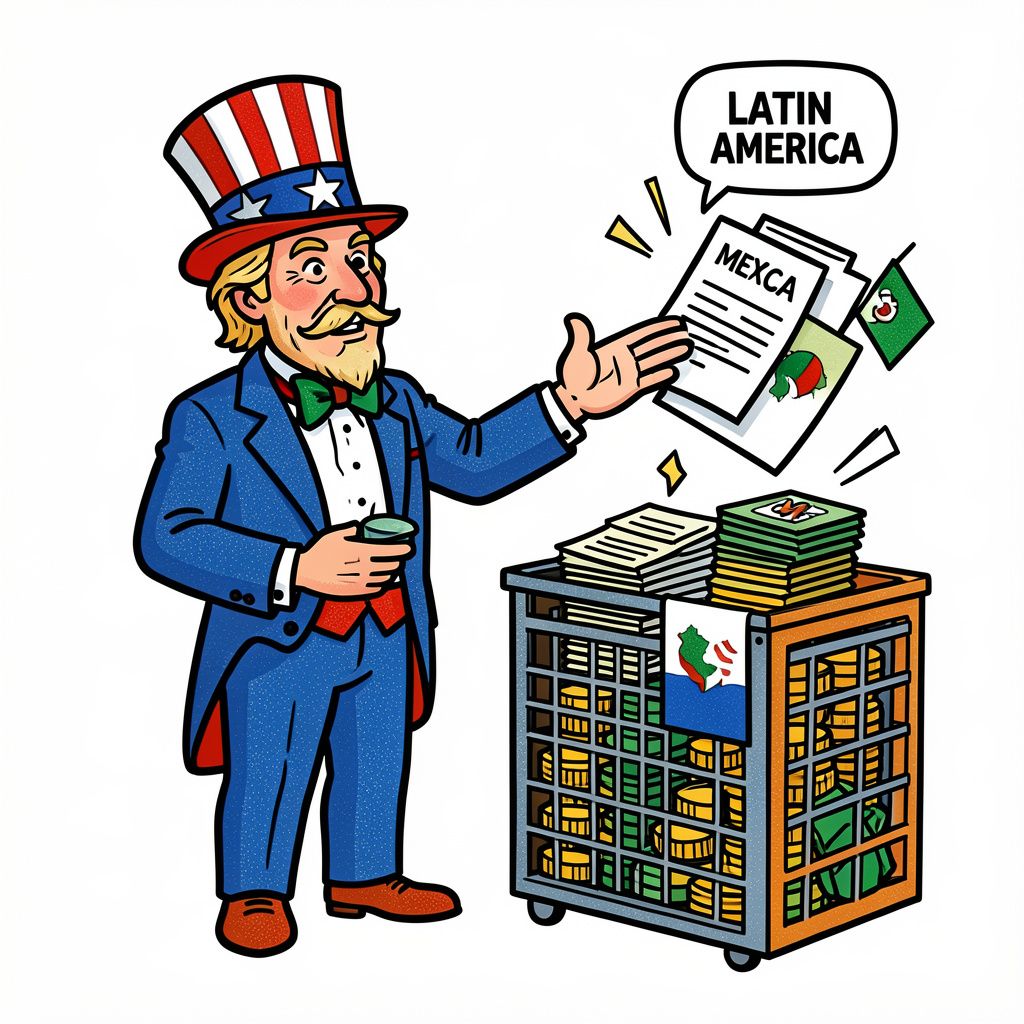
On May 7, 2026, a State Department official confirmed to The Associated Press that the United States is actively reviewing Mexico’s consulates, a move that could lead to imminent closures [1]. Assistant Secretary of State for Global Public Affairs Dylan Johnson framed the review as part of a broader effort to ensure American foreign relations align with President Donald Trump’s “America First” agenda [1]. For cross-border businesses, the potential shuttering of these diplomatic outposts threatens to severely bottleneck trade logistics and labor mobility [GPT].
This diplomatic friction follows a series of recent security incidents that have strained bilateral relations. In April 2026, a crash following the destruction of a drug lab in Chihuahua, Mexico, resulted in the deaths of two CIA officials and two Mexican investigators [1]. Mexican President Claudia Sheinbaum later revealed her security cabinet had not been informed of this U.S. collaboration [1]. Tensions further escalated on May 3, 2026, when the U.S. Department of Justice indicted ten current and former Mexican officials on drug trafficking charges, including Sinaloa Governor Rubén Rocha Moya, for allegedly aiding the Sinaloa Cartel [1]. In response to the escalating U.S. pressure, President Sheinbaum stated that Mexico “will never subordinate ourselves because this is a matter of the dignity of the Mexican people” [1].
Tightening the Economic Vise on Cuba
Simultaneously, the Trump administration has drastically intensified its economic campaign against the Cuban government. On May 1, 2026, President Trump issued Executive Order 14404, which expanded the U.S. government’s authority to sanction individuals, third-country nationals, and firms supporting the Cuban regime [2][3][4]. Acting on this order, Secretary of State Marco Rubio unveiled a sweeping package of sanctions between May 6 and May 7, 2026, targeting the military-run conglomerate Grupo de Administración Empresarial S.A. (GAESA), its Executive President Ania Guillermina Lastres Morera, and the mining joint venture Moa Nickel SA [2][3].
The financial implications of these sanctions are profound. GAESA functions as the financial engine of the Cuban regime, controlling an estimated 40% of the island’s gross domestic product and managing major hotels, financial institutions, and retail outlets [3][5]. State Department officials estimate the conglomerate controls up to $20 billion in illicit assets [2]. Recent data indicates that in 2024, GAESA held $14 billion in bank accounts and an additional $18 billion in current assets [6], bringing its known liquid and current financial holdings to a staggering 32 billion [6]. The extraterritorial reach of the new sanctions has already forced Canada’s Sherritt International Corporation to suspend operations and withdraw from the Moa Nickel joint venture after 32 years of direct participation in Cuba [3][5].
The aggressive economic squeeze exacerbates an already dire humanitarian crisis on the island. Since January 2026, the U.S. has enforced a near-total oil blockade on Cuba, paralyzing the nation’s energy infrastructure [3][4]. This culminated in a catastrophic electrical grid collapse in March 2026 that left nearly 11 million residents without power for more than a day [5]. The human cost of prolonged economic isolation is severe; a late April 2026 report by the Center for Economic and Policy Research concluded that U.S. sanctions imposed since the first Trump administration were likely the primary driver behind a 148% surge in Cuba’s infant mortality rate [1].
Diplomatic Stand-Offs and Humanitarian Aid
Amidst the tightening embargo, diplomatic channels have seen mixed results. Secretary Rubio met with Pope Leo XIV at the Vatican this week to discuss the unfolding crisis [alert! ‘Sources conflict on the exact date of the meeting, with reports citing both May 6 and May 7, 2026’] [4][6]. Following these discussions, Rubio announced on May 8, 2026, that the Cuban government had rejected a $100 million U.S. humanitarian aid offer [6]. While the U.S. has successfully distributed $6 million in aid through Cáritas, a Catholic Church agency, broader negotiations remain gridlocked after U.S. officials demanded economic reforms and the release of political prisoners [6].
Cuba’s Ministry of Foreign Affairs has fiercely condemned the May 1 executive order, labeling it a “ruthless act of economic aggression” and a “dangerous escalation” [4]. The administration’s willingness to leverage maximum pressure—echoing its previous authorization to capture Venezuelan President Nicolás Maduro and its involvement in the elections of Argentina and Honduras—signals a highly volatile period for Latin American geopolitics [1]. For investors and multinational corporations operating in the region, navigating this landscape will require acute awareness of sudden regulatory shifts and the expanding scope of U.S. secondary sanctions [GPT].