February Inflation Stays Elevated as Soaring Grocery Costs Challenge the Federal Reserve
Washington, Thursday, 12 March 2026.
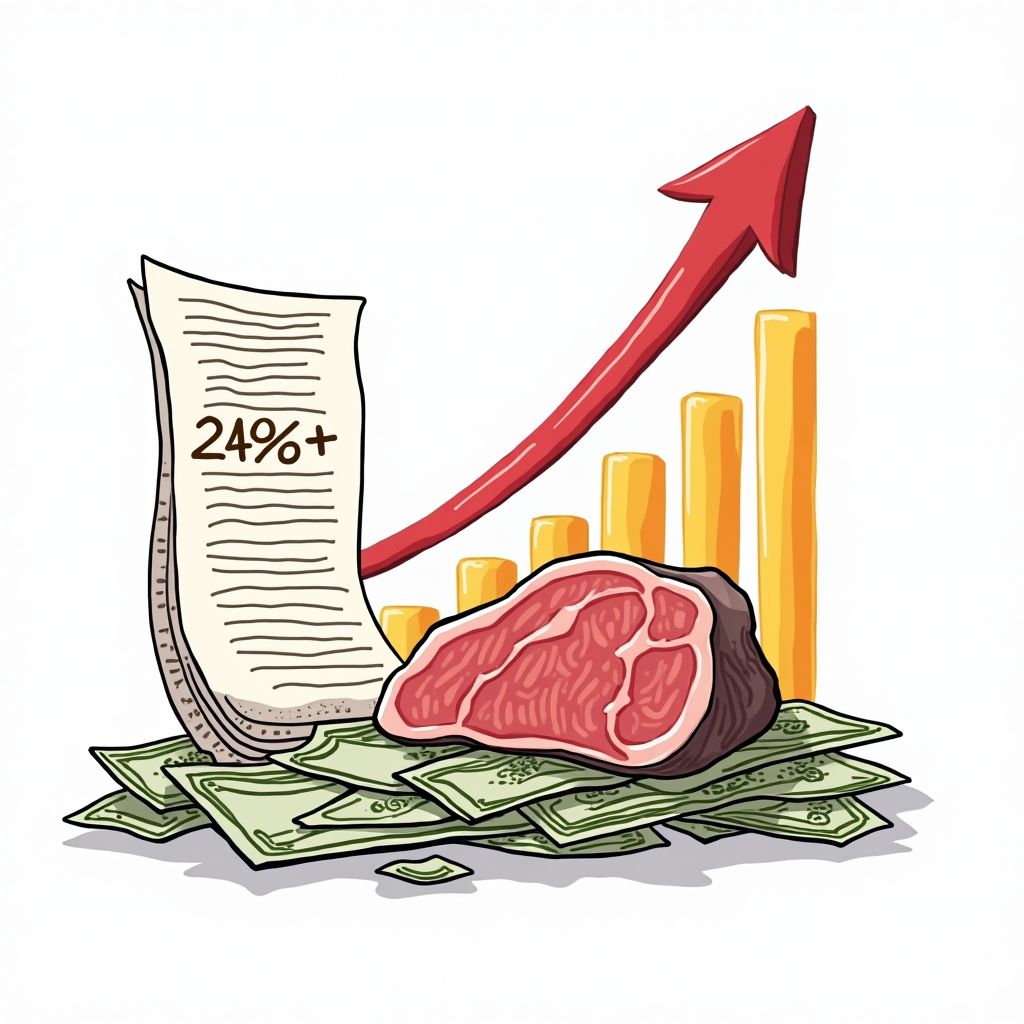
February 2026 inflation held at 2.4%. With beef prices surging 14.4% annually and global conflicts threatening gas costs, this persistent pressure will likely stall Federal Reserve rate cuts.
The Grocery Cart and Utility Squeeze
American households continue to face acute financial pressures at the supermarket, particularly lower-income consumers who spend a larger share of their earnings on necessities [1]. Grocery prices rose 0.4% in February, bringing the annual increase to 2.4% [3]. However, specific staples showed dramatic variances. Meat, poultry, and fish prices climbed 0.2% for the month and 6.8% annually, driven largely by beef and veal prices, which jumped 1.5% in February alone to reach a staggering 14.4% year-over-year increase [1][3]. Conversely, egg prices offered some relief, declining 3.8% for the month and dropping 42.1% compared to a year ago [3]. On the energy front, utility gas service prices spiked 3.1% in February, sitting 10.9% higher than in February 2025, while electricity prices saw a slight monthly decline of 0.7% but remained up 4.8% annually [3].
Distorted Data and Looming Geopolitical Threats
Economic analysts warn that the current inflation figures may not paint a complete picture of the macroeconomic landscape [1]. Economists note that CPI data from December 2025 through April 2026 is structurally impacted by data collection interruptions stemming from a 43-day government shutdown in the fall of 2025 [1]. To compensate for missing October and November 2025 data, the BLS utilized a carry-forward methodology, which is predicted to impart a downward bias on inflation readings until the spring of 2026 [1]. Additionally, tariffs are still working their way through the supply chain, adding persistent cost pressures to consumer goods [2].
Federal Reserve Meets Amidst Uncertainty
These inflationary crosscurrents present a formidable challenge for the Federal Reserve as officials prepare for their monetary policy meeting scheduled for March 17 and 18, 2026 [1][3]. The central bank remains divided on whether to maintain the current federal funds rate to force inflation down to the 2% target, or to reduce rates to stimulate an economy that unexpectedly shed 92,000 jobs in February [3][4]. However, following the latest CPI report, market expectations have solidified around a holding pattern [3]. According to the CME FedWatch tool, the probability of the Fed holding rates steady at 3.5% to 3.75% has surged to 99.3%, an increase of 5.7 percentage points from 93.6% just a month prior [1][3].