EU Grapples with Food Taxes: Can Carbon Pricing Shrink Our Plates' Footprint?
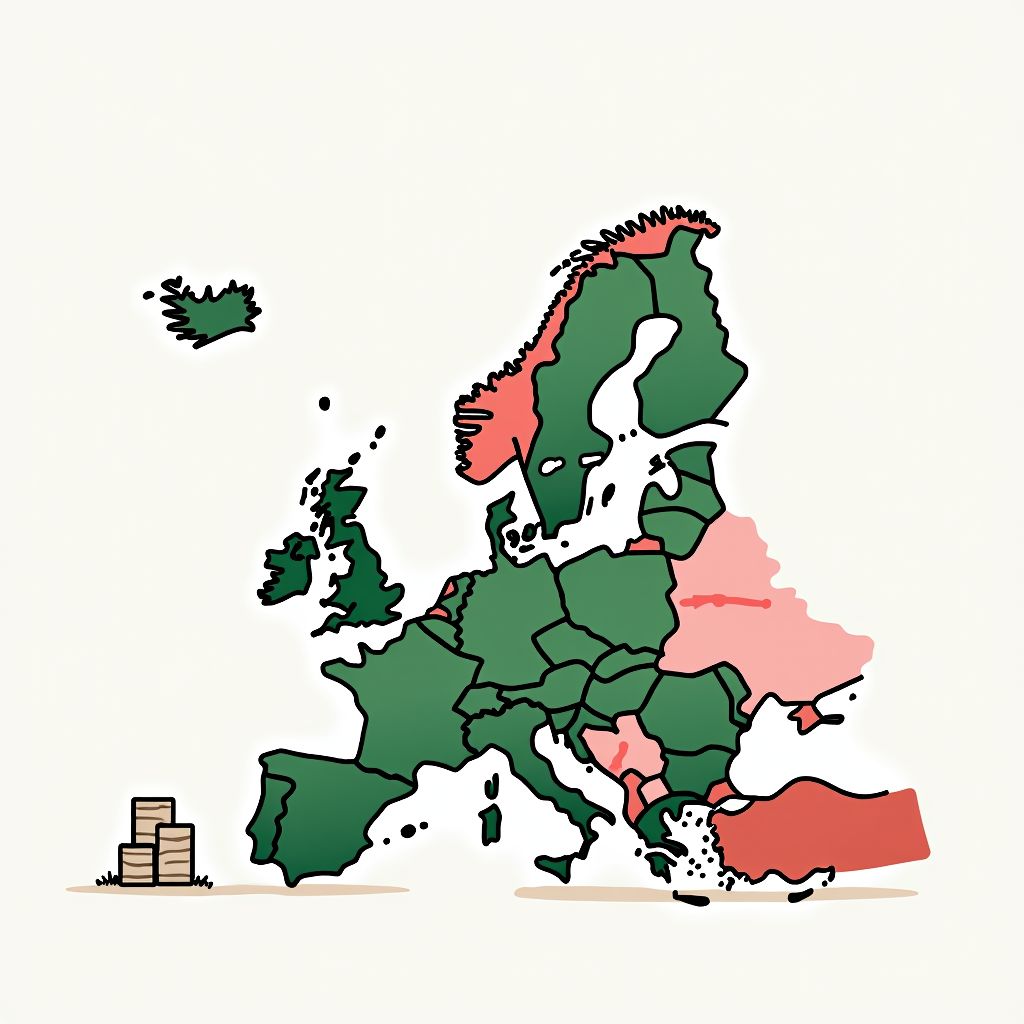
Brussels, Thursday, 22 January 2026.
A new study reveals that EU carbon pricing strategies, like VAT adjustments on meat, could cut food-related emissions by up to 5.7%, potentially saving 29.9 MtCO2e. This could cost the average EU household just €12 annually with social compensation.
The VAT Debate
Currently, 22 out of 27 EU member states apply reduced VAT rates on meat products [1][3]. Subjecting meat to the standard VAT rate could reduce environmental damage from food consumption by 3.48% to 5.7% [3][4]. Removing the reduced VAT rate on meat would increase the average annual food expenditure in EU households by approximately €109 [4]. However, this could be offset by additional tax revenues of around €83 per household, resulting in a net cost of about €26 per household [4].
Carbon Pricing as an Alternative
A carbon price of €52 per tonne of CO₂ equivalent could achieve the same reduction in food-related greenhouse gas emissions as removing the VAT rate reduction on meat [3][4]. Michael Sureth, a researcher at PIK, suggests that a comprehensive price signal would reduce other environmental impacts beyond greenhouse gases even more effectively than a selective VAT price signal for meat [3][4]. The carbon price for fuel and heating in Germany is currently €55 per tonne of CO₂ equivalent and is slated for integration into an EU-wide pricing system in 2028 [3].
Dietary Shifts and Affordability
A recent study in Nature Food compared the prices and emissions of 440 local food products across 171 countries, finding that the least expensive healthy food options could cut dietary emissions by one-third [2]. These low-cost and emissions food groups include legumes, nuts, seeds, oils, fats, wheat, maize, white beans, apples, onions, carrots, and small fish [2]. A healthy diet composed of the most-consumed foods emits 2.44 kgCO2e and costs $9.96 (in 2021 prices) per person per day, while a healthy diet of the least-expensive foods emits 1.65 kgCO2e and costs $3.68 [2]. However, a diet with the lowest emissions would cost $6.95, nearly double the least-expensive option, emitting just 0.67 kgCO2e [2].
The Bigger Picture: Food Waste and EPR
Beyond carbon pricing and VAT adjustments, addressing food waste is crucial. A January 2026 study examines the potential of Extended Producer Responsibility for Food Products (EPRFP) to tackle food waste prevention and collection in the EU [5]. EU citizens generate 129 kg of food waste per year, contributing to 8-10% of global greenhouse gas emissions [5]. The EU has set legally binding food waste reduction targets for 2030: a 30% reduction per capita at household, retail, and restaurant levels, and a 10% reduction at the manufacturing level [5].