Federal Regulators Ban Foreign Solar Equipment to Protect the Power Grid
Washington, Wednesday, 29 July 2026.
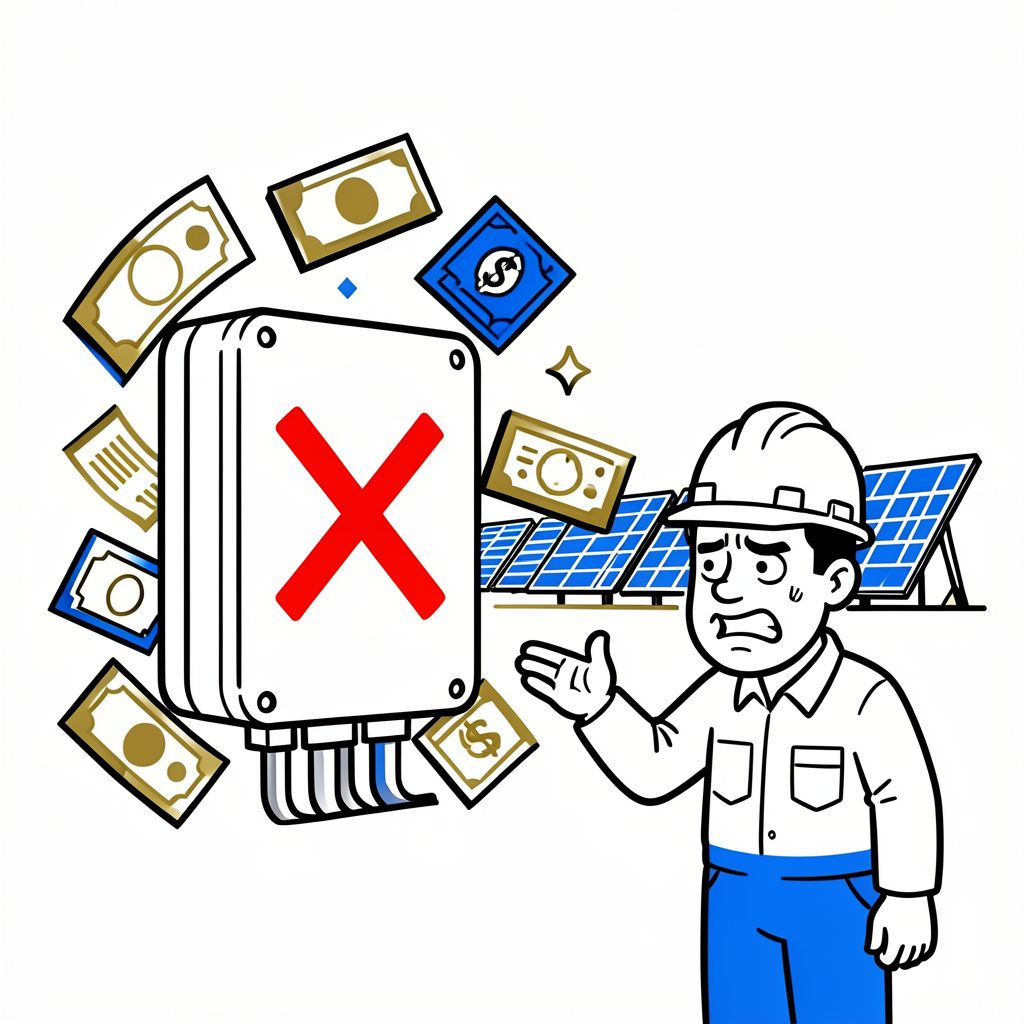
Effective July 28, 2026, the FCC banned foreign-assembled solar inverters over hacking risks, triggering a massive 93% supply deficit that threatens to stall vital U.S. clean energy projects.
A Decisive Regulatory Lockout
On July 28, 2026, the Federal Communications Commission (FCC) officially executed a sweeping regulatory lockout by adding foreign-produced power inverters and advanced robotic devices to its Covered List [1][6]. This action represents an actual, active policy implementation rather than a campaign proposal or mere statement of intent [1][2][6]. The policy, which was first announced by the administration of President Donald Trump and the FCC on July 21, 2026, took immediate effect upon its publication, meaning that the regulatory lockout is now a present reality for the energy and technology sectors [2]. Under the direction of FCC Chairman Brendan Carr and supported by key lawmakers like U.S. Representative John Moolenaar, the chair of the House Select Committee on China, the policy is designed to secure critical American infrastructure from potential espionage and cyberattacks [2].
Bypassing Traditional Rulemaking
The legal foundation for this rapid action is the Secure and Trusted Communications Networks Act of 2019 [6][7]. By utilizing the Covered List, the FCC’s Public Safety and Homeland Security Bureau bypassed the traditional, lengthy notice-and-comment rulemaking process, acting immediately after receiving two National Security Determinations from an Executive Branch interagency body on July 27, 2026 [3][6]. This regulatory mechanism has previously been deployed to block other foreign entities and products, including Huawei and ZTE in March 2021, DJI drones in December 2025, and Chinese-produced consumer routers in March 2026 [3][6].
Supply Chain Deficits and Grid Impacts
The sudden implementation of the ban on foreign-assembled power inverters has sent shockwaves through the renewable energy sector, exposing a massive domestic supply deficit [1]. Currently, domestic manufacturers supply a mere 7% of the U.S. solar inverter market [1]. This leaves a staggering supply deficit of 93% that must be addressed to meet current market demand [1]. The definition of “foreign-produced” relies on the federal “Buy American Standard” outlined in 48 CFR § 25.101(a), which classifies products based on the location of final assembly rather than corporate ownership [1][7]. Consequently, U.S.-branded inverters assembled overseas are completely prohibited, while foreign-owned brands manufactured in domestic factories may still be authorized [1].
Delays in the Clean Energy Pipeline
This supply gap poses an immediate threat to the clean energy pipeline [1]. Developers have set plans to connect over 58,000 MW of new solar and storage capacity over the next year [1]. However, projects currently awaiting interconnection are effectively stalled because replacing prohibited inverters with compliant models constitutes a “Material Modification” under utility rules [1]. This status forces developers to undergo mandatory, time-consuming engineering re-studies and pushes their projects to the very back of utility interconnection queues [1]. The White House has linked this urgency to its broader “AI Action Plan,” noting that surging power demand from next-generation data centers risks destabilizing the civilian grid if solar and battery infrastructure rollouts are delayed by these sudden hardware shortages [1].
Cybersecurity Vulnerabilities and the Robotics Ban
The regulatory action is driven by severe cybersecurity concerns, notably the precedent set by the 2023 “Volt Typhoon” cyber-espionage campaign, which used compromised routers to target U.S. critical infrastructure [2][4][5]. According to the White House interagency council, the wireless connectivity built into modern smart inverters allows foreign adversaries to push unauthorized firmware updates that could remotely disable solar arrays and disrupt the grid [1]. Although a Department of Energy analysis of 30 Chinese inverters on January 28, 2026, found no physical evidence of malicious hardware, the digital risks associated with remote firmware updates were deemed too significant to ignore [1].
Targeting Chinese Advanced Robotics
Alongside power inverters, the FCC has also banned the import, marketing, and sale of new foreign-produced advanced robotic devices, specifically targeting Chinese humanoid and quadruped systems [2][3][7]. Advanced robotic devices are defined by the FCC as mechanical mobile units weighing over 2 kg (specifically, those exceeding 1.996 kg) that are capable of autonomous movement, sensor-based operation, and network connectivity of at least 200 kbps [7]. The prime target of this restriction is Unitree Robotics, a Chinese company that holds just under 20% of the global humanoid robot market share and was designated as a Chinese military-backed company by the Pentagon on June 8, 2026 [2][3].
Unpatched Backdoors and Legal Obligations
Security researchers have documented critical, unpatched backdoors in Unitree hardware that justify the FCC’s action [3]. In March 2025, researchers identified CVE-2025-2894, a firmware backdoor in Unitree Go1 robots that enables remote control via a China-based cloud tunnel service known as “CloudSail” [3]. Vulnerable units were discovered operating at prestigious institutions, including MIT, Princeton, Carnegie Mellon University, and the University of Waterloo [3]. Furthermore, in September 2025, researchers disclosed “UniPwn,” a wormable Bluetooth Low Energy exploit affecting Unitree Go2, B2, G1, and H1 models that grants root-level access and allows autonomous compromise of nearby units [3]. These technical vulnerabilities are compounded by Chinese legal frameworks, such as the 2017 National Intelligence Law, which legally obligates domestic firms to cooperate with state intelligence efforts [3].
Economic Reindustrialization and the Path Forward
The implementation of these restrictions has disrupted commercial partnerships, notably Nvidia’s recent integration of its Blackwell chips with the Unitree H2 Plus chassis for its GR00T reference humanoid research platform [3][5]. Despite these disruptions, administration officials and domestic industry leaders have praised the move [2][3][4]. Peggy Johnson, CEO of Agility Robotics, noted that the ban sends an important market signal as U.S. robotics companies invest in resilient, domestic manufacturing [3]. Treasury Secretary Scott Bessent has also warned that Chinese AI firms face potential U.S. sanctions regarding intellectual property theft, aligning the ban with a broader policy agenda to reindustrialize America and protect the domestic AI buildout [2][4][5].
Navigating the Regulatory Exceptions
For companies caught in the transition, the FCC has provided narrow avenues for compliance [1][6][7]. Foreign-produced inverters and advanced robotic devices can bypass the ban only through an emergency “Conditional Approval” process [1][6][7]. Evaluations for power inverters will be conducted by the Department of War (DoW) or the Department of Homeland Security (DHS), while the DoW will evaluate advanced robotic devices [6][7]. To qualify, manufacturers must submit detailed documentation, including full disclosure of supply chains and firmware architecture, to federal auditors [1]. Additionally, a regulatory waiver remains in place to permit covered foreign-produced devices to receive essential software and firmware updates to maintain basic usability and security [7].
Sources
- pv-magazine-usa.com
- www.detroitnews.com
- www.techtimes.com
- www.independent.co.uk
- en.vijesti.me
- docs.fcc.gov
- www.fcc.gov