Hyundai Confirms Deployment of Electric Atlas Robots to Assembly Lines by 2028
Waltham, Tuesday, 6 January 2026.
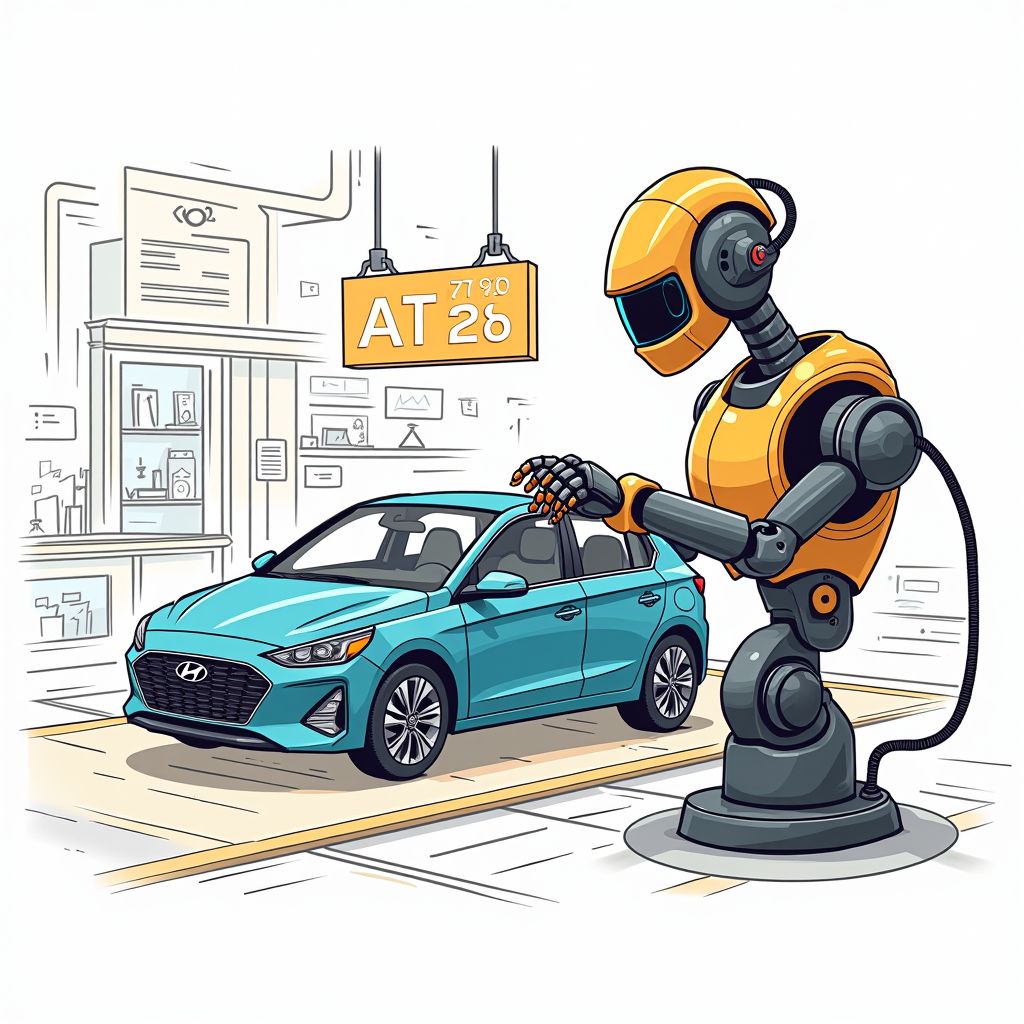
Hyundai confirms Boston Dynamics’ electric Atlas robots will enter US assembly lines by 2028. This strategic shift from R&D to commercial deployment directly challenges Tesla in the race for humanoid labor.
Strategic Integration at the Georgia Metaplant
In a definitive move to automate its manufacturing ecosystem, Hyundai Motor Group (HYMTF) announced on January 5, 2026, at CES in Las Vegas, that it will integrate Boston Dynamics’ Atlas robots into its production facilities [1]. The deployment is scheduled to begin in 2028 at the Hyundai Motor Group Metaplant in Savannah, Georgia, where the robots will initially handle parts sequencing tasks [2]. This timeline extends to 2030, by which point the robots are expected to undertake complex assembly operations, including handling heavy loads and executing repetitive motions [2]. This announcement follows a pilot program initiated in late 2025, where Atlas was tested sorting roof racks at the Georgia facility [3][4].
Technical Evolution: From Hydraulics to Electric AI
The commercial viability of this deployment rests on significant technical upgrades to the Atlas platform. Moving away from the hydraulic systems of previous iterations, the new Atlas is fully electric and features 360-degree rotating joints that eliminate the need for exposed wiring across moving parts [5]. The latest model boasts 56 degrees of freedom, representing a 12 percent increase in articulation compared to the 50 degrees of freedom reported in April 2025 [2]. Furthermore, the robot is equipped with three-fingered grippers capable of tactile sensing, allowing for the precise manipulation of objects ranging from small components to large structural elements [5]. To power these capabilities, Boston Dynamics has partnered with Google DeepMind to integrate Gemini robotics AI foundation models, alongside existing Nvidia processing architecture, enabling the robots to learn through supervised demonstration rather than rigid manual programming [1][3].
Market Implications and the Humanoid Labor Race
Hyundai’s aggressive push into robotics underscores a broader economic trend as automotive manufacturers seek to mitigate labor shortages and enhance production efficiency. Hyundai, which holds an 88% stake in Boston Dynamics following its acquisition, aims to leverage these advancements to support its target of 9.8 million annual vehicle sales by 2030 [1][3]. The financial stakes are high; Goldman Sachs projects the global market for humanoid robots could reach $38 billion by 2035 [6]. However, the sector remains fiercely competitive. Boston Dynamics CEO Robert Playter has acknowledged the rapid scale of investment from Chinese competitors, describing it as a distinct threat to their technical lead [6]. As the industry pivots toward automation, the successful integration of Atlas into the Georgia plant will likely serve as a critical bellwether for the widespread adoption of general-purpose humanoid labor in manufacturing.
Sources
- www.hyundai.com
- www.theverge.com
- www.cbsnews.com
- www.cbsnews.com
- www.cbsnews.com
- www.therobotreport.com