Spain Blocks US Use of Military Bases for Iran Strikes, Diverging from European Allies
Madrid, Tuesday, 3 March 2026.
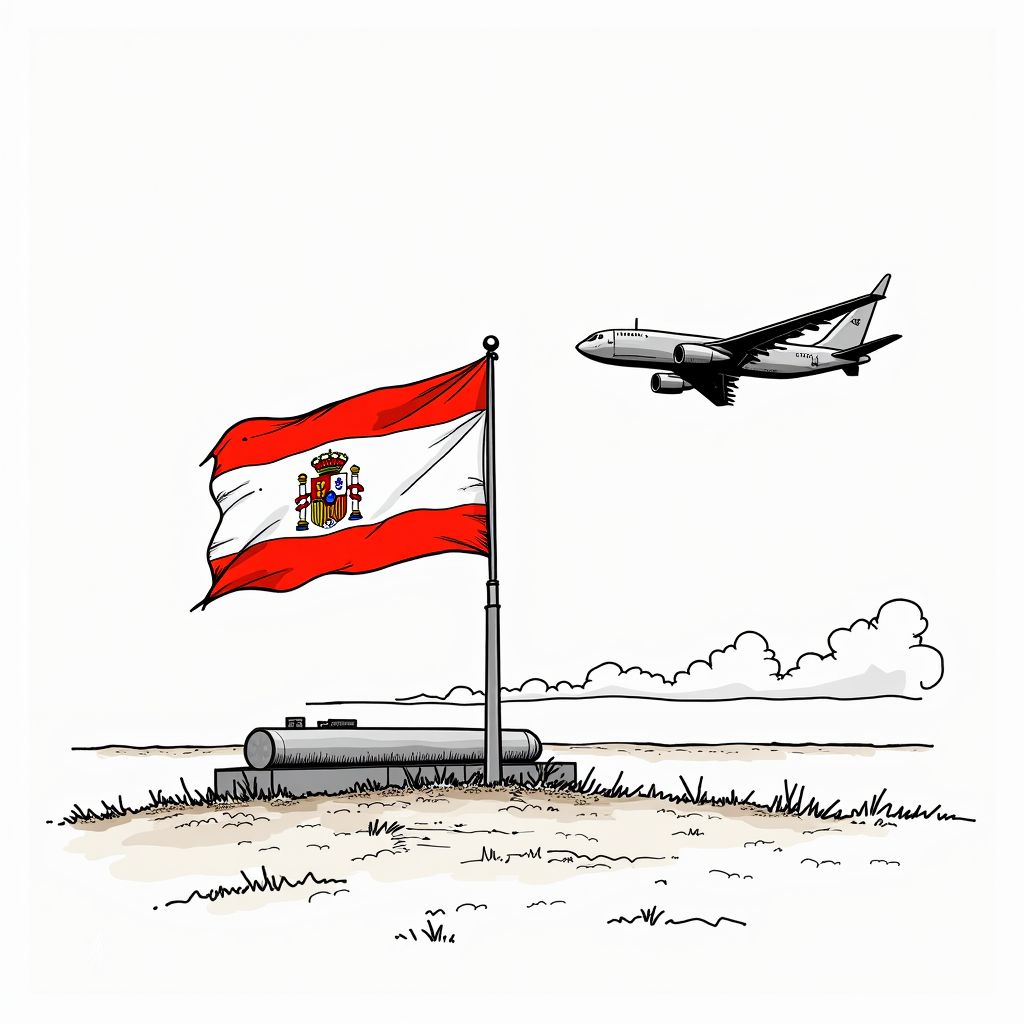
Madrid’s refusal to authorize offensive operations forced the Pentagon to relocate 15 tanker aircraft to Germany, marking a significant geopolitical split between Spain and its NATO allies.
Spain Breaks Ranks as Conflict Widens
Following the immediate economic shockwaves triggered by “Operation Epic Fury”—the coordinated U.S. and Israeli airstrikes on Iran detailed in our [previous report][1]—the geopolitical fallout has now breached the cohesion of the NATO alliance. As of Monday, March 2, 2026, the Spanish government officially refused to authorize the United States to use its joint military bases in Rota and Morón for offensive operations against Iran [2][3]. This decision, led by Prime Minister Pedro Sánchez, has forced a rapid logistical reshuffling of American assets and isolated Madrid from key European allies like the United Kingdom, France, and Germany, who have signaled varying degrees of support for the military intervention [2][4].
Logistical Scramble: The Morón and Rota Exodus
The operational impact of Madrid’s refusal was immediate and visible on radar screens across the continent. Between February 29 and March 2, the United States Air Force was compelled to relocate at least 15 aircraft from its Spanish hubs to alternative locations in Northern Europe [4][5]. Flight tracking data confirmed that ten KC-135 “Stratotanker” refueling aircraft—critical for sustaining long-range bomber sorties—departed Morón de la Frontera in Seville for Ramstein Air Base in Germany [3][6]. Additionally, five aircraft departed from the naval base in Rota, with two heading to southern France and the destinations of the remaining three undisclosed [6]. Defense Minister Margarita Robles clarified the government’s stance, asserting that while the bases are jointly used, the bilateral defense treaty does not apply to “unilateral” actions taken without international resolution support [3][7]. Consequently, the bases will not provide maintenance or support for the operation unless strictly necessary for humanitarian reasons [2][8].
A Fracture in the Alliance: Madrid Stands Alone
Spain’s prohibition highlights a deepening rift within the Western security architecture regarding the Middle East crisis. While Madrid has invoked defense treaty clauses to block the deployment [7], its neighbors have pivoted toward participation. On Sunday, March 1, British Prime Minister Keir Starmer reversed an initial hesitation and authorized the use of UK bases for “collective self-defence” [5]. Similarly, France and Germany have expressed willingness to facilitate operations, citing the need for “proportionate defensive action” in response to Iranian missile attacks [2][5]. In contrast, Spanish Foreign Minister José Manuel Albares has positioned Spain as a dissenting voice calling for “balance, moderation, and de-escalation,” arguing that the U.S.-led war violates international law and lacks a mandate from the United Nations [4][9]. This divergence has drawn sharp rebukes from allies; U.S. Senator Lindsey Graham disparaged the Spanish government as a model of “weak European leadership,” while Israeli Foreign Minister Gideon Sa’ar criticized Sánchez’s administration [8].
Diplomatic Fallout and Regional Security
The diplomatic tension is further complicated by Tehran’s reaction. The Iranian ambassador to Spain, Reza Zabib, publicly applauded Madrid’s decision to block the U.S. operation [8]. However, attempting to maintain diplomatic equilibrium, Minister Albares summoned Zabib on March 3 to formally condemn Iran’s “unjustified” retaliatory strikes against Gulf nations and a British airbase in Cyprus [9][10]. Domestically, the Spanish government faces pressure regarding the safety of its citizens abroad. Approximately 1,000 Spanish military personnel remain deployed in the region—including 700 in Lebanon and 275 in Iraq—alongside an estimated 30,000 civilian nationals [2][11]. With airspace closing and hostilities escalating, the Foreign Ministry has activated a 24-hour crisis unit and prepared evacuation protocols, though Minister Robles confirmed that Spanish contingents in Lebanon have already been forced to bunker down due to renewed exchanges between Israel and Hezbollah [2][11].
Sources
- wsnext.com
- english.elpais.com
- www.rtve.es
- www.aljazeera.com
- es.euronews.com
- es-us.noticias.yahoo.com
- www.infobae.com
- elpais.com
- www.infobae.com
- www.lanacion.com.ar
- www.lanacion.com.ar