Coordinated Sabotage Strikes Italian Rail Network as Winter Olympics Commence
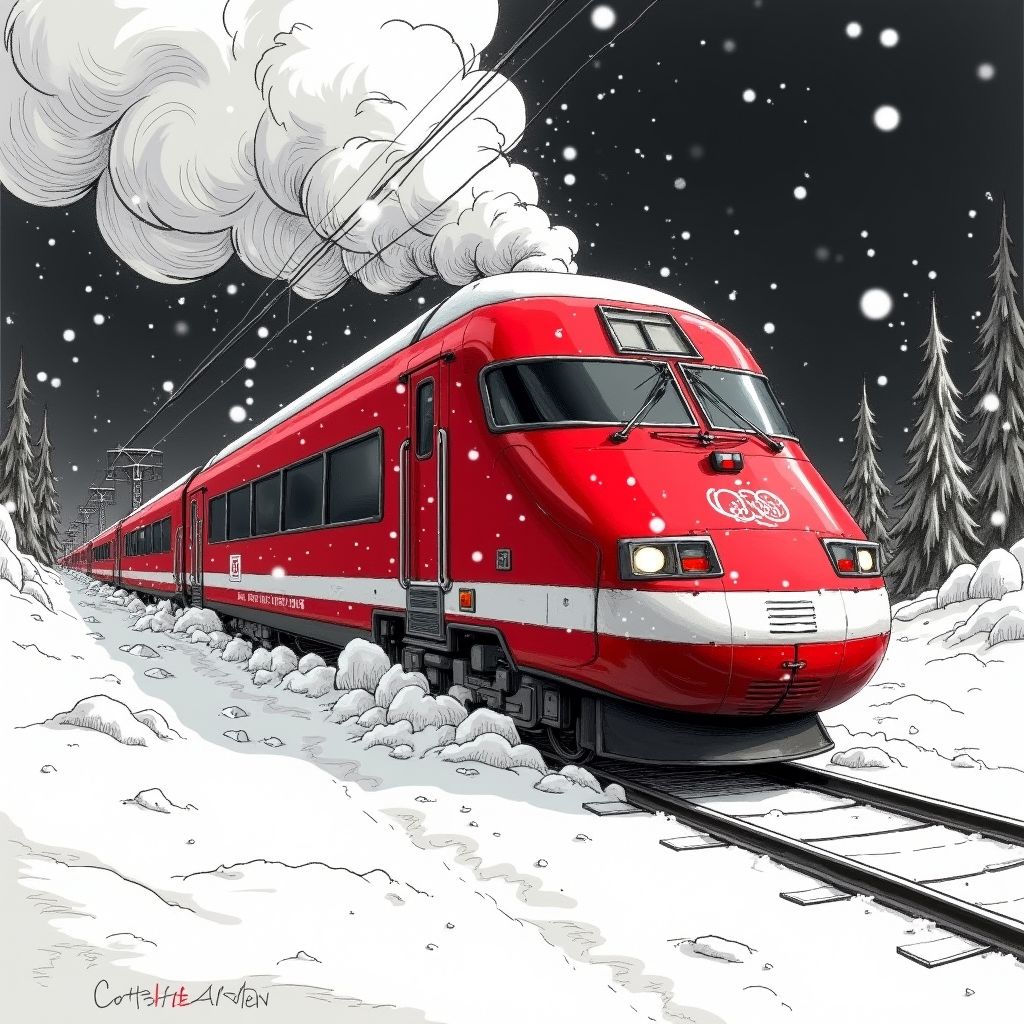
Milan, Sunday, 8 February 2026.
Authorities suspect anarchist sabotage after incendiary devices paralyzed key rail nodes, strikingly mirroring the 2024 Paris attacks just as the Milano-Cortina Winter Games opened.
Coordinated Strikes on Critical Infrastructure
In a calculated disruption coinciding with the first full day of the Milano-Cortina 2026 Winter Olympics, the Italian railway network suffered a series of coordinated attacks on Saturday, February 7, paralyzing travel across the country’s north [1][2]. The sabotage targeted strategic rail nodes in Bologna and Pesaro, causing severe logistical turbulence just hours after the opening ceremony took place in Milan [1][3]. Authorities have identified three distinct incidents involving arson and rudimentary explosives, which forced the temporary closure of high-speed lines and triggered widespread delays for thousands of travelers and Olympic attendees [2][5].
Anatomy of the Attacks
The disruptions began around 8:30 AM in the Bologna area, a crucial hub connecting Italy’s northern and southern rail arteries [1][6]. At Castel Maggiore, near the Bivio Navile junction, saboteurs severed cables essential for train speed detection and ignited a fire using incendiary devices [6][7]. Investigators discovered two rudimentary devices at the scene; while one detonated and damaged the infrastructure, a second device failed to explode, preventing potentially more catastrophic damage [6]. Simultaneously, a separate attack occurred on the Adriatic line near Pesaro, where an electrical cabin controlling track switches was set on fire, further compounding the gridlock [1][6]. The synchronization of these events has led police to suspect a deliberate strategy to maximize disruption during the high-profile sporting event [4][7].
Operational Paralysis and Recovery
The immediate aftermath of the sabotage resulted in a chaotic morning for the Italian rail system, with delays reaching up to 150 minutes for High Speed (Alta Velocità) and regional trains [2][5]. Specifically, the Intercity 604 traveling from Pescara to Milan suffered a delay of approximately 2.5 hours [5]. Traffic was suspended for roughly 45 minutes in the Bologna area while bomb disposal units and police secured the site, forcing trains to be rerouted onto surface lines which exacerbated the bottlenecks [6][7]. Despite the severity of the initial disruption, Rete Ferroviaria Italiana (RFI) technicians managed to repair the critical damage relatively quickly, allowing traffic to return to regular operation by the early afternoon of February 7 [1][5].
Political Fallout and Terror Probes
The Bologna Public Prosecutor’s Office, led by Paolo Guido, has opened an investigation into the incidents, initially categorizing them as arson and interruption of public service, though the inquiry is increasingly pivoting toward terrorism charges [6]. Investigators are focusing on anarchist groups as the primary suspects, drawing parallels to the sabotage that targeted the French high-speed rail network hours before the Paris 2024 Olympics opening ceremony [3][4]. Deputy Prime Minister and Transport Minister Matteo Salvini condemned the acts as “premeditated attacks” by individuals wishing to harm Italy, emphasizing that the sabotage mirrored the “criminal acts” witnessed in France two years prior [1][4]. While no group has yet claimed responsibility, the Ministry of Transport has announced it will seek millions in damages once the perpetrators are identified [3].
Sources
- www.bbc.com
- tg24.sky.it
- www.rainews.it
- ilmanifesto.it
- www.today.it
- www.ilfattoquotidiano.it
- www.ilpost.it