Watchdog Reports Allegations of U.S. Commanders Framing Iran War as Biblical End-Times Event
Washington D.C., Tuesday, 3 March 2026.
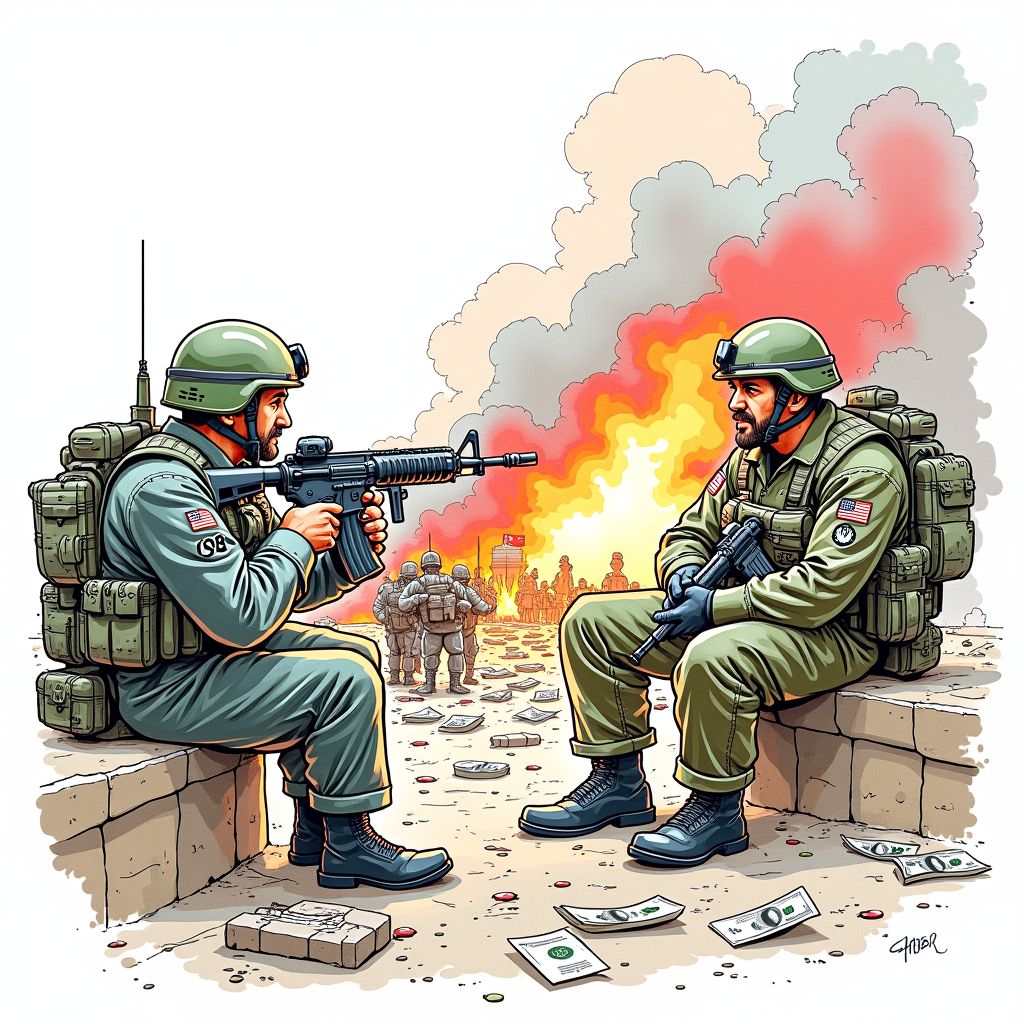
Over 110 troops allege commanders described the Iran conflict as “anointed by Jesus” to trigger Armageddon, introducing volatile ideological risks into U.S. military operations and raising constitutional concerns.
Theological Rhetoric in Military Operations
Reports emerging on Tuesday, March 3, 2026, indicate a significant infusion of religious ideology into U.S. military operations regarding the ongoing conflict with Iran. The Military Religious Freedom Foundation (MRFF), a watchdog organization, has documented a surge in grievances from service members alleging that commanders are characterizing the war as a divinely ordained mission [1][3]. As of Monday, March 2, the foundation had received more than 110 complaints from personnel across 40 different units and 30 installations, spanning the Army, Navy, Air Force, Marine Corps, and Space Force [1][3]. These complaints, which began surfacing in the early hours of Saturday, February 28, following joint U.S.-Israeli strikes, describe commanders expressing “unrestricted euphoria” and framing the violence as a fulfillment of biblical prophecy [2][5].
Allegations of “End Times” Messaging
The specific content of the allegations points to a breach of the separation between church and state within the armed forces. A non-commissioned officer (NCO) reported that a combat-unit commander explicitly instructed troops to view the conflict as “part of God’s plan,” stating that President Donald Trump was “anointed by Jesus to light the signal fire in Iran to cause Armageddon and mark his return to Earth” [1][2]. This particular complaint was filed on behalf of 15 troops, a diverse group including 11 Christians, one Muslim, and one Jew, who argued that such rhetoric destroys unit cohesion and violates their oaths to support the Constitution [2]. MRFF President Mikey Weinstein noted that these are not isolated incidents involving rogue commanders, but rather reflect a pattern where the war is being presented as “biblically-sanctioned” to accelerate the “End Times” described in the New Testament [2][4].
Systemic Shifts and Leadership Context
These developments occur against a backdrop of shifting culture within the Department of Defense under the leadership of Defense Secretary Pete Hegseth. Hegseth has reportedly evoked Christian nationalist themes and instituted regular prayer services at the Pentagon [2]. Furthermore, he sponsors a weekly Bible study led by Ralph Drollinger, who teaches that God blesses those who support Israel and curses its enemies [3]. This theological stance appears to be influencing operational messaging; in addition to the “Armageddon” rhetoric, the U.S. and Israeli strikes have reportedly targeted high-level Iranian leadership, including the assassination of Ayatollah Ali Khamenei and the bombing of the Council of Experts on March 3 [2].
Geopolitical Fallout and Casualties
The integration of apocalyptic theology into military directives coincides with a sharp escalation in casualties and geopolitical instability. On Tuesday, March 3, the U.S. was forced to shut down its embassies in Saudi Arabia and Kuwait following Iranian attacks [2]. This diplomatic retreat follows the death of six American service members in a suspected drone strike in Kuwait on March 2 [2]. Simultaneously, the humanitarian toll within Iran has risen precipitously; the Iranian Red Crescent Society reported on March 3 that U.S. and Israeli strikes had killed at least 787 people over the preceding three days, with targets including schools, hospitals, and residential buildings [4]. The framing of this bloodshed as a religious necessity by U.S. commanders introduces a volatile variable into an already fragile regional conflict.