Iranian Retaliatory Missiles Strike Southern Israel, Escalating Regional Conflict
Dimona, Sunday, 22 March 2026.
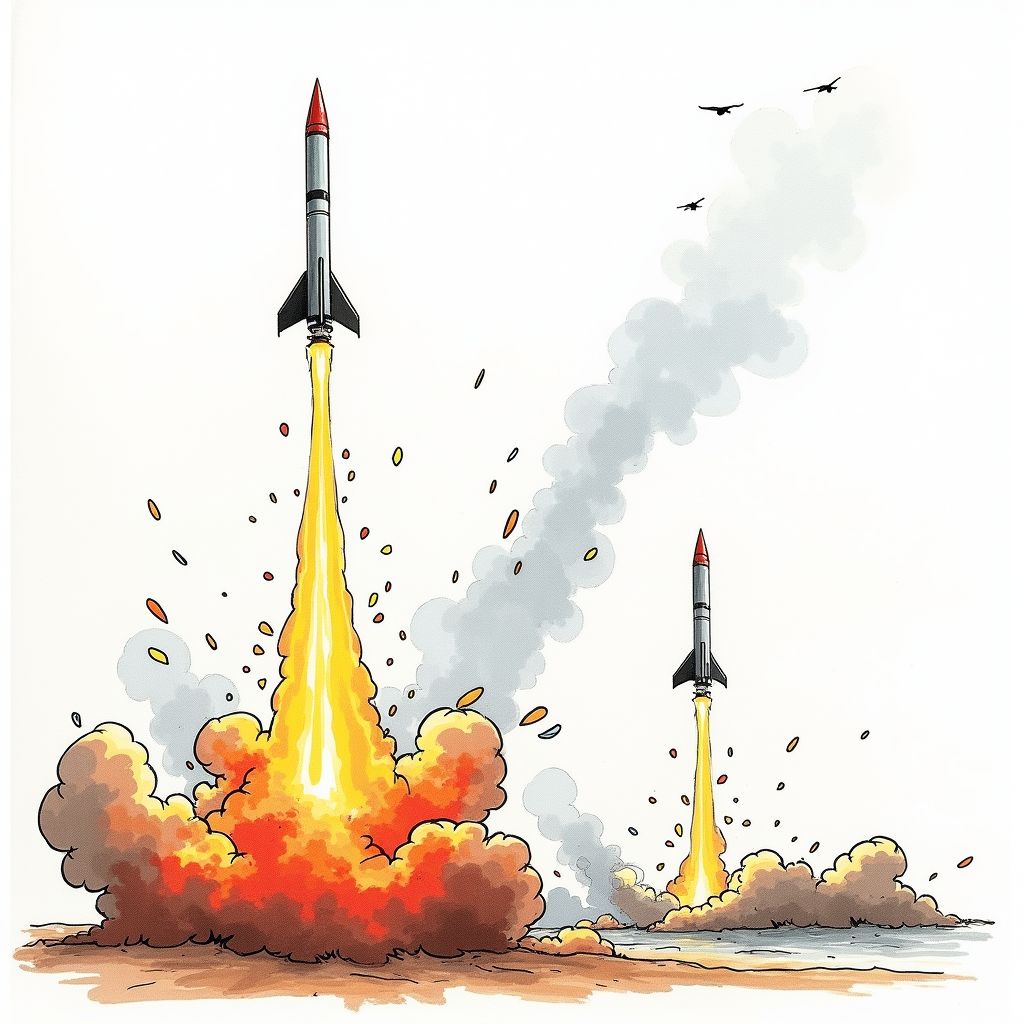
Iranian missiles bypassed air defenses to strike southern Israel on March 20, 2026, injuring over 140 people. This retaliation sharply escalates regional conflict, threatening global energy markets.
From Covert Operations to Direct Military Confrontation
The current missile barrage represents a severe escalation stemming from recent weeks of escalating hostilities. Following Israel’s targeted killing of Iranian leader Ali Larijani, which initially threatened to upend the vital Strait of Hormuz trade route, the conflict has rapidly transformed into direct military confrontation [GPT]. Iranian state television explicitly claimed that the March 20 strikes were a direct response to a prior Israeli attack on Iran’s Natanz nuclear enrichment facility [1][3][6]. This tit-for-tat exchange marks a historic threshold in the region’s geopolitical landscape: it is the first time during the current war that Israel’s nuclear research center has been directly targeted by enemy fire [3].
A Direct Hit on Israel’s Nuclear Hub
On Friday, March 20, 2026, Iranian ballistic missiles equipped with warheads weighing approximately 500 kilograms penetrated Israeli airspace [5]. Israeli air defense systems notably failed to intercept the incoming projectiles, allowing them to slam into the southern cities of Dimona and Arad [3][5]. In Dimona, social media and emergency responder footage captured the destruction of a one-story residential building, which was engulfed in flames following a direct hit [2][7].
Retaliation and Domestic Disruptions
Israel did not wait long to answer the assault. On Saturday, March 21, the Israel Defense Forces (IDF) launched a wave of retaliatory airstrikes targeting strategic infrastructure deep within Iranian territory [4][5]. The Israeli Air Force specifically struck Malek Ashtar University in Tehran, a facility operating under the Iranian Ministry of Defense that has long been sanctioned internationally for its role in developing ballistic missiles and nuclear weapon components [1][4]. This deep-strike capability underscores Israel’s intent to systematically degrade the Iranian regime’s nuclear ambitions [4]. Prime Minister Benjamin Netanyahu reinforced this posture, stating that Israel remains “determined to continue to strike our enemies on all fronts” [5].
Global Economic Shockwaves and Ultimatums
Beyond the immediate theater of war, the geopolitical risk premium is wreaking havoc on global energy markets. With Iran actively restricting commercial vessels in the Strait of Hormuz—a crucial maritime chokepoint responsible for a fifth of global crude trade—North Sea Brent crude prices have surged by over 50% in the past month, blowing past $105 per barrel [1]. The economic strangulation has drawn widespread condemnation from leaders in the UK, France, Germany, South Korea, and the UAE, who have offered to help ensure safe passage for commercial shipping [1].
Sources
- www.theguardian.com
- www.cnn.com
- news.sky.com
- www.maariv.co.il
- www.ynet.co.il
- www.instagram.com
- www.emess.co.il