Audi Tests Humanoid Robots to Automate Factory Assembly Operations
Ingolstadt, Wednesday, 21 October 2026.
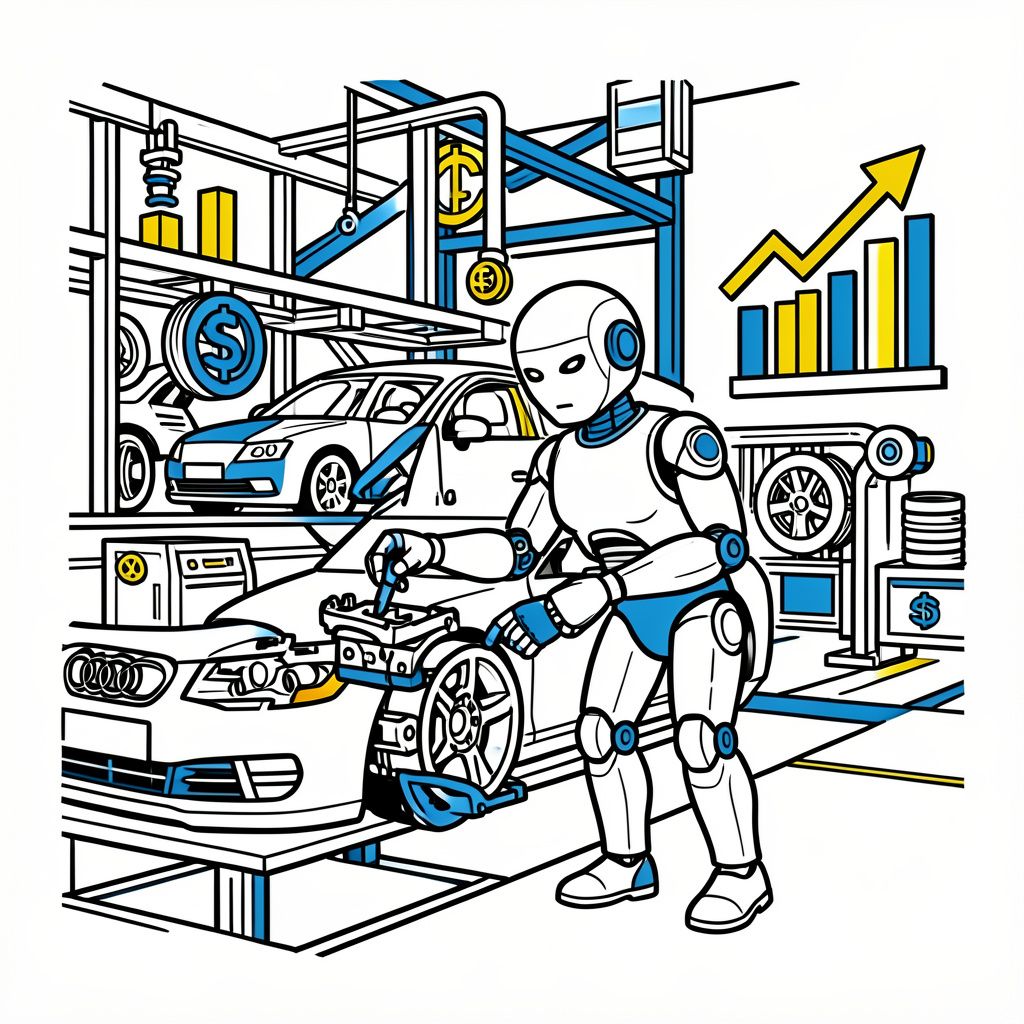
Audi is testing AI-powered humanoid robots in Germany to manage one million daily assembly parts picks, tackling complex factory tasks that were previously impossible to automate.
Strategic Partnership Announced at GTC Berlin
Audi AG has formally announced a joint proof-of-concept initiative with Agile Robots, Dassault Systèmes, and NVIDIA to integrate mobile humanoid robots into automotive logistics operations [1]. The announcement was made on 20 October 2026 at the NVIDIA GTC conference in Berlin, marking a significant step in automating complex parts sequencing [1][3]. The project focuses on Audi’s primary manufacturing plant in Ingolstadt, Germany, where the technology will be tested under real-world conditions [1][2]. This collaboration highlights an accelerating trend among major automakers to address labor shortages and optimize supply chain efficiency through advanced robotics [1]. The partnership leverages NVIDIA’s computing architecture and Dassault Systèmes’ industrial simulation platform to support the deployment of AI-driven humanoids [1].
Operational Scale and Logistical Challenges
The Ingolstadt facility currently performs approximately one million picks per day to supply parts for vehicle assembly [1][2]. Automating this volume involves handling a wide variety of parts and placing them in the right order for final assembly, a task previously considered unsolvable for traditional robotics [2][3]. Agile Robots’ mobile humanoids feature dual-arm manipulation and AI-powered perception, enabling the picking of unsorted components from mixed containers [1][6]. These robots are designed to operate at human height and integrate into existing factory infrastructure without requiring facility redesigns [3]. The project aims to bring automation to complex, variable tasks at the heart of modern manufacturing, with mobile humanoids working alongside employees to improve productivity [2].
Virtual Twins and AI Integration
The initiative utilizes a virtual twin of the logistics environment created via Dassault Systèmes’ DELMIA application on the 3DEXPERIENCE platform [1]. This virtual environment is integrated with NVIDIA Omniverse libraries to test feasibility, ergonomics, and safety before physical deployment [1][5]. Partners aim to reduce engineering and commissioning timelines from months to days using these simulation tools [3]. Dassault Systèmes intends to implement LEO, an AI-powered Virtual Companion, to assist engineers and accelerate process development, though the specific completion date for this implementation is not specified [alert! ‘deadline not specified in source’][1]. NVIDIA supports the initiative by providing robotics platforms, simulation pipelines, and edge-AI technologies for the perception, training, and deployment of intelligent machines [3].
Broader Industrial Implications
This project aligns with broader efforts by European industrial leaders to implement NVIDIA CUDA-X and Omniverse libraries across engineering and manufacturing lifecycles [7]. Other companies, such as Siemens, are integrating similar agents to coordinate operations, resulting in estimated cost savings [7]. NVIDIA released cuDSS for general availability at GTC Berlin on 20 October 2026, designed to accelerate complex engineering simulations [7]. The collaboration between Audi, Agile Robots, and their partners demonstrates how Physical AI can turn industrial concepts into competitive advantages [1]. Industry observers note that this is only the beginning of the industrial revolution happening with NVIDIA libraries and AI integration [5].
Sources
- www.audi.com
- www.linkedin.com
- supplychaindigital.com
- www.audi.com
- www.linkedin.com
- fr.linkedin.com
- blogs.nvidia.com
- x.com