Alaska Air Group Centralizes Long-Haul Growth in Seattle While Trimming Hawaiian Fleet
Seattle, Sunday, 22 February 2026.
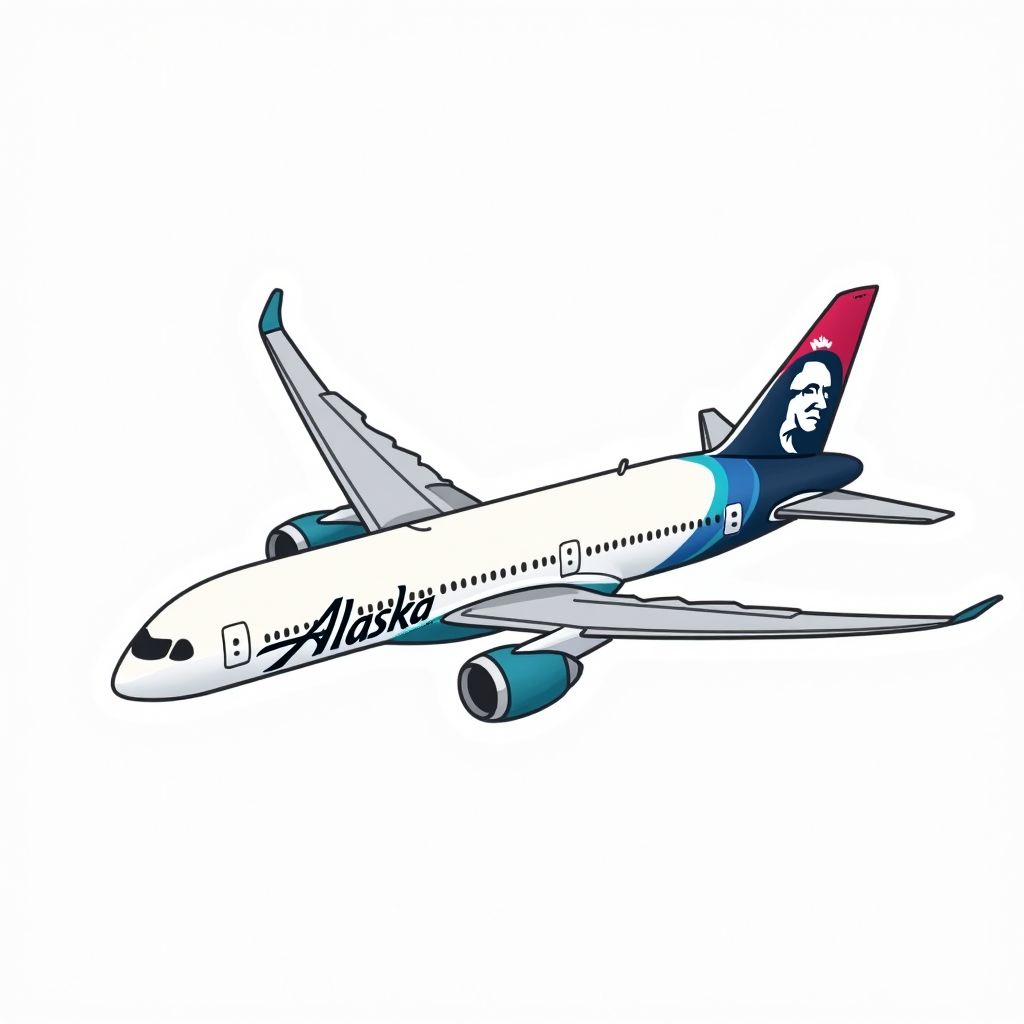
Alaska Air Group is fundamentally reshaping its transpacific strategy following its acquisition of Hawaiian Airlines. In a move that redefines the carrier’s operational geography, future widebody growth is pivoting away from Honolulu to the company’s Seattle headquarters. Data from a recent 10-K filing reveals that while Hawaiian Airlines will see its Airbus A330 fleet shrink by four aircraft in 2028, Alaska Airlines will simultaneously integrate new Boeing 787-10 Dreamliners—originally intended for Hawaiian—into its Seattle base. While this signals a reduction in Hawaiian’s long-haul capacity, the group is counterbalancing these fleet cuts with a $600 million “Kahuʻewai” investment plan focused on modernizing airport infrastructure throughout the islands. This strategic consolidation underscores a drive for route profitability, effectively positioning Seattle as the primary gateway for the group’s global ambitions while streamlining Hawaiian’s operations for efficiency.
Reshaping the Transpacific Fleet
The integration of Hawaiian Airlines into the Alaska Air Group is precipitating a distinct shift in fleet composition, detailed in the company’s 10-K form filed on February 12, 2026 [1]. Currently, Hawaiian Airlines operates 24 Airbus A330-200 aircraft, a number that will remain static through the end of 2027 [1]. However, the landscape changes in 2028 when four of these widebody jets are scheduled to exit the fleet, leaving a total of 20 aircraft [1][3]. This reduction represents a contraction of roughly 16.667% in Hawaiian’s dedicated A330 capacity. Concurrently, Alaska Airlines is preparing to absorb twelve Boeing 787 Dreamliners originally ordered by Hawaiian [5]. These aircraft will be transferred to Alaska’s operating certificate and based in Seattle, with four of the larger 787-10 variants specifically slated for arrival in 2028 [1][3]. This reallocation underscores the group’s intent to build a Seattle-based global airline while rightsizing Hawaiian’s widebody operations [1].
Elevating the Passenger Experience and Infrastructure
Despite the reduction in total airframes, the carrier is investing heavily in the quality of the remaining fleet and ground facilities. Starting in 2028, the remaining Airbus A330s will undergo a comprehensive cabin rebuild, featuring new seats, lighting, and an expanded first-class cabin [1][5]. According to Alaska Airlines Chief Commercial Officer Andrew Harrison, the reconfiguration will also introduce international premium economy seats, aligning the product with global standards as Hawaiian Airlines prepares to join the oneworld Alliance on April 22, 2026 [5]. Beyond the aircraft, the group has committed to the “Kahuʻewai” Hawaii Investment Plan, which allocates $600 million over five years to modernize airport infrastructure and guest facilities across the islands [1][3]. To oversee these physical expansions, Alaska Airlines promoted Ben Brookman to Vice President of Real Estate and Airport Affairs on February 19, 2026 [8].
Narrowbody Efficiency and Economic Trade-offs
On the narrowbody front, Alaska is optimizing its fleet with higher-capacity aircraft. The airline plans to take delivery of 50 Boeing 737 MAX 10 aircraft across 2027 and 2028 [1]. These jets are critical to the carrier’s efficiency strategy, offering 5.5% more seating capacity and 25% more first-class seats compared to the MAX 9 [3]. In a related strategic decision regarding fleet integrity, the carrier has permanently removed the specific 737 MAX 9 involved in the January 2024 door plug incident from service, prioritizing brand reputation over asset utilization [6]. However, the broader shift away from a widebody-centric model for Hawaiian Airlines carries economic risks. The retirement of the four A330s in 2028 is expected to decrease available cargo space, potentially complicating logistics for Hawaii’s supply chains that rely on the substantial belly capacity of widebody aircraft [3].
Summary
The Alaska Air Group is executing a decisive pivot, centralizing its long-haul growth in Seattle with the induction of Boeing 787s while streamlining Hawaiian Airlines’ widebody fleet. By 2028, the group aims to balance a 4 aircraft reduction in Hawaiian’s A330 fleet with significant investments in cabin upgrades and a $600 million infrastructure plan [1][5]. This strategy positions Seattle as the primary global gateway, leveraging new, efficient narrowbodies like the MAX 10 to support domestic connectivity, even as the reduction in widebody lift poses potential challenges for island cargo logistics.
Sources
- beatofhawaii.com
- simpleflying.com
- news.ssbcrack.com
- www.flightglobal.com
- simpleflying.com
- www.linkedin.com
- www.facebook.com
- www.djc.com