Senate Inquiry Targets Potential Influence Peddling in Trump’s $400 Million Ballroom Renovation
Washington, Wednesday, 14 January 2026.
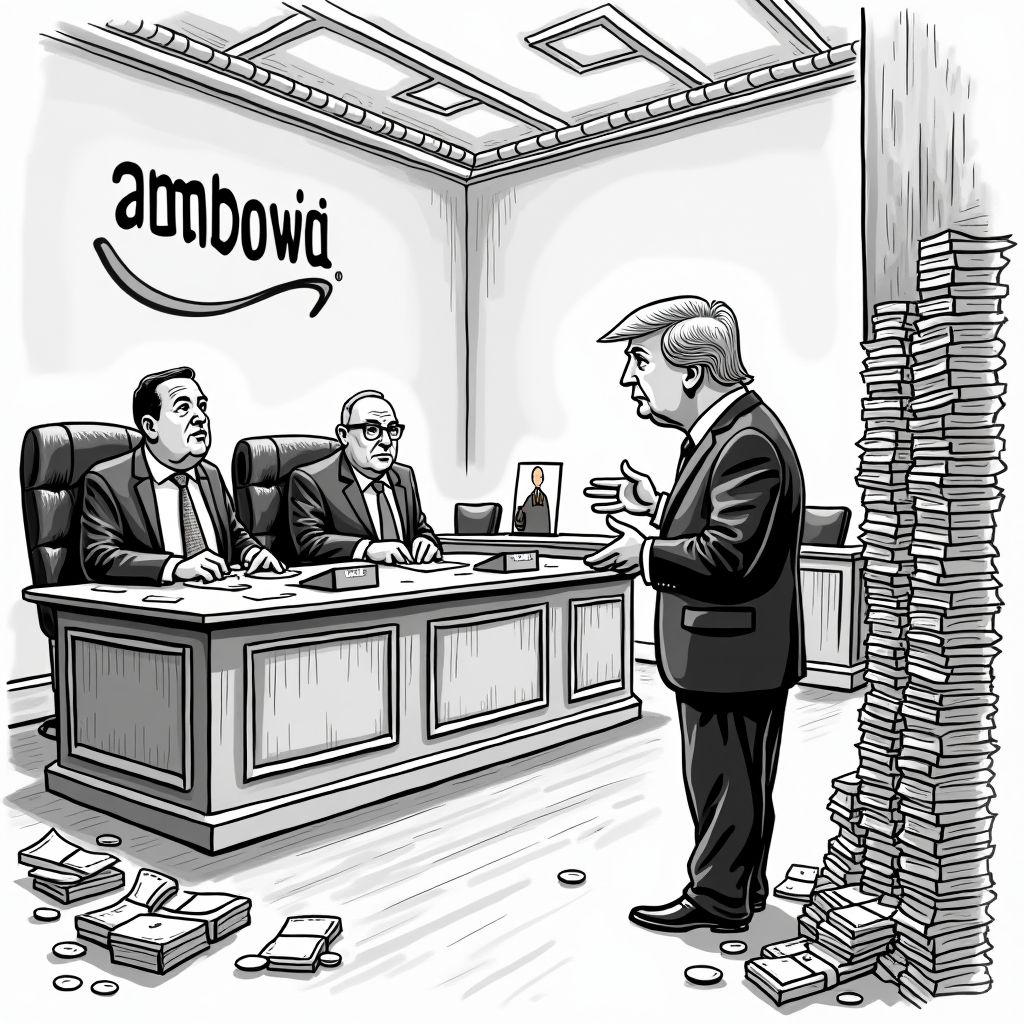
With major federal contractors like Amazon and Microsoft funding President Trump’s $400 million ballroom, Senate Democrats are investigating if these tax-deductible donations secured privileged influence over the administration’s AI policy and federal contracts.
Senate Inquiry Targets Potential Influence Peddling in Trump’s $400 Million Ballroom Renovation
Senate Democrats, led by Senator Elizabeth Warren, have formally launched an inquiry into the financing of the White House ballroom renovation, a project managed by the nonprofit Trust for the National Mall [1]. The investigation seeks to determine whether high-dollar contributions from major corporations secured special access to the administration or influenced policy decisions [1]. This scrutiny comes as demolition continues on the White House East Wing to make way for the 90,000-square-foot facility, a construction effort that President Trump personally surveyed as recently as Friday, January 9, 2026 [1][2].
Escalating Costs and Corporate Entanglement
The financial scope of the project has expanded dramatically since its inception. Initially estimated at $200 million when announced in July 2025, the projected cost has effectively doubled to $400 million, representing a 100% increase in funding requirements [1][2]. This massive capital injection is being provided by 37 private donors, a list that includes technology behemoths such as Amazon, Microsoft, and Alphabet, as well as defense contractors like Lockheed Martin [2]. The timing of these donations has drawn particular attention from lawmakers, who question the correlation between these contributions and the awarding of federal contracts [3].
The Intersection of AI Policy and Philanthropy
A focal point of the Senate inquiry is the synchronization between the administration’s policy initiatives and the fundraising timeline. On July 23, 2025, President Trump launched an “AI Action Plan” designed to ease data center permitting and expand AI export support [2]. Mere days later, on July 31, 2025, the ballroom project was publicly announced [2]. Critics argue that donors such as Microsoft, Palantir, and Amazon Web Services—companies that stand to benefit significantly from the AI Action Plan—are intimately involved in the project while simultaneously holding billions in federal contracts [2].
Legislative Pushback and Hidden Donors
In an effort to curb potential ethical violations, Senator Warren and Representative Robert Garcia have introduced the “Stop Ballroom Bribery Act” [3]. This proposed legislation would prohibit donations from organizations that present a conflict of interest and ban the solicitation of funds by the President, Vice President, and their staff [3]. Additionally, the act seeks to prevent the public recognition of donors until they have been cleared by the directors of the National Park Service and the Office of Government Ethics [3].