The $24,000 Reality Check: Class of 2026 Faces a Steep Drop in Salary Expectations
New York, Wednesday, 6 May 2026.
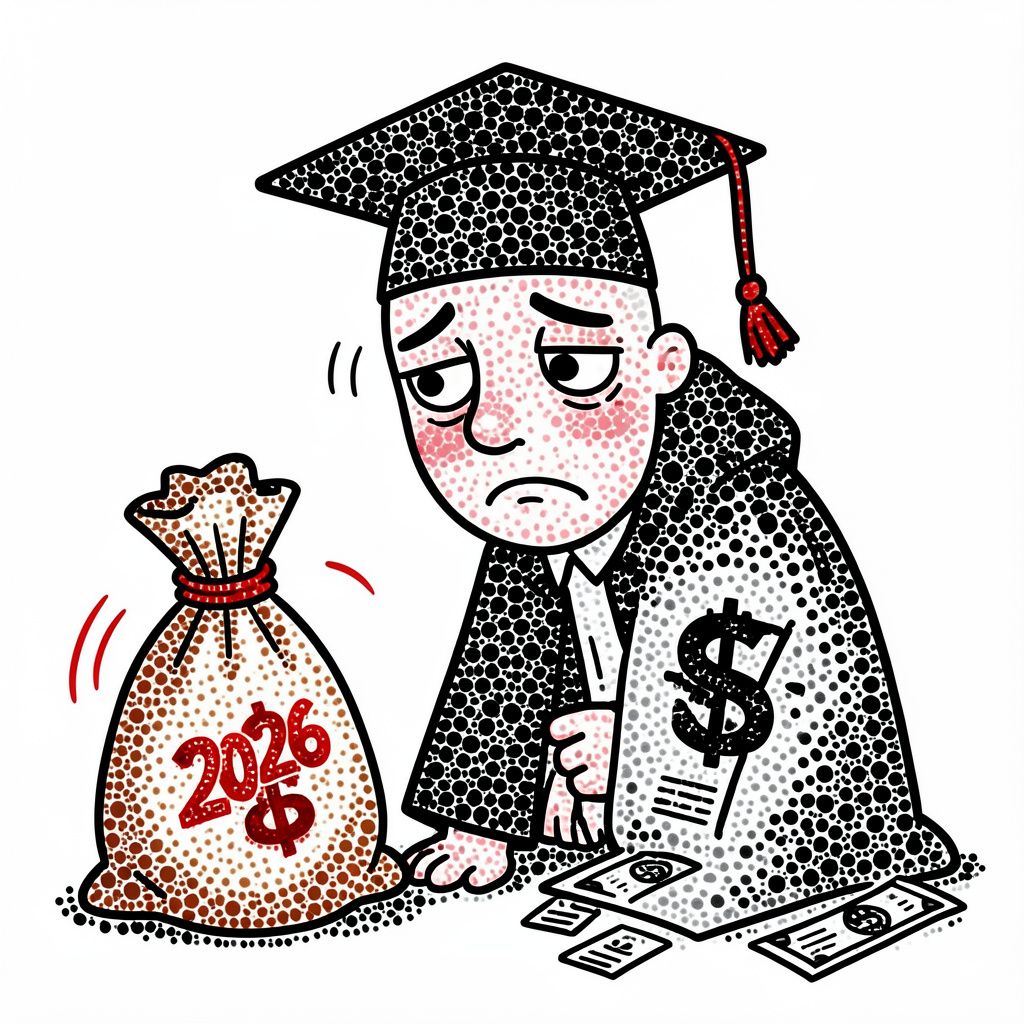
Facing a cooling labor market and 42.5% underemployment, the Class of 2026 is overestimating starting salaries by $24,000. Graduates must recalibrate expectations to secure entry-level corporate roles.
The Disconnect Between Expectations and Reality
More than 3 million new graduates are entering the labor market this year, many of whom are operating under significantly inflated financial assumptions [1][4]. Surveys conducted in early 2026 reveal that college seniors anticipate an average starting salary of approximately $80,000 in their first year post-graduation [1][2][4]. However, the reality of the current market dictates an average starting paycheck of $56,153, creating a stark expectation gap of nearly $24,000 [1][2][4]. This disconnect extends far beyond entry-level roles; students project they will earn an average of $144,889 a decade into their careers, which is 51.683% higher than the actual average midcareer salary of $95,521 [1][4].
Field of Study and the AI Factor
Compensation realities also diverge sharply depending on a graduate’s chosen field of study. The National Association of Colleges and Employers (NACE) Winter 2026 Salary Survey projects that computer science graduates will command the highest average starting salaries at $81,535, representing a 6.9% increase from 2025 [1][2][4]. Engineering graduates follow closely at $81,198 [1][2][4]. Yet, even in these highly technical fields, expectations remain inflated; engineering students, for instance, anticipated starting salaries of $92,452, overestimating their initial market value by nearly 20% [1][4]. Meanwhile, business majors can expect to start around $68,873, and social science graduates face a projected salary decline of 1.7% [2].
A Shift in Generational Priorities
Faced with a cooling labor market and corporate restructuring, the Class of 2026 is demonstrating a psychological shift in its employment priorities. A Monster report published in late April 2026 revealed that 67% of new college graduates are now willing to trade higher compensation for greater job security [1][4]. This pivot toward stability is steering many graduates toward small and medium-sized businesses. According to Gusto payroll data, average starting salaries for the Class of 2026 at these smaller enterprises have risen to $65,734, up from $62,801 the previous year [1][4].
Strategic Recalibration for the Class of 2026
To successfully navigate this environment, human resource experts advise graduates to look beyond base salary and focus on total compensation packages. Candidates are encouraged to negotiate for sign-on bonuses, relocation assistance, guaranteed first-year performance bonuses, and accelerated review cycles [2]. Career advisors emphasize treating the first post-graduate role as an “18-to-24-month skills sprint,” accepting that a slightly lower starting base is vastly preferable to the lifetime earnings lost during a prolonged period of unemployment [2].