Historic Munich Rally Against Iranian Regime Signals Geopolitical Shift
Munich, Sunday, 15 February 2026.
Up to 250,000 demonstrators gathered in Munich on Saturday, overshadowing the annual Security Conference to demand immediate regime change in Tehran. As opposition leader Reza Pahlavi calls for a democratic transition amidst reports of new US naval deployments, this unprecedented mobilization highlights the intensifying instability threatening the current Iranian leadership.
Unprecedented Turnout Defies Expectations
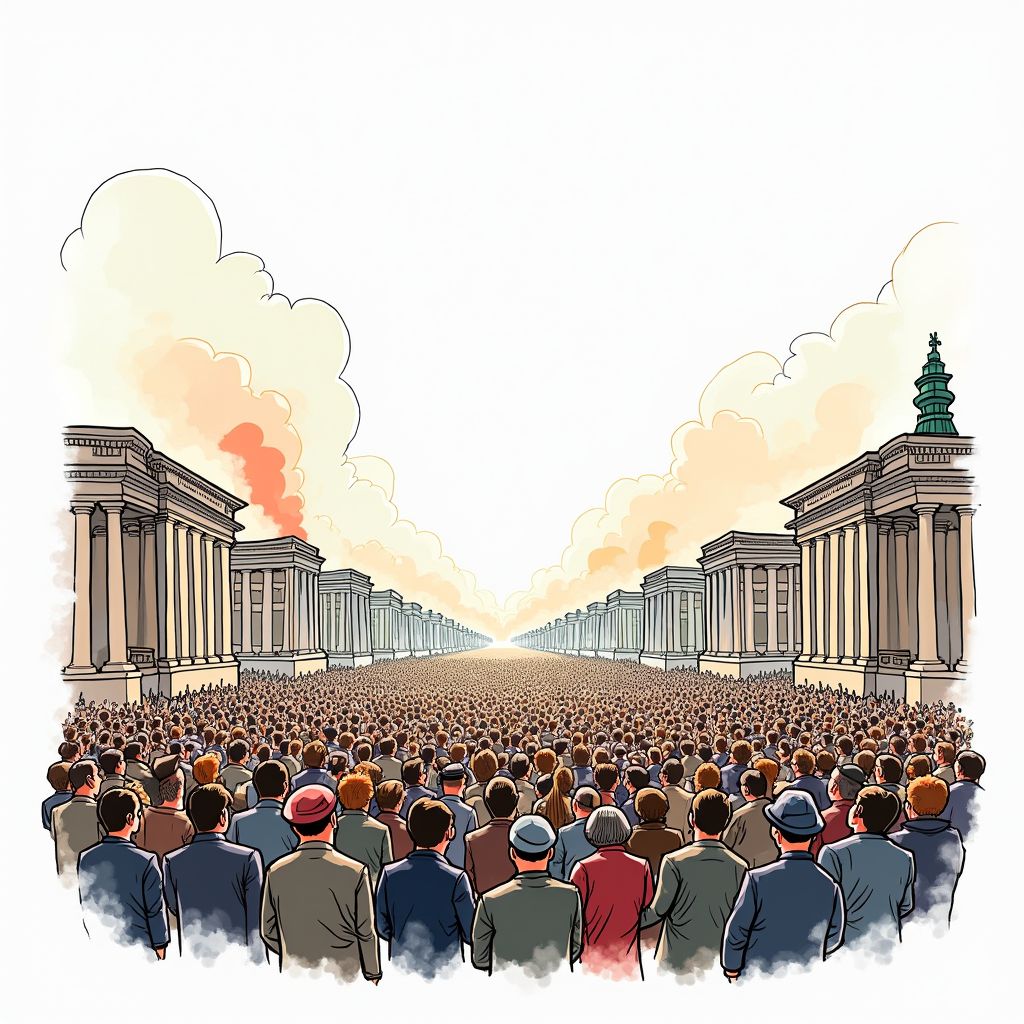
The scale of Saturday’s mobilization at the Theresienwiese fairgrounds significantly exceeded initial projections. While organizers from “The Munich Circle” had registered 100,000 participants, the actual turnout swelled to as many as 250,000 demonstrators according to some estimates [6][8], representing an increase of 150% above expected numbers. Police authorities officially placed the crowd size at approximately 200,000 [1][5], while more conservative estimates cited 80,000 participants [2]. This gathering, described as a “global day of action,” saw Iranians traveling from across Europe to voice their dissent [3][6], creating a visual counter-narrative to the diplomatic proceedings of the Munich Security Conference nearby.
Calls for Transition and International Intervention
Reza Pahlavi, the son of the former Shah, utilized this platform to articulate a specific roadmap for regime change. Addressing the crowds on Friday and Saturday, Pahlavi declared his intention to lead a “transition phase” aimed at establishing a transitional government and holding a referendum [1][6]. He clarified his political ambitions, stating, “I do not seek a title, I do not want to put a crown on my head,” but rather emphasized his goal is to see the day Iranians can elect their own government [8]. Pahlavi also urged world leaders to cease negotiations with the current leadership, arguing that the “mullah regime” is not representative of the Iranian people [1].
The Human Cost of the January Crackdown
The urgency of the protests in Munich is rooted in the brutal suppression of nationwide unrest that occurred in January 2026 [1][5]. The human toll of this crackdown has been severe, though verification of casualty figures remains difficult. The US-based Human Rights Activists News Agency reports that 7,008 individuals were killed [2], while other sources indicate the death toll could be as high as 30,000 following weeks of violence [8]. Additionally, rights groups estimate that more than 53,000 people have been arrested by security forces [2].
Sources
- www.france24.com
- www.timesofisrael.com
- www.instagram.com
- www.youtube.com
- www.instagram.com
- www.br.de
- www.youtube.com
- www.zeit.de