Energy Permitting Bill Under Scrutiny Over Former Pipeline Executive's Role
Washington, Sunday, 8 November 2026.
A bipartisan Senate bill restricting states’ power to block pipelines faces ethics scrutiny after former Williams Companies CEO-turned-senator Alan Armstrong promoted provisions directly benefiting his former firm.
The Bipartisan Push to Fast-Track Pipelines
A bipartisan Senate bill currently awaiting a vote the week of November 9, 2026, seeks to overhaul federal permitting processes for energy infrastructure projects, including natural gas pipelines. The legislation, introduced as the Bipartisan American Affordability and Jobs Act (BAAJA; S. 5653), aims to limit states’ and tribes’ authority to block or impose conditions on projects under the Clean Water Act’s Section 401 water quality certifications. Provisions within BAAJA would restrict judicial review, scale back environmental reviews, and impose strict timelines for permitting decisions, including a 9-month window for water quality permits for new gas pipelines [1][4][5]. The bill’s architects, including Senators Martin Heinrich (D-N.M.) and Mike Lee (R-Utah), argue it would streamline projects like the Constitution pipeline, which has faced decade-long delays [5][alert! ‘The Constitution pipeline’s status remains pending federal approval as of November 2026’].
Senator Armstrong’s Controversial Role
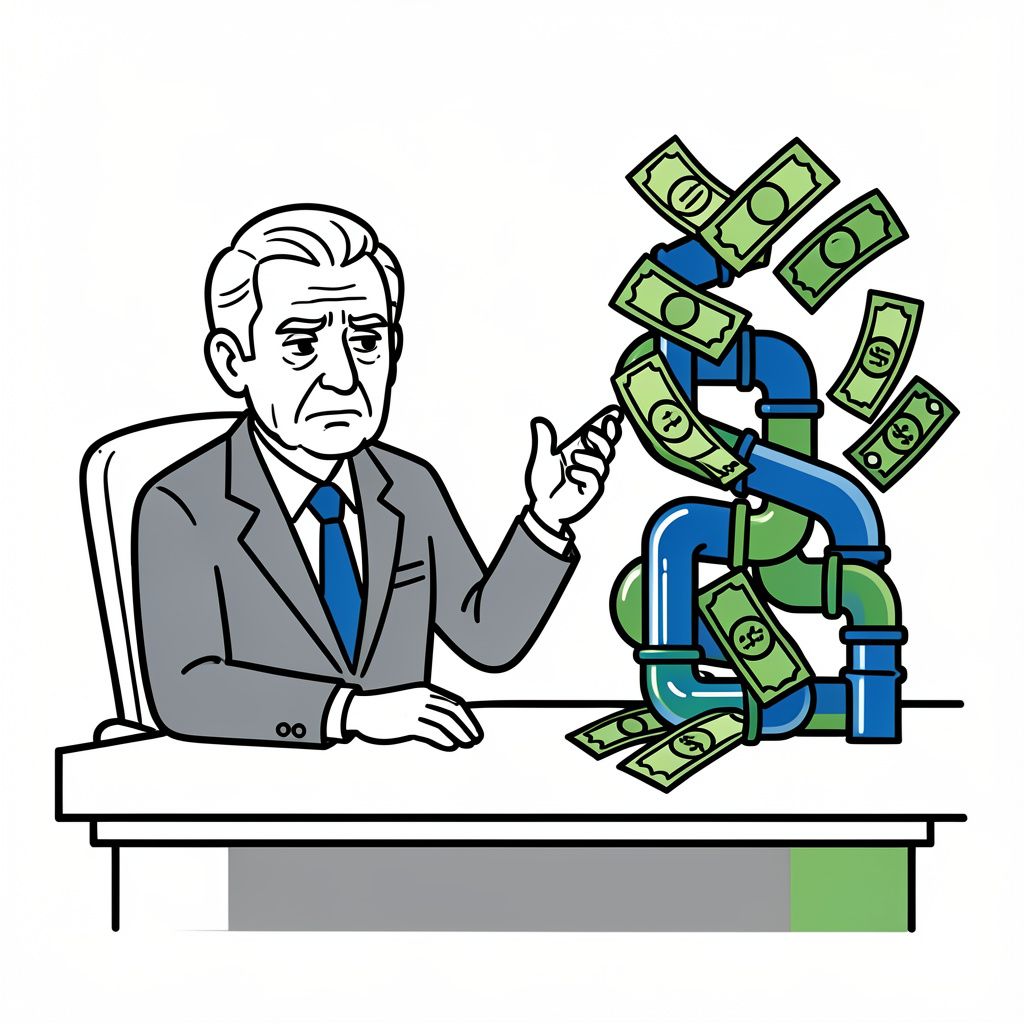
The bill’s provisions restricting state oversight of pipeline projects have drawn sharp scrutiny due to the involvement of Senator Alan Armstrong (R-Okla.), a former CEO and chairman of Williams Companies, a midstream energy giant with a direct stake in pipeline development. Armstrong, appointed to the Senate in March 2026, has been a vocal advocate for provisions that would revive the stalled Constitution pipeline project in New York. Williams Companies, where Armstrong held over 2.7 million shares worth nearly $200 million as of March 2026, has been pushing federal regulators to approve the pipeline after New York denied it a water quality permit in 2016 [1][5]. In October 2026, the U.S. Department of Energy allocated up to $42 million under the Defense Production Act to cover permitting costs for the project, further fueling concerns about conflicts of interest [1][alert! ‘The DOE’s funding allocation does not imply endorsement of the pipeline’s approval’].
Ethical Concerns and Financial Ties
Ethics watchdogs and environmental groups have raised alarms over Armstrong’s financial ties to Williams Companies, which stand to benefit from the bill’s passage. Armstrong reported nearly $69 million in income from Williams since March 2026 and sold between $5.5 million and $26 million in company stock and options during the same period [1]. He also hired former Williams executives to his Senate staff, including T. Lane Wilson, who served as senior vice president and general counsel at Williams while working as Armstrong’s chief of staff in Washington, D.C., from April to July 2026 [1]. Critics, including Donald Sherman, CEO of Citizens for Responsibility and Ethics in Washington, argue that Armstrong’s actions ‘taint a lot of the negotiations’ and raise questions about the ‘pro-fossil-fuel compromise’ that benefits the oil and gas industry [1]. Armstrong’s office has stated he ‘consulted and complied with all Senate ethics rules’ during his transition from private citizen to senator [1].
Industry and Political Backing
The bipartisan bill enjoys support from a broad coalition, including Senate architects, clean energy developers, oil and gas producers, mining operators, and trade unions. The American Petroleum Institute, a leading industry group, has lobbied aggressively for permitting reform, framing it as a necessary step to address energy affordability and grid reliability [3]. Proponents argue that the bill’s provisions, such as limiting litigation to 150 days post-approval and preventing federal permit revocations, would unlock $166 billion in new gas-fired capacity and reduce regional energy price spikes exacerbated by geopolitical conflicts [2][5]. Wood Mackenzie, an energy research firm, estimates that U.S. load growth will rise by 3% from 2026 to 2035, with wholesale power prices increasing by 46% in its base case scenario [2]. However, opponents like Tyson Slocum of Public Citizen warn that the bill ‘gives massive benefits to the oil and gas industry’ and undermines environmental safeguards [1].
Legal and Environmental Pushback
Environmental advocates argue that the bill would ‘de-fang bedrock environmental laws’ such as the National Environmental Policy Act (NEPA), the Endangered Species Act, and the Clean Water Act. The legislation would narrow definitions of water-quality impacts, curtail the EPA’s veto authority over Clean Water Act permits, and shorten Endangered Species Act litigation timelines to the D.C. Circuit Court of Appeals [4]. Michael Gerrard, an environmental law professor at Columbia Law School, warns that the bill would ‘pull NEPA’s principal teeth—the possibility of a court order blocking a project for violating NEPA’ [4]. The bill’s opponents also highlight its potential to exempt routine agency actions under $10 million from NEPA requirements and allow project sponsors to pay fees for expedited reviews, raising concerns about transparency and accountability [5]. As the Senate prepares to vote on BAAJA, the debate underscores a broader tension between energy infrastructure expansion and environmental protection [4][5].
Sources
- insideclimatenews.org
- energynews.pro
- www.hcn.org
- www.everycrsreport.com
- x.com
- insideclimatenews.org
- energynews.pro
- www.hcn.org
- www.everycrsreport.com