Cheap Solar Power Officially Overtakes Nuclear Energy Worldwide
London, Monday, 26 October 2026.
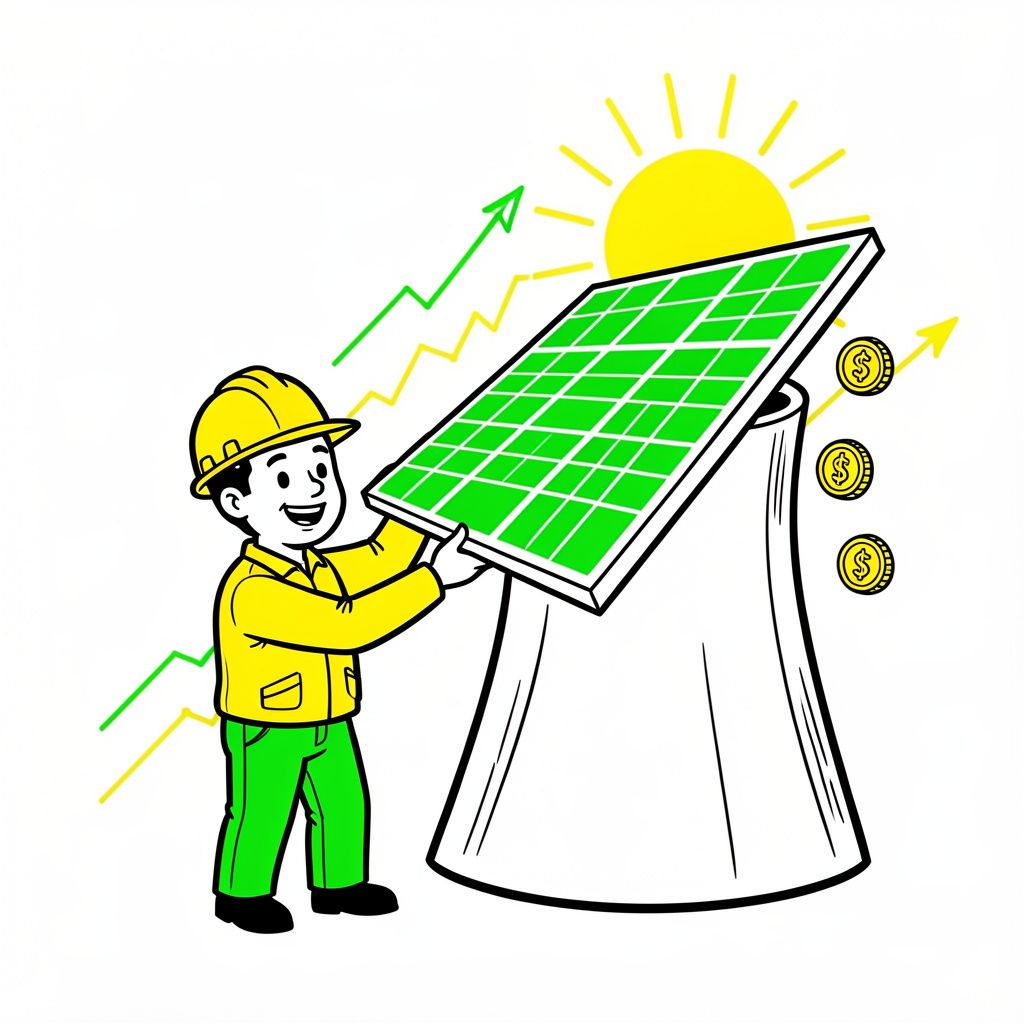
Plummeting panel prices have propelled global solar electricity generation past nuclear output for the first time, marking a massive shift in worldwide infrastructure investments toward low-cost renewable power.
A Historic Milestone in Global Energy
Solar power has officially overtaken nuclear energy as the world’s largest source of electricity generation, according to the World Nuclear Industry Status Report (WNISR) 2026. The milestone, confirmed in October 2026, represents the first time solar electricity generation surpassed nuclear output globally. Wind energy had already exceeded nuclear on a monthly basis in March 2025, followed by solar in April 2025, with at least one of these renewable technologies outproducing nuclear every month from March 2025 through June 2026 [3].
The Economic Drivers Behind Solar’s Explosive Growth
The unprecedented cost decline in solar photovoltaic technology has been the primary catalyst for this structural shift in global energy infrastructure. Panel prices fell dramatically between 2023-2024, dropping well below $100 per panel (£75), enabling 30 to 40 years of electricity generation with minimal input costs [1]. This price deflation has made solar installations dramatically cheaper than conventional alternatives, accelerating capital deployment away from traditional baseload facilities toward renewable energy assets paired with grid-scale storage [1][3]. The International Energy Agency’s Electricity 2026 report forecasts solar PV will generate over 600 terawatt-hours (TWh) annually through 2030, with renewables and nuclear together expected to account for around half of global electricity generation by that time [5].
Global Capacity Shifts and Regional Variations
Global solar capacity grew by 27% in 2025 alone, adding 510 gigawatts (GW) to reach 2,383 GW, while nuclear capacity increased by just 1.5 GW to 399.5 GW [3]. The International Energy Agency Photovoltaic Power Systems Programme (IEA PVPS) estimates even higher solar additions of about 690 GW in 2025 [3]. Solar generation rose 30% in 2025, while nuclear output increased by just 1.1% to 2,703 TWh [3]. China accounted for the majority of this growth, with its nuclear generation growing 7.6%, though output elsewhere fell by 0.2% [3]. Notably, nuclear’s share of global electricity supply dropped to 8.8% in 2025, its lowest level in approximately 45 years [3].
Infrastructure and Market Implications
The rapid expansion of solar capacity has directly resulted in reduced construction of new coal plants, with clean electricity growth driving this transition [1]. Grid-scale storage additions reached 104 GW and 257 GWh in 2025, helping electricity systems manage the variable nature of renewable production [3]. The U.S. Energy Information Administration’s data from August 2026 shows renewable energy sources grew over 10% in electrical generation during the first two-thirds of 2026, while renewables and battery storage are projected to add 82.8 GW of new generating capacity by August 31, 2027 [4]. However, construction delays remain a significant challenge, with nuclear projects taking an average of 10.9 years to complete, and none of the 16 reactors connected between 2023-2025 finishing on schedule [3].
Future Outlook and Policy Considerations
The World Nuclear Industry Status Report 2026 notes that solar and wind collectively outproduced nuclear for multiple consecutive months in 2026, with both technologies individually surpassing nuclear generation in March, April, and May 2026 [3]. The report questions the claimed advantages of small modular reactors, stating their commercial deployment remains uncertain and heavily dependent on public funding [3]. Meanwhile, falling battery costs are expected to further support solar expansion, with annual grid investment needing to increase by roughly 50% by 2030 from current levels of $400 billion to meet forecasted electricity demand [5]. Emerging economies will account for nearly 80% of additional electricity consumption through 2030, with China contributing close to 50% of the increase at an average annual growth rate of 4.9% [5].