Swiss Companies Abandon Trade with Cuba over U.S. Sanction Fears
Bern, Tuesday, 1 September 2026.
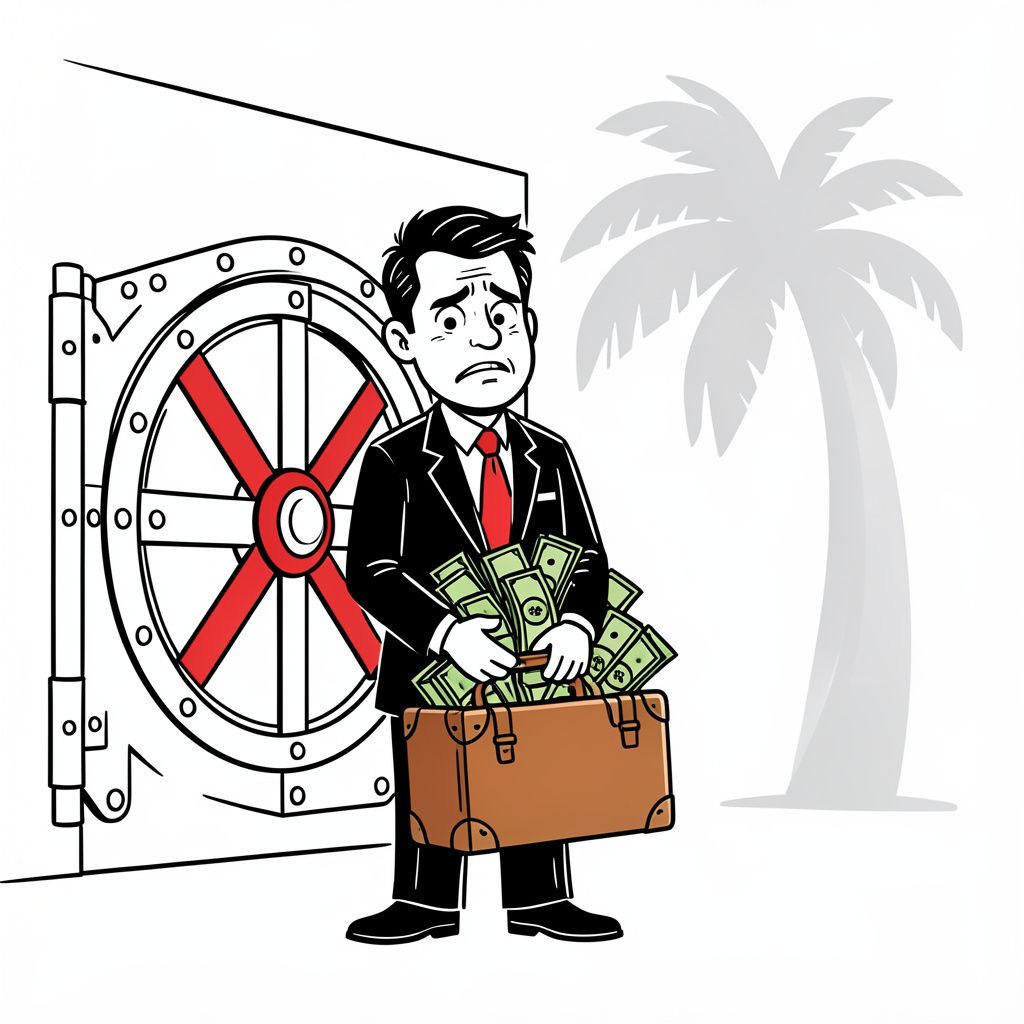
Fear of U.S. secondary sanctions has caused Swiss trade with Cuba to collapse, forcing banks to block payments and leaving remaining businesses resorting to carrying cash in suitcases.
A Drastic Contraction in Bilateral Trade
The commercial landscape between Switzerland and Cuba has deteriorated rapidly over the course of 2026. According to data from Swissinfo and Diario de Cuba, Switzerland’s trade revenue with the island plummeted from over CHF 2.7 million (approximately $3.4 million) in 2025 to barely CHF 1 million in the first half of 2026 [1][3]. This steep decline is mirrored in key export sectors; Swiss watch exports to Cuba fell from CHF 1.4 million in 2025 to just over CHF 357,000 in the first half of 2026, representing a contraction of 74.5% [1][3]. Meanwhile, pharmaceutical exports have virtually vanished, collapsing to under CHF 9,000 during the period from January to June 2026 [1][3].
A Drastic Contraction in Bilateral Trade
This commercial exodus is directly reflected in the dwindling ranks of the Swiss-Cuban Chamber of Commerce (SwissCubanCham). Ursin Mirer, the chamber’s president, noted that membership has shrunk from a historical range of 60 to 70 companies down to approximately 40 active firms [1][3]. Mirer emphasized that companies simply “don’t feel protected” under the current international framework [1][3]. While Swiss development work in Cuba was concluded on March 31, 2023 [1], the remaining private commercial ties are now buckling under the pressure of aggressive economic containment.
The Mechanism of Financial ‘De-risking’
The primary driver behind this trade collapse is not a lack of commercial interest, but rather the process of banking “de-risking” fueled by the fear of secondary U.S. sanctions [1][3]. Financial institutions are increasingly choosing to terminate or heavily restrict transactions linked to Cuba to avoid severe penalties from Washington. As Cedric Ryngaert, a professor of public international law at Utrecht University, explains, the United States claims territorial jurisdiction the moment a transaction has any link to its financial system [1][3]. Ryngaert points out that the mere involvement of an American correspondent bank clearing a transaction in U.S. dollars can expose a European trade operation to U.S. enforcement [1][3].
The Mechanism of Financial ‘De-risking’
Consequently, Swiss companies find it nearly impossible to collect payments from Cuban state entities, even when state banks issue valid invoices, guarantees, or bank orders [1][3]. Historically, businesses relied on regional financial hubs like Panama to route payments to and from the island [1][3]. However, Mirer has confirmed that under intense U.S. pressure, Panama is no longer a viable financial conduit [1][3]. Furthermore, the European Union’s “Blocking Statute”—which theoretically protects European firms from the extraterritorial application of U.S. sanctions—has proven entirely ineffective [1][3]. Banks routinely choose to cut ties with Swiss-Cuban traders rather than risk losing vital access to the lucrative U.S. financial market [1][3].
Real-World Fallout for Tourism and Commerce
The practical consequences of these financial barriers are starkly illustrated by the struggles of remaining Swiss enterprises. Reto Rüfenacht, the owner of the tour operator Caribbean Tours, reported a total collapse in turnover [1][3]. His agency, which previously brought roughly 15,000 tourists to Cuba annually, now sees practically no clients [1][3]. The banking restrictions have become so overzealous that automatic control systems flag and block Rüfenacht’s transactions even when they involve completely unrelated destinations like Mexico or Belize, simply because they are linked to his Cuba-associated firm [1][3]. To pay local suppliers on the island, Rüfenacht has occasionally been forced to physically transport cash to Cuba in a suitcase [1][3].
Real-World Fallout for Tourism and Commerce
This hostile environment has driven almost all Swiss small and medium-sized enterprises (SMEs) to exit the Cuban market entirely [1][3]. The only entities capable of enduring these hurdles are large multinational conglomerates, such as Nestlé and Roche, which possess the compliance infrastructure and diversified revenue streams necessary to navigate the sanctions landscape [1][3]. For smaller players, revitalizing trade would require establishing robust legal certainty, genuine protection for foreign companies, and resolving underlying currency issues—conditions that currently seem far out of reach [1][3].
Geopolitical Asphyxiation and Cuba’s Reform Efforts
The escalation of Swiss corporate anxiety coincides with a concerted push by the U.S. government to intensify economic pressure on Cuba. In August 2026, the U.S. administration shifted further toward economic containment, establishing a dedicated CIA Cuba task force on August 5, 2026, to create political divisions [2]. This was quickly followed by targeted sanctions. On August 8, 2026, U.S. Secretary of State Marco Rubio announced sanctions targeting five Cuban entities and eight individuals, followed by another round on August 20, 2026, targeting the Cuban Institute of Friendship with the Peoples, its leadership, eight state-owned companies, and the ministry of construction [2]. Rubio stated that the objective of these measures is to teach Cuban leadership that “there are no escape valves” [2].
Geopolitical Asphyxiation and Cuba’s Reform Efforts
This economic pressure, which includes a de facto naval blockade, has contributed to six nationwide blackouts in Cuba during 2026 [2]. Nine United Nations special rapporteurs condemned the deepening humanitarian crisis in August 2026 [2]. In a bid to survive this economic stranglehold, Cuba is preparing to implement unprecedented economic reforms [4]. The Cuban government plans to loosen some of its tightest communist controls by allowing private companies to trade directly with foreign businesses, granting foreign investors greater freedom to hire workers, and expanding their ability to develop real estate on the island [4]. However, as long as Swiss financial institutions prioritize U.S. market access over Cuban engagement, these domestic reforms may do little to restore Swiss-Cuban commercial relations.