Trump Plans to Nominate Todd Blanche as Permanent Attorney General
Washington, D.C., Wednesday, 3 June 2026.
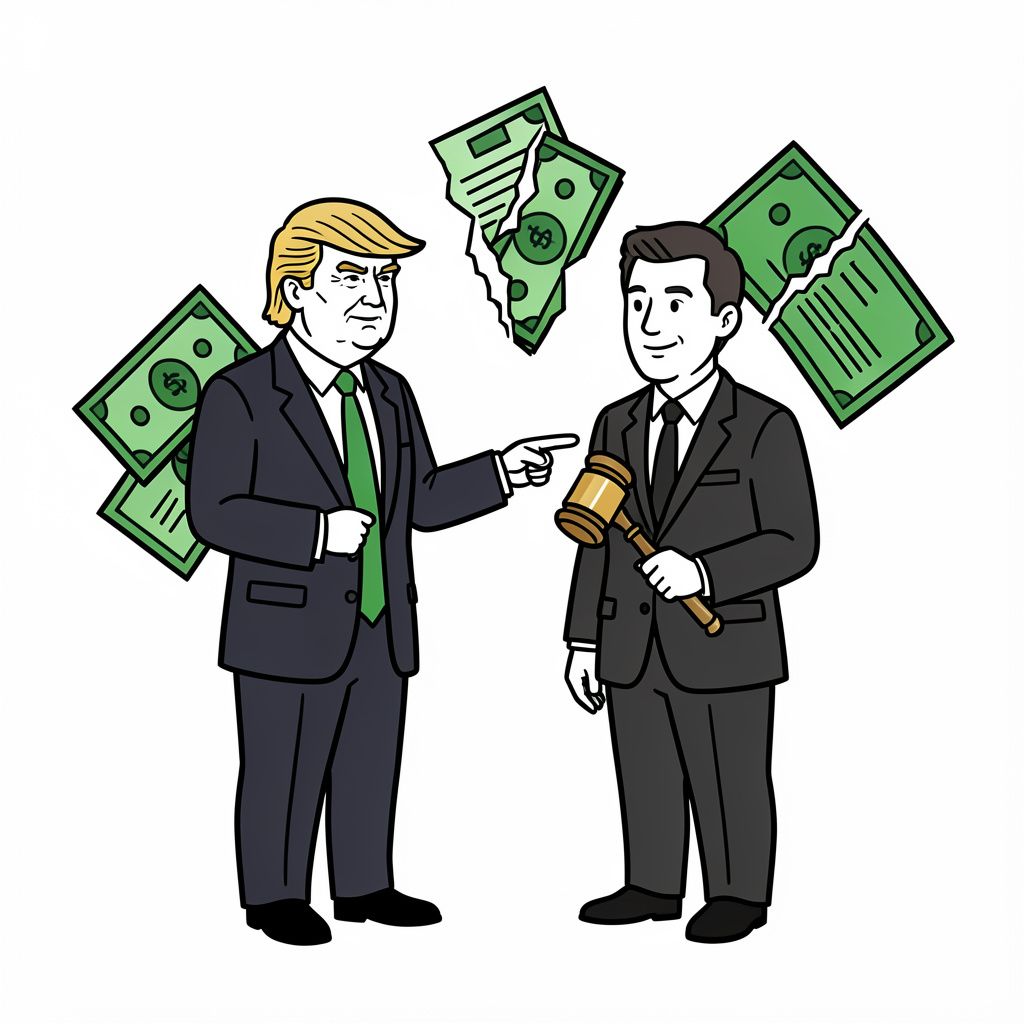
President Trump will formally nominate Todd Blanche as permanent Attorney General, cementing his judicial strategy just a day after Blanche abruptly scrapped a controversial $1.8 billion compensation fund.
Solidifying the Justice Department’s Trajectory
On Wednesday, June 3, 2026, President Donald Trump confirmed during an interview on the “Pod Force One” podcast that he expects to permanently appoint acting Attorney General Todd Blanche to lead the Department of Justice [1][2]. Blanche assumed the acting role in April 2026 following the dismissal of former Attorney General Pam Bondi on April 2, 2026 [2][3]. When asked if he had decided on Blanche’s permanent status, Trump affirmed the choice, praising Blanche for doing a “very good job” and noting his long-standing relationship with his former personal lawyer [2][3]. The president also dismissed speculation that Florida Governor Ron DeSantis was in consideration for the position, despite commending DeSantis’s performance as a governor [2].
For financial markets and corporate legal divisions, a permanent Blanche appointment signals a continuation of the administration’s current regulatory and enforcement strategies [GPT]. Under Blanche’s leadership, the Justice Department has aggressively pursued the administration’s priorities, initiating criminal cases against the Southern Poverty Law Center on April 21, 2026, and bringing a second indictment against former FBI Director James Comey on April 28, 2026 [3]. The Comey indictment notably includes accusations of threatening to assassinate the president via a cryptic photograph of seashells reading “86 47” [2]. Additionally, the DOJ has escalated investigations into former CIA director John Brennan, removed press releases regarding January 6 riot prosecutions, and maintained agreements preventing the Internal Revenue Service (IRS) from auditing Trump and his family [1].
The Demise of the Anti-Weaponization Fund
The confirmation of Blanche’s impending nomination arrived just one day after a significant fiscal and political pivot regarding a controversial compensation program. On Tuesday, June 2, 2026, Blanche testified before a House Appropriations subcommittee that the DOJ would not proceed with a proposed $1.8 billion fund—also reported as a specific $1.776 billion figure—designed to compensate victims of alleged government “weaponization” [2][3]. The scuttled fund had its roots in a settlement stemming from Trump’s $10 billion lawsuit against the IRS over the leaking of his tax records [2][3].
The proposed payouts had drawn fierce bipartisan opposition, largely because the parameters did not explicitly exclude individuals convicted in the January 6, 2021, attack on the U.S. Capitol [3]. Furthermore, the controversy surrounding this potential “slush fund” threatened to derail a massive $72 billion funding package earmarked for the administration’s immigration crackdown [3]. To put the fiscal scale into perspective, the $1.8 billion fund represented exactly 2.5 percent of the broader $72 billion immigration package it threatened to compromise [3]. Despite Blanche’s congressional testimony halting the program, President Trump publicly defended the fund on June 3, stating that those targeted by a “crooked government” had been decimated and deserved reimbursement [1][3].
Looking Ahead to Senate Confirmation and 2028
Blanche’s path to permanent status will require Senate confirmation before his acting term expires in late October 2026 [3]. Republicans currently hold a narrow 53-47 majority in the chamber [3]. This legislative arithmetic means the administration can afford few defections, making the cancellation of the divisive $1.8 billion fund a potentially calculated move to appease moderate lawmakers and secure the larger $72 billion immigration package [alert! ‘Analysis of political strategy based on funding package threats mentioned in sources’][3].
Beyond domestic judicial appointments, Trump used the June 3 podcast broadcast to weigh in on future political and international developments. Amid reports that he had soured on Vice President JD Vance as his singular successor, Trump actively promoted a joint 2028 Republican presidential ticket featuring Vance alongside Secretary of State and National Security Adviser Marco Rubio, describing the duo as “very hard to beat” [1]. On the international front, the president also confirmed details of a heated, expletive-laden phone call with Israeli Prime Minister Benjamin Netanyahu regarding Israeli military actions in Lebanon, demonstrating the administration’s ongoing, volatile engagement with Middle Eastern geopolitics [1].