US Lifts Russian Fuel Sanctions to Curb Rising Energy Costs
Washington, Saturday, 10 October 2026.
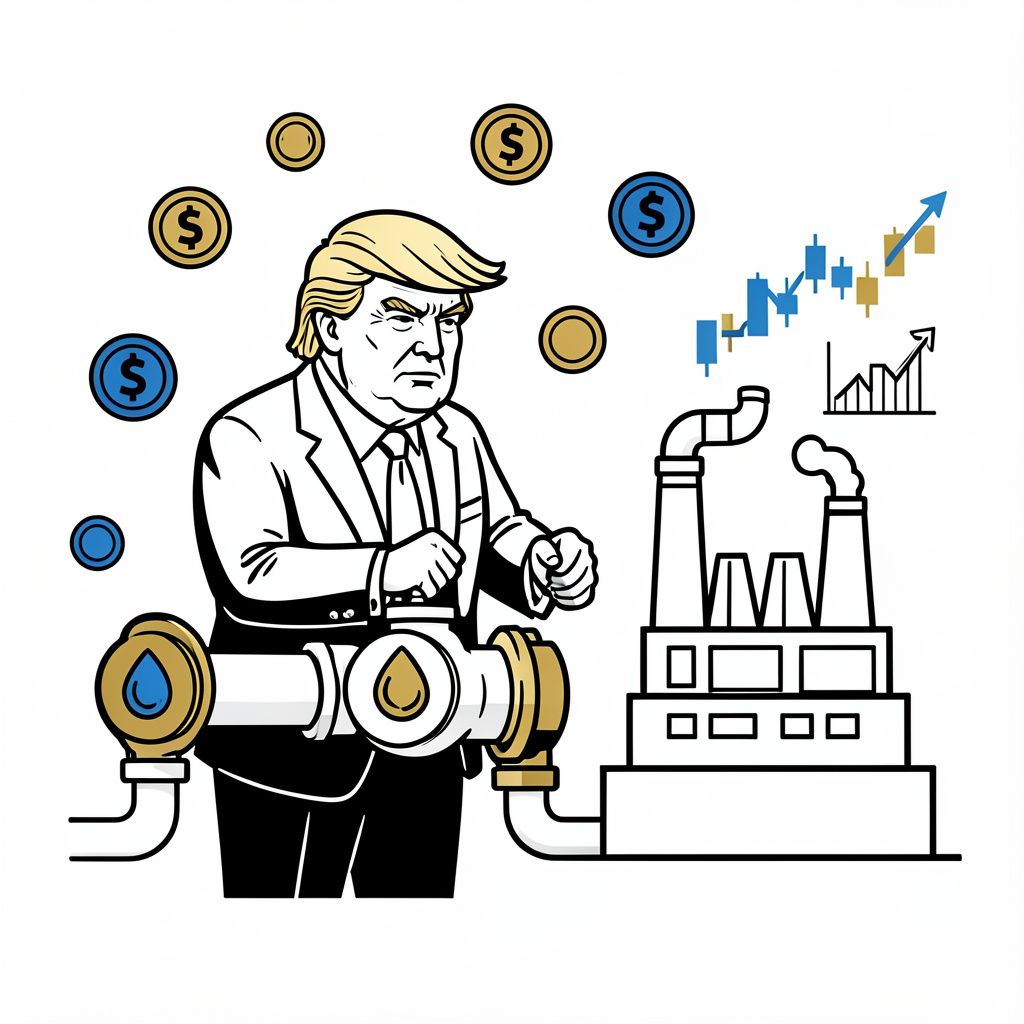
President Trump suspended sanctions on Russian diesel to ease surging domestic energy prices, directly linking high U.S. fuel costs to Ukrainian drone strikes against Russian oil refineries.
Trump Calls for Ukrainian Leadership Change Amid Energy Deal Fallout
On Saturday, 10 October 2026, U.S. President Donald Trump publicly demanded a change in Ukraine’s leadership, stating it is time for the nation to get a new president [2][3]. This statement marks a significant escalation in diplomatic tensions, following Trump’s announcement on Friday, 9 October 2026, regarding a deal to purchase Russian diesel fuel [3][4]. The President argued that Ukrainian President Volodymyr Zelenskyy has failed to negotiate an end to the war and is responsible for elevated U.S. diesel prices due to strikes on Russian energy infrastructure [3][4]. This development updates previous reporting on Russian strikes in Ukraine that occurred following the initial news of the energy deal [9]. Trump’s comments were made outside the White House, where he emphasized that Zelenskyy could have settled the war multiple times but chose not to [4].
Energy Market Volatility and Policy Shifts
The Trump administration lifted sanctions on Russian diesel on 9 October 2026, permitting the import of 300,000 tons of diesel to address rising energy costs [4][6]. Current U.S. diesel prices average $6.28 per gallon, an increase from $5.94 in September 2026 and $3.68 in October 2025 [6]. The year-over-year price increase represents a significant surge in energy costs for American consumers 70.652 [6]. Trump linked these costs directly to Ukrainian military strategy, claiming attacks on Russian refineries create a world problem affecting farmers and ranchers [3][7]. The agreed supply schedule involves an immediate delivery of over 272,100 tonnes, followed by 453,500 tonnes in November 2026 [1][5].
Diplomatic Reactions and Strategic Disagreements
President Zelenskyy condemned the deal, calling it a weak decision by strong partners and a birthday gift to Putin [2][4]. Ukrainian officials argued that increased Russian export revenue would be used to manufacture weapons and recruit mercenaries [4]. In the U.S., Senate Minority Leader Chuck Schumer labeled the agreement a deal with the devil, while Representative Madeleine Dean characterized it as a desperate attempt to mitigate political consequences [4]. U.S. mediators Steve Witkoff and Jared Kushner had previously informed Ukrainian negotiators in Miami on 2 October 2026 that Trump planned to lift sanctions due to Ukraine’s refusal to cease attacks on refineries [5]. A U.S. official noted that Zelensky is misreading the room by continuing to hit refineries, eroding goodwill built over the last six months [5].
Escalation on the Ground and Future Outlook
While diplomatic friction mounted, Russian aerial bombs struck residential buildings in the Zaporizhzhia region on 10 October 2026 [1][6]. Casualty reports vary, with Ukrainian officials stating at least 15 people were killed, while other reports suggest the toll could be at least 20 [1][3]. Over the four-day period leading up to 10 October 2026, Russian bombardments have killed more than 60 people in Ukraine [1]. Looking ahead, EU foreign affairs chief Kaja Kallas stated that European foreign ministers intend to approve the largest set of sanctions on Russia since the start of the full-scale invasion on 12 October 2026 [6]. U.S. mediators are considering trips to Moscow and Kyiv the week of 12 October 2026 to discuss peace proposals, though the status of these plans remains uncertain following recent diplomatic friction [5].
Sources
- www.cbc.ca
- www.axios.com
- apnews.com
- thehill.com
- www.axios.com
- www.bbc.com
- www.nytimes.com
- www.facebook.com
- wsnext.com