Why New York Contractors Face Full Liability for Falls on Home Renovations
New York, Friday, 14 August 2026.
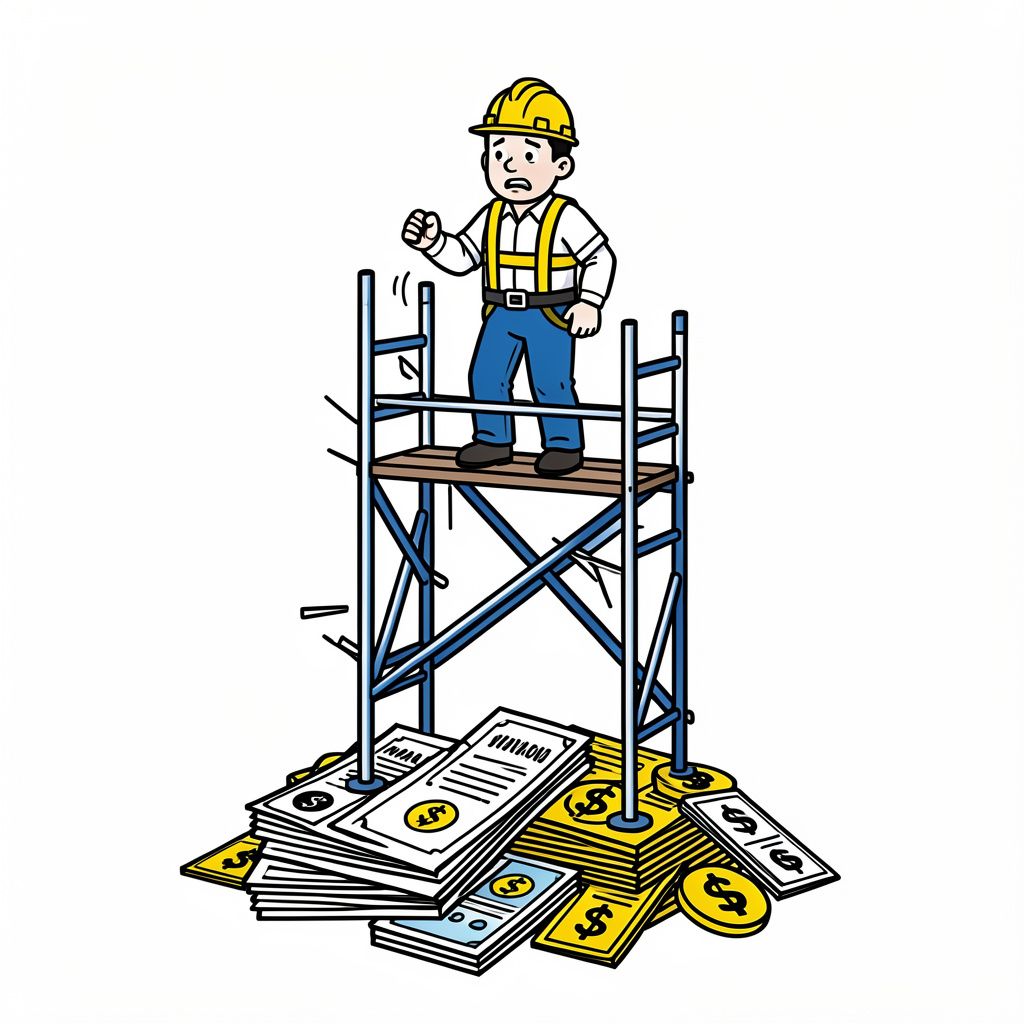
New York’s Scaffold Law holds general contractors fully liable for worker falls, even when single-family homeowners are exempt, driving up legal risks and insurance costs statewide.
Strict Liability Under Labor Law Section 240
New York’s Labor Law Section 240, commonly known as the Scaffold Law, imposes absolute liability on property owners and general contractors for gravity-related construction injuries [1][4]. While exemptions exist for owners of one- and two-family homes, these protections do not extend to general contractors or subcontractors working on the property [1]. Legal experts confirm that if a safety device fails to protect a worker from a fall, liability attaches regardless of whether negligence can be proven [3]. This legal standard remains unique among American jurisdictions, preventing the use of comparative fault defenses even if a worker skips safety measures [5]. As of August 2026, law firms continue to advise that the homeowner exemption shields owners, not contractors, maintaining high litigation risks for construction entities [1].
Construction Safety Data and Fatalities
Recent safety data highlights the severity of elevation-related hazards in the construction sector. The U.S. Bureau of Labor Statistics reported 370 fatal construction and extraction falls, slips, and trips nationwide in 2024, a decrease from 400 in 2023 -7.5 [1]. In New York City, the Department of Buildings recorded 320 construction-related injuries and 10 worker deaths across the five boroughs during 2025 [1]. Manhattan led all boroughs with 184 construction-related incidents and 147 injuries in 2025, with falls identified as the primary cause of citywide construction injuries and fatalities [2]. A fatality in Queens in July 2025 involved a worker installing solar panels without safety equipment, illustrating ongoing compliance gaps [1].
Economic Impact and Insurance Costs
The financial implications of the Scaffold Law extend beyond litigation to insurance premiums and project costs. Critics argue the law, dating back to 1885, adds an invisible tax to every job in the city, contributing to construction insurance being the most expensive liability law in the country [5]. General contractors and liability insurers operating in New York face ongoing exposure to severe litigation risks and rising insurance premiums across residential renovation, roofing, and solar installation projects [1]. The combination of absolute liability, pure comparative negligence rules, and no statutory cap on damages creates a highly plaintiff-friendly environment that influences economic planning for developers [4][5].
Current Legal Guidance for Workers
Legal professionals continue to emphasize documentation and immediate action following construction site accidents. As recently as August 12, 2026, law firms posted advisories stating that property owners and general contractors are liable if a safety device fails, regardless of the equipment type [3]. Workers are advised to photograph the ladder, roof line, and tie-off points, and to secure the contractor’s full company name before evidence disappears [1]. Post-accident protocols include notifying the employer, calling emergency services, and securing all medical records for potential workers’ compensation or third-party liability claims [2]. Free consultations remain available for injured workers, operating on a contingency fee basis where no fee is charged unless the case is won [3][5].