Trump Threatens Substantial Retaliation Over Canada's Proposed Trade Deal with China
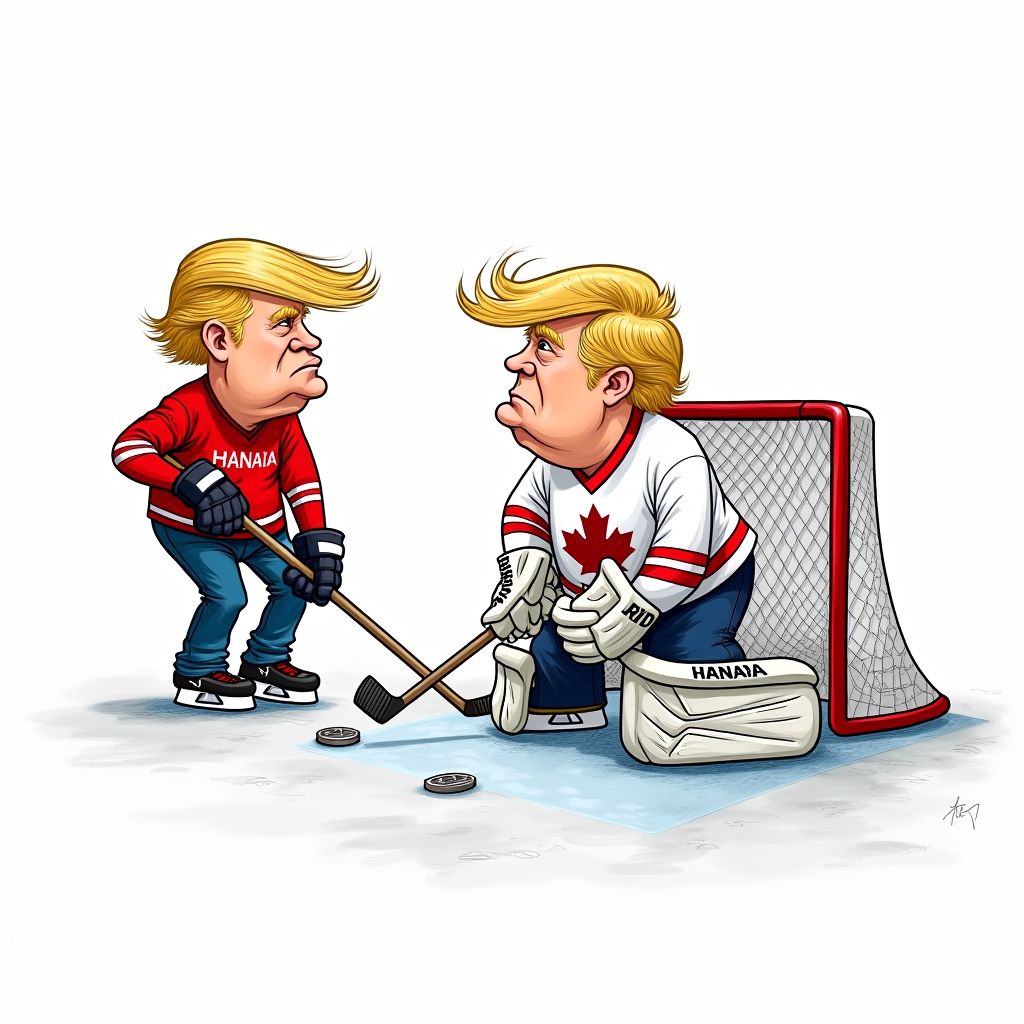
Washington D.C., Monday, 2 February 2026.
President Trump warns of a “substantial response” to Ottawa’s Beijing pact, arguing the deal would allow China to “take over” Canada and—in a stark warning—end Canadian ice hockey.
Ultimatum on Air Force One
Speaking to reporters aboard Air Force One on Saturday, January 31, Republican President Donald Trump escalated tensions with Ottawa regarding its burgeoning economic pivot toward Beijing. President Trump explicitly warned that the United States would mount a “very substantial” response should Canada proceed with enacting the trade agreement recently negotiated with China [1][7]. Framing the geopolitical stakes in existential terms, the President argued that the deal would result in a loss of sovereignty, stating, “We don’t want China to take over Canada. And if they make the deal that he’s looking to make, China will take over Canada” [1][2].
Details of the Contested Deal
The friction stems from an agreement reached earlier in January 2026 between Prime Minister Carney and Chinese President Xi Jinping, designed to reduce Canada’s economic reliance on the United States amidst ongoing trade disputes [3][8]. The pact focuses on specific commodity and automotive sectors. Notably, China is set to slash tariffs on Canadian canola products—previously Canada’s largest market for the seed—from 84% down to approximately 15% by March 1, 2026 [3][8]. This represents a massive tariff reduction of roughly 82.143 percent, signaling a significant reopening of Chinese markets to Canadian agriculture.
Shifting Global Alliances
The standoff between Washington and Ottawa is symptomatic of a broader trend among traditional U.S. allies who are increasingly exploring economic opportunities with Beijing following trade clashes with the Trump administration [8]. Prime Minister Carney is not alone in this pivot; U.K. Prime Minister Keir Starmer recently visited Beijing to repair ties, and German Chancellor Friedrich Merz is scheduled to visit China later this month [8]. Additionally, Finnish Prime Minister Petteri Orpo has joined the list of European leaders meeting with President Xi, suggesting a coordinated diversification of trade partnerships by Western nations in response to current U.S. trade policies [8].