Global Economy Faces Vulnerability as Emergency Fuel Reserves Drop
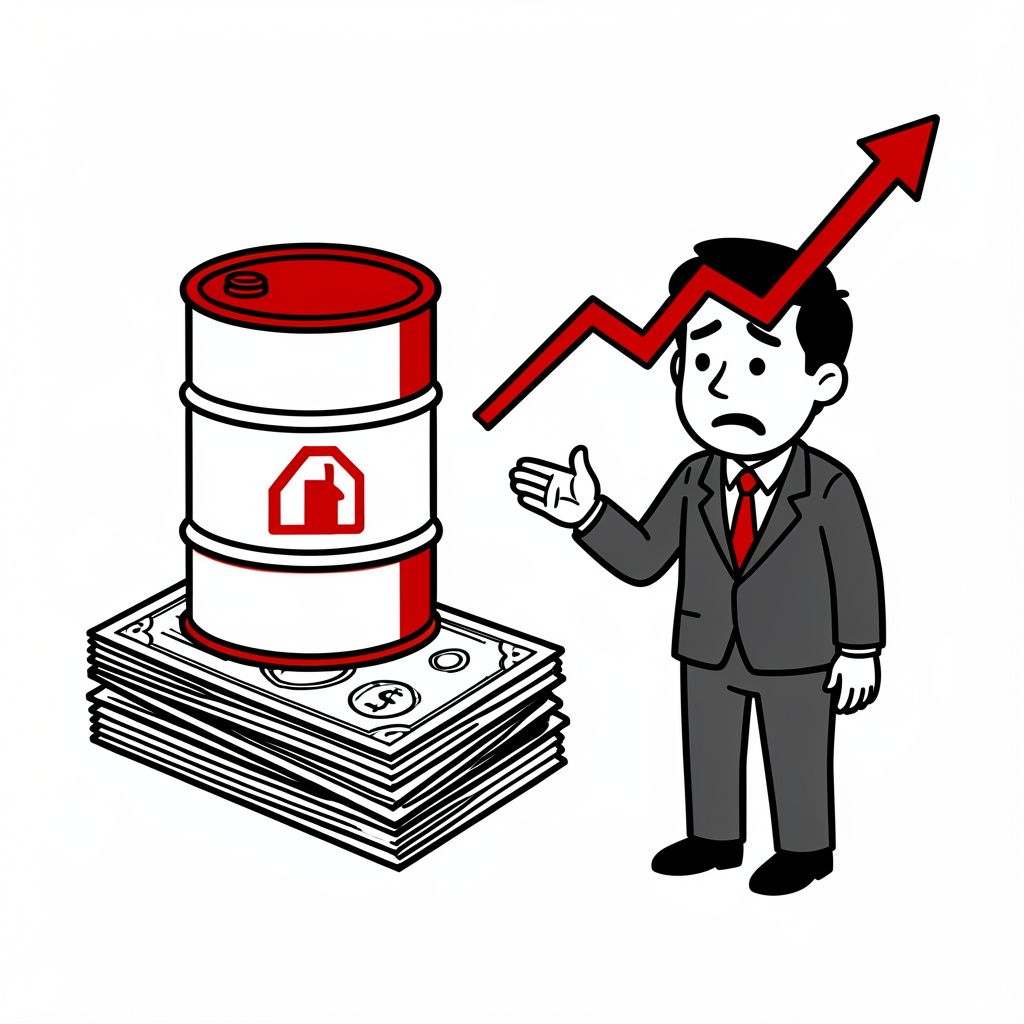
Washington, Tuesday, 13 October 2026.
The International Monetary Fund warns global economic resilience is nearing its limit, as depleted strategic oil reserves—with U.S. stocks at a 1982 low—threaten stability against future supply shocks.
Fiscal Buffers Depleting Amid Modest Growth Upgrade
The International Monetary Fund released its World Economic Outlook report on October 13, 2026, revealing a global economy navigating narrow pathways between growth and instability [1][2]. While the multilateral lender upgraded the global growth forecast to 3.1% for 2026, up from 3.0% in July 2026, this represents a 3.333 percent increase that masks underlying fragility [1][3]. Advanced economies are projected to grow by 2.1% in 2026, slowing to 1.9% in 2027, indicating that current momentum may not be sustainable without policy intervention [3]. IMF Managing Director Kristalina Georgieva emphasized that while resilience has been observed, it is reaching its limits due to constrained fiscal spaces and high debt levels [1][3].
Energy Reserves at Critical Lows
A primary concern highlighted in the report is the depletion of strategic energy stocks, with the U.S. Strategic Petroleum Reserve reported at its lowest level since 1982 [1][5]. Global oil reserves are decreasing by approximately 2.7 million barrels per day, and Gulf crude exports in September 2026 averaged only 88% of pre-conflict levels [2]. The International Energy Agency held a meeting of member governments on October 7, 2026, to discuss emergency oil stock releases, underscoring the urgency of the supply situation [1]. The IMF warned that without shoring up supply capacity and replenishing policy buffers, additional geopolitical shocks could transmit rapidly through prices and supply disruptions [1].
Inflationary Pressures and Interest Rates
Inflation remains a persistent challenge, with global inflation projected at 4.7% for 2026 and revised up to 4.1% for 2027 [1][4]. In Australia, the Reserve Bank delivered its fourth consecutive interest rate hike on September 29, 2026, following discussions on escalated Middle East conflict and oil prices exceeding August forecasts [4]. The IMF modeled a scenario where oil prices rise by US$30, which could add approximately 0.99 percentage points to headline inflation in affected economies [4]. Such price increases threaten to erode consumption and investment, particularly as long-term interest rates weigh on economic activity [1].
Geopolitical Scenarios and Future Risks
Geopolitical tensions continue to skew risks to the downside, with the IMF estimating the Strait of Hormuz may not reopen until March 2027 [2][3]. A prolonged stalemate or further escalation in the Middle East could push global oil prices to US$130 per barrel from the fourth quarter of 2026 to the first quarter of 2027 [4]. Additionally, while AI-driven investment provided a demand impulse in the first half of 2026, the IMF warns of potential financial fragility if productivity gains fail to materialize [2]. Finance ministers and central bank governors meeting in Bangkok from October 12 to October 16, 2026, are tasked with addressing these compounding vulnerabilities [1][3].