Middle East Oil Routes Face Uncertainty as the White House Abandons Iran Diplomacy
Washington, Friday, 13 November 2026.
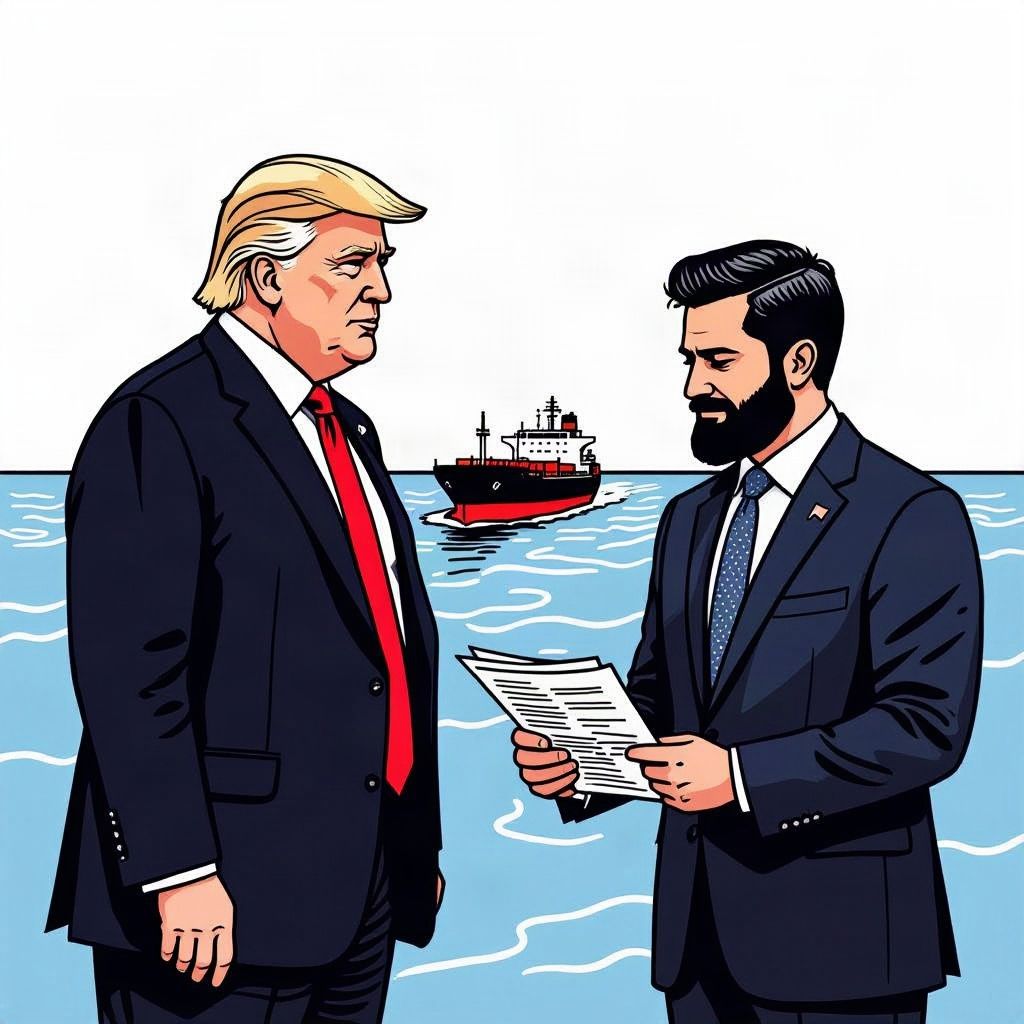
President Donald Trump halted peace negotiations with Iran, claiming total control over the vital Strait of Hormuz while redirecting Vice President JD Vance toward domestic corruption enforcement.
Trump’s abrupt end to Iran diplomacy reshapes regional power dynamics
President Donald Trump’s November 12, 2026 declaration that the United States no longer requires a diplomatic agreement with Iran marks a seismic shift in Middle East policy, abruptly halting negotiations led by Vice President JD Vance just days after the U.S. midterm elections handed control of Congress to Democrats [1][2][4][6]. The decision follows a months-long conflict that began in February 2026 with joint U.S.-Israeli airstrikes on Iranian targets, a campaign that closed the Strait of Hormuz and triggered a surge in global oil prices [2][6]. Trump’s rhetoric—asserting American control over Iranian assets and the Strait—signals a preference for sustained economic pressure over negotiated settlement, a stance he reinforced during a November 11, 2026 White House briefing with Qatar’s Prime Minister Sheikh Mohammed bin Abdulrahman Al Thani [2][6].
Vance’s demotion: From Iran negotiator to domestic political enforcer
Vice President JD Vance, who had led a failed June 2026 peace initiative and engaged in nearly daily mediation talks with regional intermediaries including Pakistan’s army chief Asim Munir and Qatar’s prime minister, was reassigned by Trump to combat alleged corruption in Democratic-led states and cities—a portfolio Vance himself has tied to the GOP’s midterm losses [1][2][4][6][8]. Vance’s public admission that the Iran war ‘was the reason we lost’ the November 3, 2026 elections, which cost Republicans control of both the House and Senate, underscores the political toxicity of the conflict for the Trump administration [1][2][4][8][10]. Trump’s Truth Social post directing Vance’s pivot cited ‘Massive Corruption and Crime taking place in Democrat run Cities and States’ such as Minnesota, California, and Illinois, framing the move as a domestic reset following electoral defeat [3][4][10].
Regional instability collides with energy market fragility
The White House’s abandonment of diplomacy arrives amid escalating maritime violence in the Persian Gulf, where British military reports confirmed two oil tankers were struck by projectiles within 48 hours of Trump’s announcement—one on November 10 in the Persian Gulf and another on November 11 near Ras al-Khaimah in the Strait of Hormuz [5]. The incidents compound risks for the 21 million barrels of oil daily transiting the strait, which accounts for approximately 20% of global seaborne petroleum trade [GPT]. While Trump has framed U.S. control of the Strait as ‘total’—bolstered by naval escorts and regional partnerships—analysts warn that the absence of diplomatic channels increases the likelihood of miscalculation in a corridor already roiled by proxy conflicts and asymmetric attacks [2][5][6].
Economic and geopolitical reverberations for U.S. allies and adversaries
The Trump administration’s strategy now hinges on maintaining economic sanctions, port blockades, and naval patrols while delegating domestic enforcement to Vance—a division of labor that mirrors the president’s stated intent to ‘strangle the Iranian regime’ without further military escalation [5][6]. Yet Iran’s chief negotiator and parliament speaker Mohammad Bagher Qalibaf has warned that Tehran remains ‘fully prepared’ for war if diplomacy fails, complicating calculations for European allies and Asian energy importers [5]. In Washington, Democrats preparing to assume congressional oversight in January 2027 have signaled potential investigations into Trump’s business dealings, adding another layer of uncertainty to U.S. policy coherence [5][8]. For multinational corporations, the abrupt policy reversal demands scenario planning: from heightened insurance premiums for Gulf transits to contingency strategies for supply chain disruptions in a region where geopolitical risk premia were already elevated [GPT].
Sources
- www.usatoday.com
- www.theguardian.com
- www.politico.com
- apnews.com
- www.nytimes.com
- www.axios.com
- www.cnn.com
- www.washingtonpost.com