The 'Bull Market Genius' Trap: How Years of Bailouts Distorted Investor Risk Perception
New York, Sunday, 21 December 2025.
Analysis reveals how 15 years of policy support created a “moral hazard,” deluding investors into mistaking market momentum for skill—a trap that even Benjamin Graham fell into.
The Psychology of the Safety Net
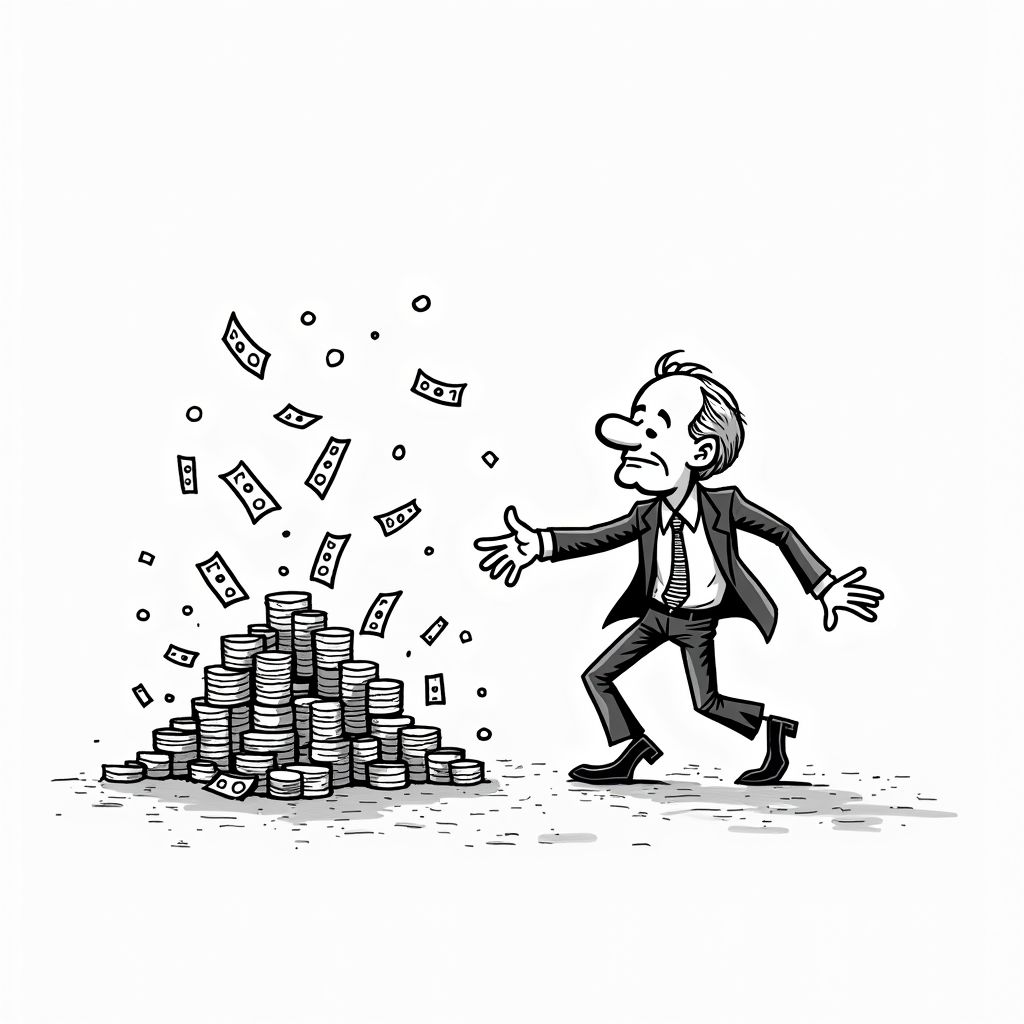
Over the past 15 years, a distinct behavioral pattern has emerged where investors have been conditioned to expect bailouts from the Federal Reserve during market corrections [1]. This phenomenon is rooted in the aftermath of the Global Financial Crisis, where fiscal and monetary policies, such as zero interest rates and quantitative easing, fostered an environment where policy support was anticipated during periods of volatility [1]. The Federal Reserve’s interventions, while well-intentioned, have created a conviction among market participants that a safety net will always exist, fundamentally altering how risk is perceived and managed [1].
Historical Precedents of Overconfidence
The danger of this mindset is best illustrated by the experience of Benjamin Graham, the renowned father of value investing. In the late 1920s, Graham utilized leverage to turn $400,000 into $2.5 million, only to lose the majority of those gains in the 1929 market crash [1]. This historical example underscores that the “bull market genius” phenomenon is often a form of self-deception, where investors mistake a rising market for their own intelligence, leading them to take on dangerous levels of risk and leverage under the false assumption that the trend is permanent [1].
The Mechanics of Moral Hazard
Economists define this situation as “moral hazard,” characterized by a lack of incentive to guard against risk when one is protected from its consequences [1]. As of December 19, 2025, analysis suggests that this conditioning has led investors to underestimate potential losses, creating a fragility within the market structure [1]. While optimism drives markets up slowly, the reversal can be abrupt; as the old Wall Street adage notes, “Bulls take the stairs, but bears jump out the window,” meaning prices often collapse violently when fear displaces hope [2]. Technical analysts warn that one bad session can erase months of profits, advising traders to vigilantly watch for the “Bearish Engulfing” pattern, which is considered the most reliable reversal signal when it appears near resistance zones [2].
Divergent Signals and Defensive Strategies
Broader market indicators currently present a complex picture. Retail Money Funds continue to post record highs as recession fears persist, a metric that historically declines only when capital flows back into equities as recessions end [3]. Meanwhile, in the cryptocurrency sector, sentiment remains cautious; the Solana Fear and Greed Index stands at a neutral 49 as of December 21, 2025, reflecting mixed signals despite high buy interest in search engines [4]. This neutrality persists even as external risks loom, evidenced by North Korean hackers stealing over $2 billion in ETH and SOL throughout 2025 [4].