Civil Rights Titan and Two-Time Presidential Candidate Jesse Jackson Dies at 84
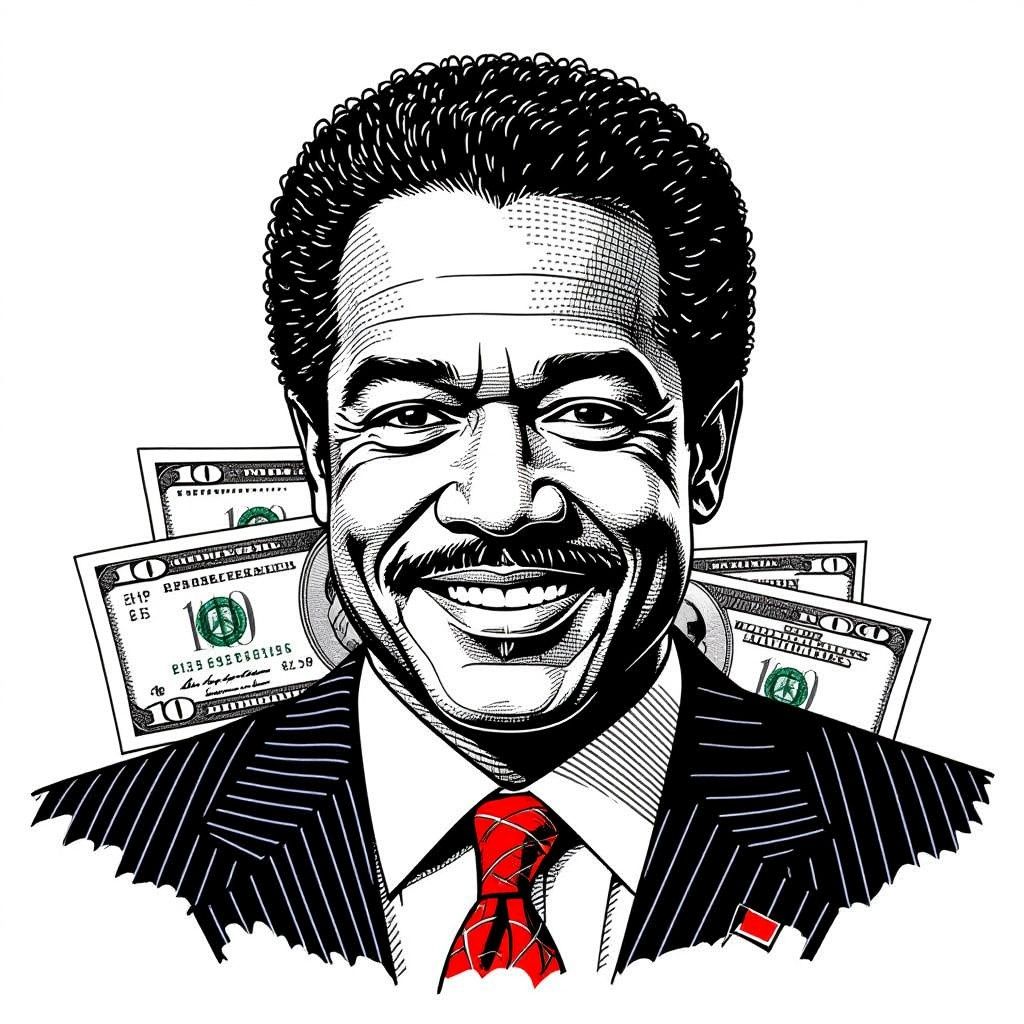
Chicago, Tuesday, 17 February 2026.
The civil rights icon who transformed American politics died Tuesday at 84. A protégé of King, his groundbreaking presidential campaigns crucially paved the way for Barack Obama’s historic victory.
A Legacy of relentless Advocacy
The Reverend Jesse Louis Jackson Sr., a defining figure of the American Civil Rights Movement and a two-time Democratic presidential candidate, died peacefully on the morning of Tuesday, February 17, 2026, surrounded by his family [1][3]. He was 84 years old [1][2]. The Jackson family announced his passing with a tribute to his lifetime of service, describing him as a “servant leader” whose “unwavering commitment to justice, equality, and human rights helped shape a global movement for freedom and dignity” [1][3]. His death marks the departure of one of the last surviving titans who marched directly alongside Dr. Martin Luther King Jr., having been present in Memphis, Tennessee, when King was assassinated in April 1968 [2][5]. Leaders across the political spectrum have issued tributes, with House Democratic Leader Hakeem Jeffries calling Jackson a “legendary voice for the voiceless” [1], and civil rights leader Al Sharpton stating that the nation has lost “one of its greatest moral voices” [3].
Redefining American Politics
While Jackson never held the presidency, his political ambition fundamentally altered the landscape of the Democratic Party and American governance. He ran for the Democratic presidential nomination in 1984 and 1988, campaigns that were viewed by many at the time as symbolic but proved to be statistically significant [1][3]. In his 1984 bid, Jackson secured more than 18% of the primary vote, and in 1988, he won 11 primaries and caucuses, amassing just under 7 million votes [1][3]. These campaigns were built on the concept of a “Rainbow Coalition,” a strategy designed to unite the poor, working-class, and minority voters into a cohesive political force [6][7]. His mission, as he articulated, was “to transform the mind of America” [6]. Political analysts and contemporaries credit Jackson’s groundwork as the precursor to Barack Obama’s election in 2008; Rashad Robinson, former president of Color of Change, noted that “there certainly would be no Barack Obama if there was no Jesse Jackson” [4].
Diplomacy Without Portfolio
Beyond domestic civil rights, Jackson carved out a unique role as an international diplomat, often operating without official government sanction to secure the release of Americans detained abroad. His capacity to negotiate with adversaries of the United States demonstrated a distinctive brand of humanitarian diplomacy. In 1983 and 1984, he negotiated the release of a U.S. Navy pilot from Syria and 22 Americans alongside 26 political prisoners from Cuba [3][4]. His efforts continued into the next decade; in 1990, he helped secure the release of 700 women and children from Iraq following Saddam Hussein’s invasion of Kuwait, and in 1999, he negotiated the freedom of three U.S. soldiers held in Yugoslavia [3][4]. In recognition of his domestic and international efforts, President Bill Clinton awarded Jackson the Presidential Medal of Freedom in 2000 [1][5].
The Long Struggle for Equality
Born in Greenville, South Carolina, on October 8, 1941, Jackson’s activism began in his youth; he was arrested in July 1960 for participating in a sit-in at a whites-only library in his hometown [5][7]. Following his work with the Southern Christian Leadership Conference (SCLC), he founded Operation PUSH (People United to Save Humanity) in 1971 to advocate for black economic self-sufficiency, later merging it to form the Rainbow PUSH Coalition [3][7]. Throughout his career, he pressed corporate America to open its doors to minority communities, often using the threat of boycotts to encourage diversity and inclusion [2]. Despite facing health challenges in his later years, including a diagnosis of Parkinson’s disease in 2017 which was later identified as progressive supranuclear palsy (PSP), Jackson remained active in public life [1][3]. He was hospitalized as recently as November 2025, yet continued to champion causes until the end, leaving behind a legacy that Bernice King described as that of a “gifted negotiator and a courageous bridge-builder” [1][3].
Sources
- www.bbc.com
- montreal.citynews.ca
- www.nbcnews.com
- www.usatoday.com
- www.npr.org
- www.nytimes.com
- www.theguardian.com