Thames Water Lenders Prepare Legal Battle Against Government Takeover
London, Monday, 20 July 2026.
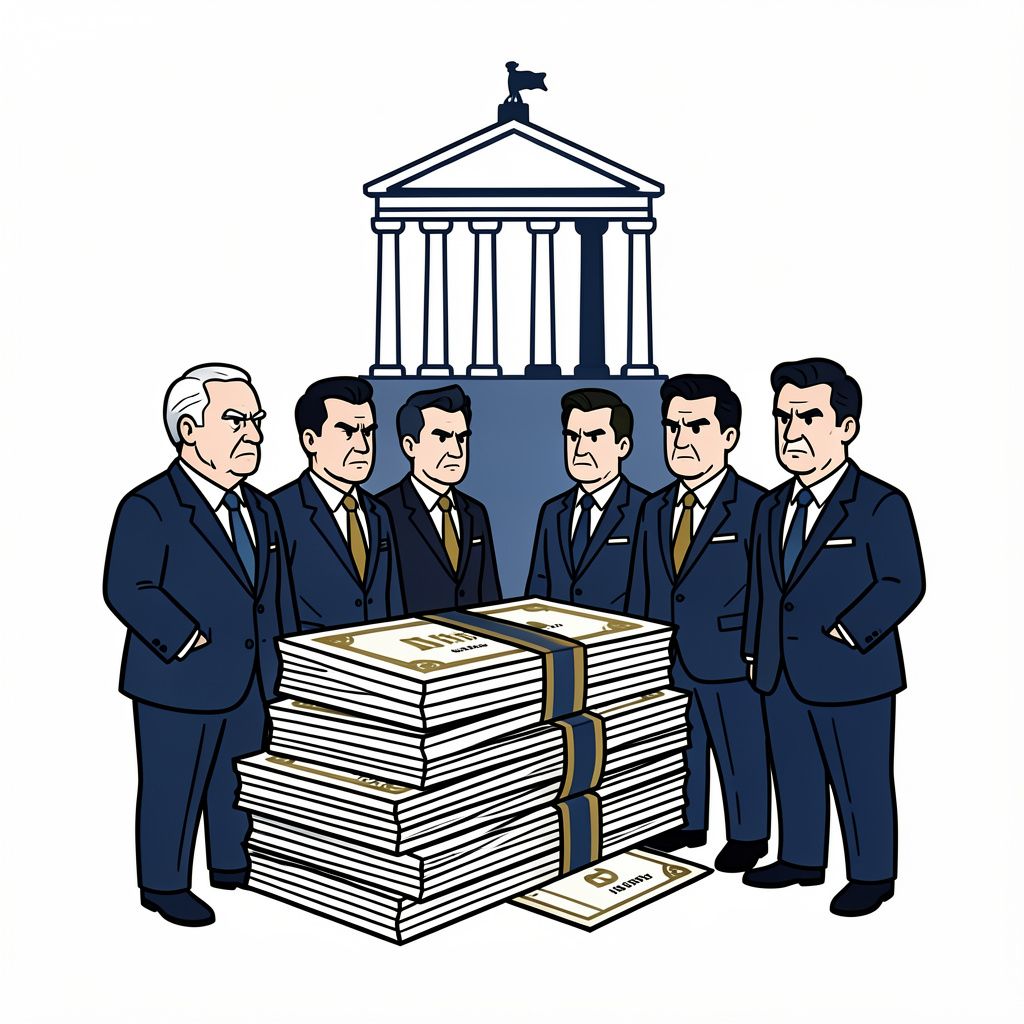
Major lenders holding £17 billion of Thames Water’s debt are preparing a massive legal battle against the UK government to demand full repayment if nationalization occurs.
The Escalation of a Multi-Billion Pound Dispute
As Andy Burnham prepares to assume office as Prime Minister on Monday, July 20, 2026 [3], following his confirmation as leader of the Labour Party on July 17, 2026 [4], a major regulatory and legal battle is brewing over the future of the UK’s largest water utility. The London & Valley Water (L&VW) consortium, which holds £17 billion of Thames Water’s total £21 billion debt—representing approximately 80.952% of the outstanding debt—has engaged law firms Pallas Partners and Akin Gump to prepare for potential litigation [2][4]. The consortium, which is scheduled to see Burnham transition into Downing Street on July 26, 2026 [4], is acting on growing concerns that the incoming administration will force Thames Water into temporary public ownership via a Special Administration Regime (SAR) [2][4].
A Precautionary Stance with Deep Financial Stakes
The L&VW syndicate comprises prominent global financial institutions, including Apollo Global Management, Elliott Management, Farallon Capital Management, and Silver Point Capital [2][4]. While representatives close to the consortium have characterized these legal preparations as a “precautionary measure” with no active lawsuit currently filed [2], the stakes remain exceptionally high. An unnamed banking source indicated that creditors are prepared to “litigate for years if necessary” to ensure full repayment of outstanding debts [4], a move that could potentially saddle the British taxpayer with a multi-billion-pound liability if a full nationalization occurs [1].
Restructuring Proposals and Regulatory Hurdles
Thames Water, which serves 16 million customers across London and the Thames valley [2][3], reported pre-tax profits of £226.4 million as of March 31, 2026, yet saw its total debt surge from £17.73 billion in the previous year to £19.77 billion [3]. This represents a year-on-year debt increase of 11.506%. Facing a projected cash shortfall of £2 billion by the end of 2027 [1] and potential insolvency by December 31, 2026 [3], the L&VW consortium has proposed a solvent restructuring to avoid a taxpayer-funded administration [2]. The proposed rescue package includes injecting £3.35 billion in new equity, £6.25 billion in new debt, and writing off £9.6 billion of existing debt [4], while pausing dividends until the 2030s [4].
The Government’s Rising Skepticism
However, government officials and regulators remain deeply skeptical of the terms. In June 2026, Environment Secretary Emma Reynolds wrote to regulator Ofwat to express early concerns, stating she was not convinced the consortium’s proposal provides sufficient protection for consumer interests or the environment [1][2][4]. Further compounding this skepticism, Deputy Labour Leader Lucy Powell declared on July 19, 2026, that “the privatisation of water hasn’t worked,” pointing to its failure to foster competition or prevent rising bills [1]. Powell confirmed that the government possesses the statutory powers to place distressed water utilities under special measures [1], fueling speculation of an imminent state intervention [5].
The Path Forward Under Prime Minister Burnham
The incoming Prime Minister has long argued that the water industry is “broken” and does not operate in the public interest [3]. In June 2026, Burnham outlined a 10-year staggered renationalization plan for the sector, specifically identifying a “very strong case” for public ownership of Thames Water [3]. Allies of Burnham have reinforced this stance, arguing that if the taxpayer must provide £2 billion in funding to keep the company afloat during a Special Administration Regime (SAR), the public must receive control in return [2][3]. The government is evaluating an SAR modeled on the 2021 administration of energy supplier Bulb, which eventually repaid £3 billion to the state following an asset sale to Octopus Energy [3].
A Tightening Timeline for Resolution
As of Monday, July 20, 2026, the consortium has not initiated formal legal action and continues to express a strong desire to meet with incoming ministers to negotiate a solvent restructuring [2]. Yet, the timeline is tight; Ofwat is legally required to conduct a three-month public consultation on any private sector restructuring deal, squeezing the window for a non-governmental solution [4]. Thames Water’s Chief Executive Chris Weston has called for urgent clarity from the incoming Prime Minister, noting that the utility has had no direct conversations with Burnham regarding his specific plans for the sector [3]. The outcome of this high-stakes standoff will likely define the relationship between the new government and international infrastructure investors for years to come [GPT].