Trump Denies China Uses Wind Power as Beijing Installs Record-Breaking Turbine
Washington D.C., Friday, 16 January 2026.
Contradicting recent political rhetoric, China just installed the world’s first 20-megawatt offshore turbine, reinforcing a sector that now generates 16% of the nation’s total electricity supply.
Political Rhetoric vs. Industrial Reality
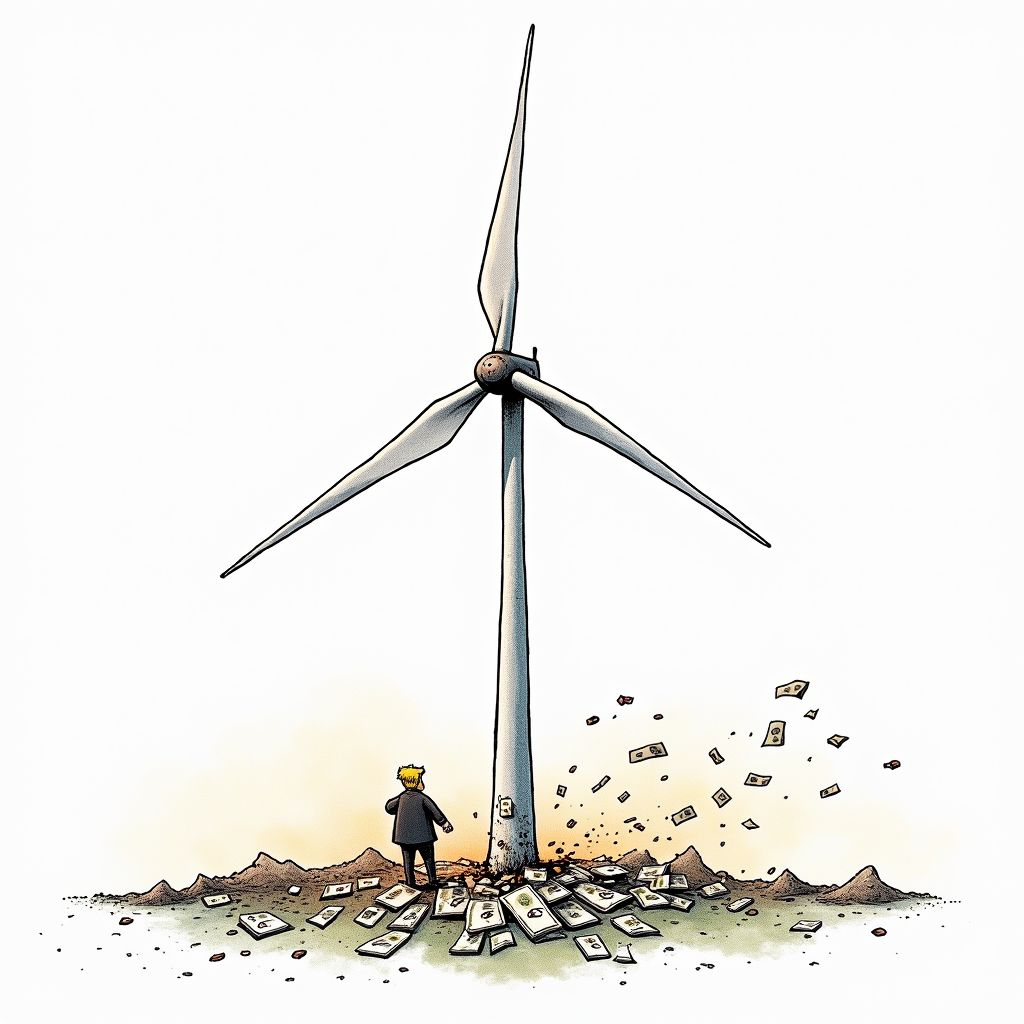
During a meeting with top U.S. oil executives on January 9, 2026, President Donald Trump explicitly criticized wind energy, claiming that China does not utilize the technology domestically [2]. He asserted that while Beijing manufactures turbines, they sell them to “suckers” like Europe and the United States, maintaining that China itself relies on coal, oil, and gas rather than renewable wind sources [1][2]. This characterization, however, was starkly contradicted just four days later on January 13, 2026, when China Three Gorges Corporation (CTG) successfully installed the world’s first 20-megawatt (MW) offshore wind turbine off the coast of Fujian Province [4][5]. This installation is not merely a prototype but a fully operational unit connected to the power grid, signaling a significant divergence between the President’s claims and the verifiable expansion of China’s renewable energy infrastructure [3][8].
The 20-Megawatt Milestone
The newly installed turbine represents a massive leap in engineering scale and generation capacity. Developed in cooperation with Goldwind, the unit features a rotor diameter of 300 meters and blades measuring 147 meters in length—longer than a passenger jet [4][8]. The structure stands with a hub height of 174 meters, which is equivalent to a 58-story building [4]. In terms of energy production, this single turbine is expected to generate over 80 gigawatt-hours (GWh) of electricity annually [4]. To place this output in perspective, that volume is sufficient to power approximately 44,000 households for a year [3][8]. Furthermore, the project highlights environmental efficiency; the turbine is projected to offset the burning of about 24,000 tons of coal annually, reducing carbon dioxide emissions by roughly 64,000 tons [3][8].
The Scale of Chinese Dominance
While President Trump argued that observers are “not able to find any” windmill areas in China [1], data from the U.S. Energy Information Administration (EIA) and other industry monitors paints a radically different picture. As of May 2025, reports indicated that wind energy accounted for 16% of all electric generation in China [2]. By the end of 2025, China’s wind power capacity had climbed to 580 gigawatts (GW), up from 521 GW at the end of 2024 [6]. This represents a year-over-year capacity increase of approximately 11.324 percent. The disparity in scale is further illuminated by global comparisons; as early as February 2025, China operated nearly triple the wind capacity of the United States [1]. Additionally, the Gansu Wind Farm, located in the Gobi Desert, hosts 7,000 turbines with a planned capacity of 20 GW, cementing its status as the world’s largest wind power complex [2].
Future Trajectories
Looking ahead, Beijing’s commitment to wind energy shows no signs of slowing, contrasting with the volatility suggested by current U.S. political discourse. China aims to achieve a minimum wind power capacity of 2 terawatts (TW) by 2035 and 5 TW by 2060 [6]. Beyond traditional turbines, the nation is also testing high-altitude power generation, recently conducting trials with giant wind kites capable of reaching altitudes of 4,877 meters [6]. As trade relations remain tense, the gap between political characterizations of China’s energy sector and the verifiable on-the-ground developments continues to widen, presenting a complex reality for global energy investors.
Sources
- www.yahoo.com
- www.spencerfane.com
- www.4coffshore.com
- www.offshorewind.biz
- www.youtube.com
- energiesmedia.com
- news.cgtn.com