DOJ Asserts Courts Lack Authority to Halt White House Ballroom Construction
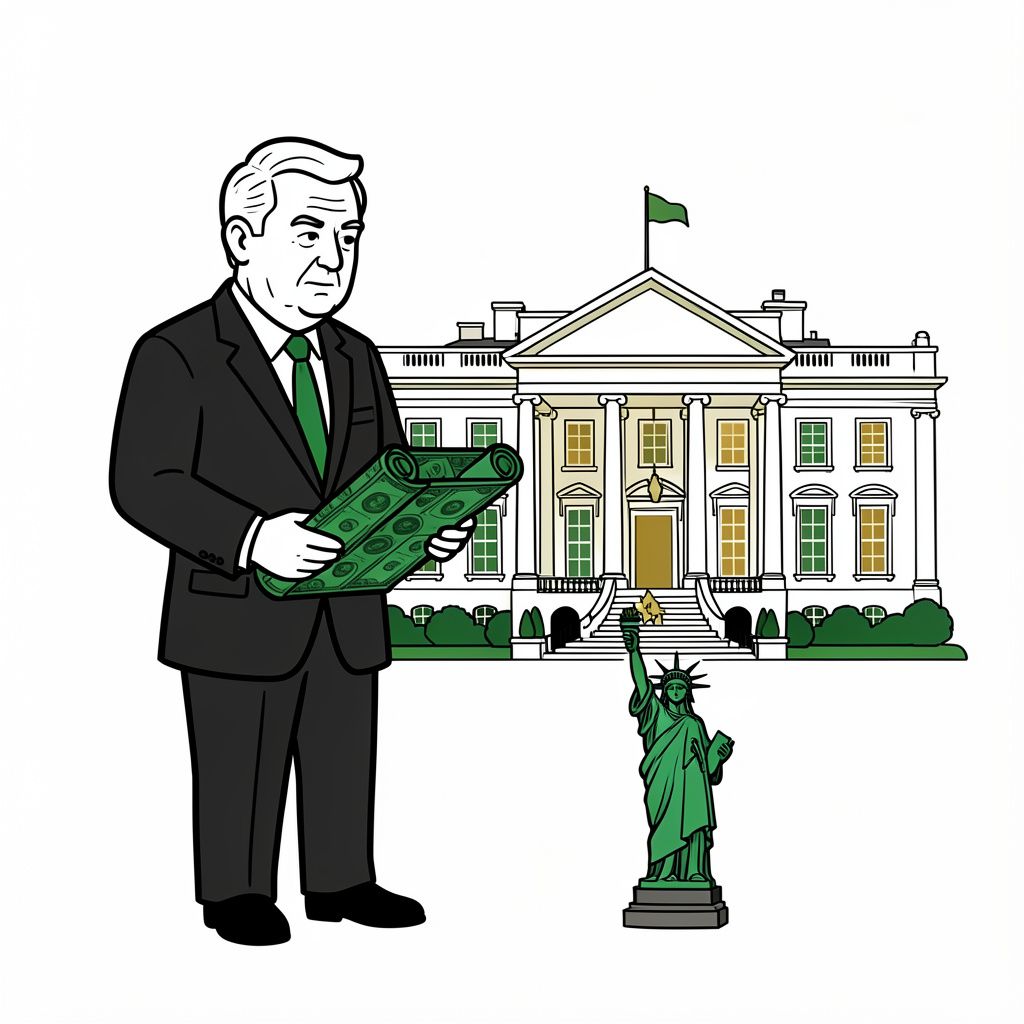
Washington, Friday, 5 June 2026.
Defending the 8,361-square-meter White House ballroom construction today, the DOJ argued courts lack jurisdiction to intervene, controversially claiming this executive immunity would even cover demolishing the Statue of Liberty.
Legislative Friction Sets the Stage
The legal showdown in the appellate courts arrives on the heels of significant legislative friction on Capitol Hill. Earlier this week, six Republican senators broke ranks to block President Donald Trump’s White House ballroom project, a move catalyzed by revelations that project donors recently secured over $50 billion in federal contracts [5]. Following this bipartisan Senate push, Republicans formally stripped a $1 billion Secret Service security upgrade intended for the ballroom from an immigration spending bill that advanced early this morning, Friday, 5 June 2026 [1]. With public funding avenues narrowing, the Trump administration’s fight to complete the $400 million, 8,361-square-meter ballroom has pivoted aggressively to the judicial arena [1][3].
Testing the Limits of Executive Power
During a contentious hearing before a three-judge panel of the U.S. Court of Appeals for the D.C. Circuit, the Department of Justice (DOJ) mounted a sweeping defense of executive authority [2][5]. Yaakov Roth, the principal deputy assistant attorney general representing the DOJ, argued that the judicial branch is fundamentally powerless to halt the construction, which includes an integrated underground bunker [1]. When pressed by U.S. Circuit Judge Patricia Millett on whether the courts could intervene if the government acted with “complete lawlessness,” Roth affirmed that under the DOJ’s legal theories, the judiciary could not stop the project [1][2]. The administration has continuously justified the construction by citing national security imperatives, specifically pointing to a failed assassination attempt at a White House Correspondents Association event in April 2026 [1].
Judicial Skepticism and Legal Standing
The appellate panel appeared divided, reflecting the deep constitutional questions at play [6]. Judges Millett and Brad Garcia, appointed by Presidents Obama and Biden respectively, expressed profound skepticism toward the government’s claim that Congress had already provided all necessary approvals through general statutes promoting the use of the National Park Service [5]. Conversely, Judge Neomi Rao, a Trump appointee, scrutinized the legal standing of the plaintiffs—the National Trust for Historic Preservation—questioning whether a citizen’s intent to “walk past the White House maybe once a month” constitutes sufficient grounds to sue [5]. Thad Heuer, representing the historic trust, fiercely contested the DOJ’s position by invoking the foundational precedent of Marbury v. Madison, reminding the panel that “it is emphatically the province of the judicial department to say what the law is” [1].
The Financial and Corporate Undertow
Beyond the constitutional friction, the economics of the ballroom project reveal a complex web of corporate patronage. The Trump administration initially claimed the project would be an “invaluable gift” funded entirely by private donors, explicitly promising it would not cost taxpayers [4]. Yet, prior to March 2026, the administration attempted a surprise maneuver to pressure Congress into allocating $1 billion for the project, a move that failed amid intense public backlash [4]. An analysis of the private funding reveals that out of 27 identified corporate ballroom donors, 14 received new or increased U.S. government contracts totaling over $50 billion between September 2025 and March 2026 [4]. This means that 51.852 percent of the identified corporate backers directly benefited from federal agreements during the project’s controversial inception phase [4].