Trump Outlines Economic and Security Agenda in High-Stakes State of the Union
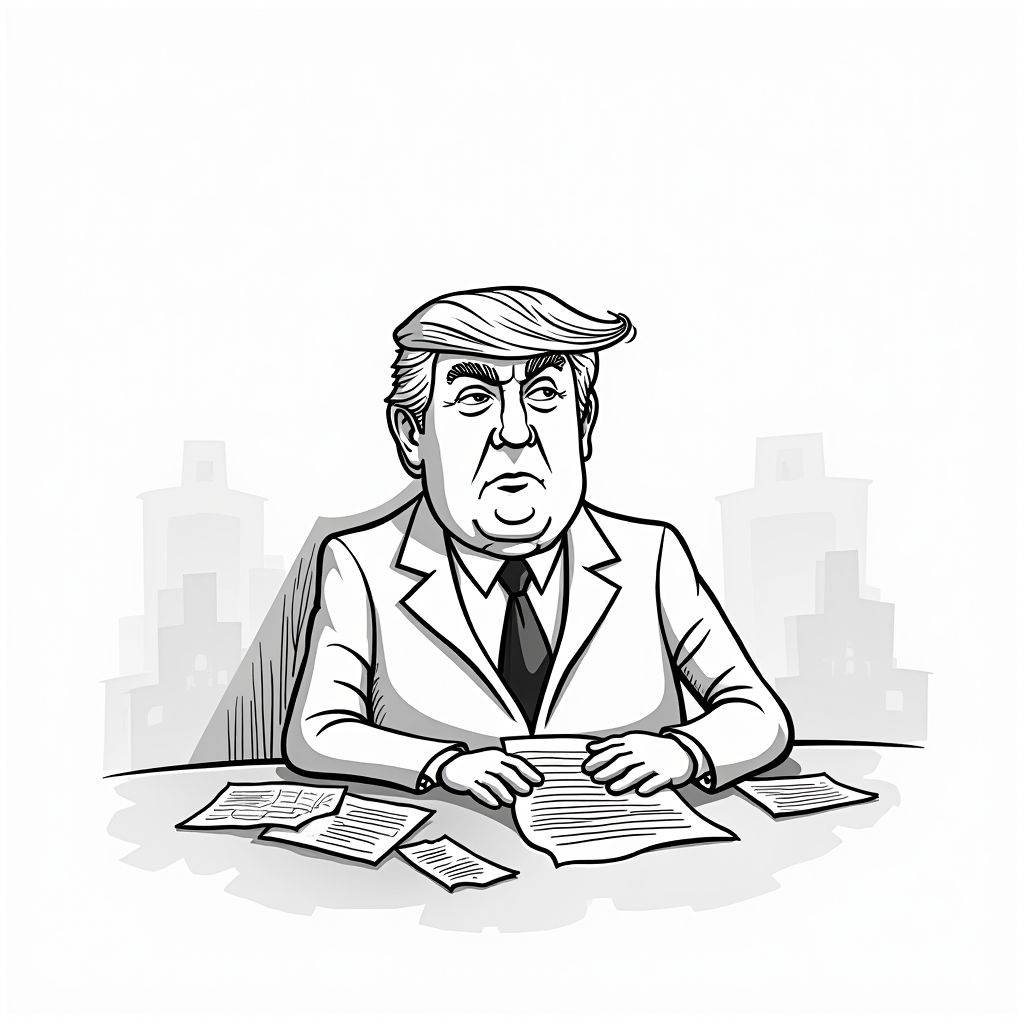
Washington D.C., Tuesday, 24 February 2026.
On Tuesday, February 24, 2026, President Trump delivered a pivotal State of the Union address aimed at framing the narrative for the upcoming midterm elections. Against the backdrop of a Department of Homeland Security shutdown and a recent Supreme Court defeat regarding his tariff policies, the President emphasized a theme of “America at 250: Strong, Prosperous and Respected.” The address introduced significant regulatory proposals, notably requiring artificial intelligence companies to fund their own electricity consumption. Furthermore, the President addressed escalating tensions with Iran and the ongoing war in Ukraine. The speech underscored the nation’s deep political divide, evidenced by a Democratic boycott and a rebuttal from Virginia Governor Abigail Spanberger focusing on the administration’s fiscal and social controversies.
Economic Policy and Trade Tensions
The President’s address arrives during a period of significant economic friction, particularly regarding trade policy. Just days prior to the speech, on February 17, 2026, the Supreme Court ruled the administration’s tariff agenda illegal, a major rebuke of his economic leverage [4]. In a swift countermove on February 22, President Trump announced on Truth Social that he would raise the global tariff rate to 15%, asserting this level was legally tested [2]. This aggressive trade posture contrasts with public sentiment; a recent poll indicates that 60% of Americans believe the country is worse off than it was a year ago, with only 39% approving of the President’s handling of the economy [1][2]. Despite these headwinds, the President previewed the speech by claiming the nation is poised for its “best three years economically,” advocating for new personal tax cuts to stimulate growth [2].
Regulatory Shifts and Infrastructure Costs
A central pillar of the administration’s new domestic agenda focuses on the burgeoning artificial intelligence sector. President Trump confirmed plans to announce a formal agreement requiring AI and technology companies to independently fund the electricity infrastructure for their data centers, shifting the burden of increased energy consumption away from public utilities [2][3]. This proposal aligns with the address’s broader theme, “America at 250: Strong, Prosperous and Respected,” which seeks to highlight American innovation and independence as the nation approaches its semiquincentennial [3]. To personify this focus on future technologies, the First Lady invited Everest Nevraumont, a 10-year-old student from an AI-powered school in Austin, Texas, to attend the address [2].
Legislative Gridlock and Departmental Shutdowns
The State of the Union was delivered amidst a palpable legislative stalemate. The Department of Homeland Security (DHS) has been in a partial shutdown since its funding expired on January 30, 2026, due to a deadlock over immigration enforcement policies [3]. President Trump used the podium to characterize the shutdown as “despicable,” explicitly calling on Democrats to reopen the department [3]. The legislative dysfunction extends beyond the budget; on February 23, the House failed to pass a critical aviation safety bill by a vote of 264-133. The bill, designed to address safety issues following a January 2025 crash, collapsed after the Pentagon withdrew its support, citing unresolved budgetary burdens and operational security risks [2].
Foreign Policy and Military Posture
On the international stage, the President addressed the war in Ukraine, now entering its fifth year, and the escalating instability involving Iran [2]. The administration is currently weighing potential military action against Iran following the failure of diplomatic channels, with deliberations continuing over strikes similar to Operation Midnight Hammer, which targeted nuclear sites the previous summer [2][3]. Negotiations regarding Iran’s nuclear program are set to resume in Switzerland on Thursday, February 26 [3]. Underscoring the administration’s emphasis on national strength and achievement, the guests included the U.S. Men’s Olympic Hockey Team, who recently secured a gold medal, and the parents of Sarah Beckstrom, a National Guard member killed in the line of duty [2][3].
The Political Landscape Ahead of Midterms
The address served as a strategic launchpad for the Republican party ahead of the November midterms, where they look to defend a slim majority of 53 to 47 in the Senate and 218 to 214 in the House [5]. Historical data suggests a difficult path forward, as the party controlling the White House typically loses an average of 27 House seats and four Senate seats during midterm elections [5]. The partisan divide was on full display, with at least 32 Democratic lawmakers boycotting the speech and others wearing “suffragette white” in protest [2][3]. Following the President’s remarks, Virginia Governor Abigail Spanberger delivered the Democratic response from Colonial Williamsburg, while Senator Alex Padilla provided the Spanish-language rebuttal, marking the opposition’s first major counter-messaging effort of the election cycle [2][5].