Federal Court Blocks New York Ban on Masks for Immigration Agents
New York, Tuesday, 4 August 2026.
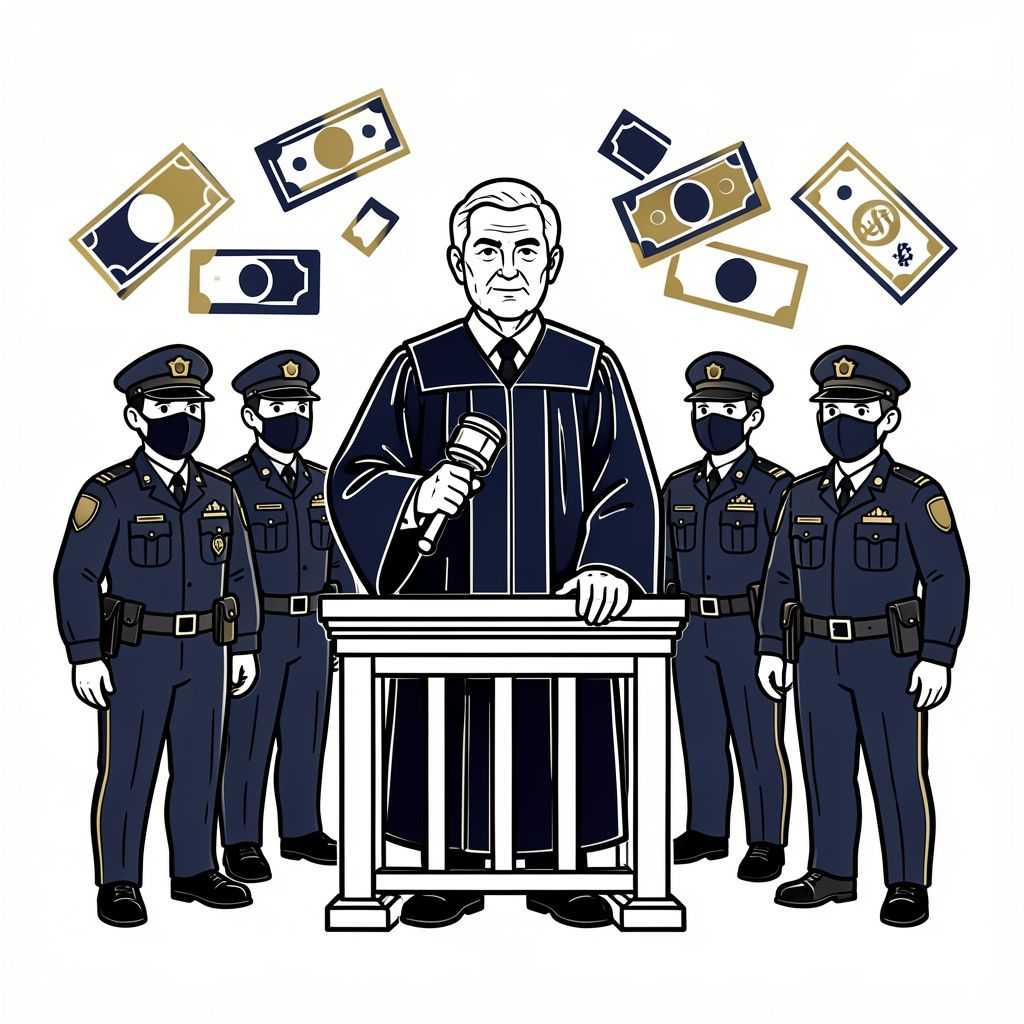
A federal judge halted New York’s ban on immigration agents wearing face masks, ruling it unconstitutionally regulates federal officers, while allowing restrictions on local police cooperation to remain.
Constitutional Boundaries and Federal Authority
On Monday, 3 August 2026, U.S. District Judge Mae D’Agostino of the Northern District of New York issued a preliminary injunction blocking key provisions of a New York State law that prohibited federal immigration agents from wearing face coverings [2][4]. The court determined the challenged provisions were likely unconstitutional as they interfere with federal law enforcement operations, asserting that only the federal government has the authority to regulate these operations [2]. Judge D’Agostino wrote that the state’s face covering and identification acts directly regulate federal officers in violation of the Supremacy Clause [4][5]. The ruling halts the state’s attempt to enforce masking restrictions on federal agents, setting a significant legal precedent regarding the boundary between state regulatory power and federal law enforcement operations [1].
Local Enforcement Restrictions Remain
While the mask ban was blocked, Judge D’Agostino declined to block a separate provision of the law that restricts New York local law enforcement agencies from participating in federal immigration enforcement functions under 287(g) agreements [2][6]. The ruling stated that New York’s refusal to cooperate with federal immigration enforcement does not constitute discrimination against the federal government, as this possibility is contemplated by federal statutes [2]. The judge noted that such participation is voluntary under federal law, allowing the state to regulate its own police agencies [3][6]. This distinction allows the state to maintain its ban on formal cooperation agreements while preventing direct regulation of federal officers [7].
Political Responses and Legal Strategy
New York Governor Kathy Hochul and Attorney General Letitia James are currently reviewing legal options regarding the court’s decision to block the mask ban [2][5] [alert! ‘Status of appeal not confirmed’]. In a joint statement, they said, “While the court enjoined enforcement of New York’s mask ban, we stand firm in our belief that masked agents do not make New York safer” [2][5]. Conversely, the Trump administration argued that forcing ICE agents to uncover their faces would expose them to harassment and doxxing [3]. Kiersten Pels, a DOJ spokesperson, said, “This Department of Justice is focused on law and order, public safety, and will not tolerate any violence directed toward law enforcement officials working tirelessly to keep Americans safe” [3].
National Implications and Election Year Stakes
This decision aligns with similar rulings where the administration has challenged laws in California, Connecticut, New Jersey, Virginia, and Philadelphia [3]. Governor Hochul, a Democrat, faces reelection in November 2026, competing against challenger Bruce Blakeman, a Republican [5]. State lawmakers in Albany passed the mask ban in May 2026, alongside other laws meant to regulate ICE officers amid the Trump administration’s increase in immigration enforcement [3]. The federal government sued New York in late June, a week before the ban was set to go into effect [3].
Sources
- www.nytimes.com
- www.foxnews.com
- www.politico.com
- abc7ny.com
- gvwire.com
- spectrumlocalnews.com
- www.wrvo.org