Major Roof Fire at Key Ohio Plant Threatens US Auto Supply Chains
Moraine, Monday, 23 March 2026.
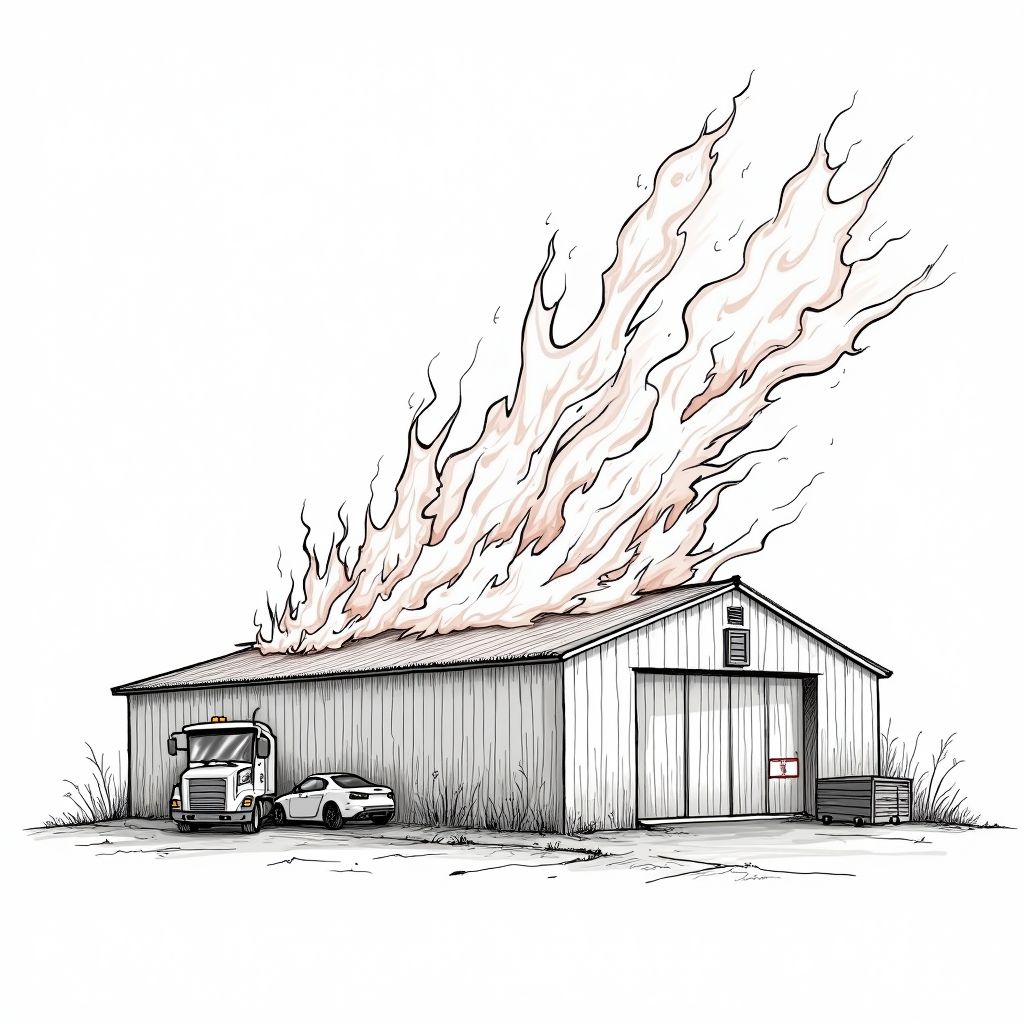
A major roof fire at Fuyao’s Ohio facility threatens auto supply chains. The plant, manufacturing 30% of US automotive glass, battled severe flames fanned by 20 m/s winds.
A Perfect Storm for First Responders
At approximately 20:30 on Sunday, March 22, 2026, emergency crews were dispatched to the Fuyao Glass America facility located at 2801 West Stroop Road in Moraine, Ohio [1][3]. The blaze reportedly ignited on the roof of a recently constructed building intended to house a new coating factory [1]. Moraine Fire Marshal Doug Hatcher confirmed that the fire was initially confined to roofing materials and rooftop units, though the full extent of potential structural collapse remained unverified during the initial response [2].
Safety, Evacuations, and Immediate Fallout
Despite the visual severity of the fire, which produced flames visible for miles, there were no reported injuries or fatalities among employees or first responders [1][2][3]. Fuyao management confirmed that internal emergency response protocols were swiftly activated, resulting in a complete and safe evacuation of the facility [1]. Consequently, the company canceled its Sunday night shift [3]. Fire Marshal Hatcher noted that the situation “could’ve been much worse” given the scale of the industrial complex [3].
Supply Chain Vulnerabilities and Economic Context
The operational status of the Moraine plant is highly consequential for the broader North American automotive sector [GPT]. Employing nearly 2,000 workers, the facility supplies critical glass components to major industry players, including General Motors, Ford, BMW, and Honda [3]. Since its inception in 2016—launched with a $200 million investment in a former General Motors assembly plant—Fuyao has steadily expanded its footprint [1]. Following a 2025 expansion that added approximately 55,700 square meters of production space to its original 92,900 square meters, the facility’s total operational footprint reached 148600 square meters [1]. Today, this single node produces roughly 30% of all automotive glass utilized in the United States [1].