Iceland Plans Referendum to Restart EU Membership Talks Amid Geopolitical Pressures
Reykjavik, Thursday, 26 February 2026.
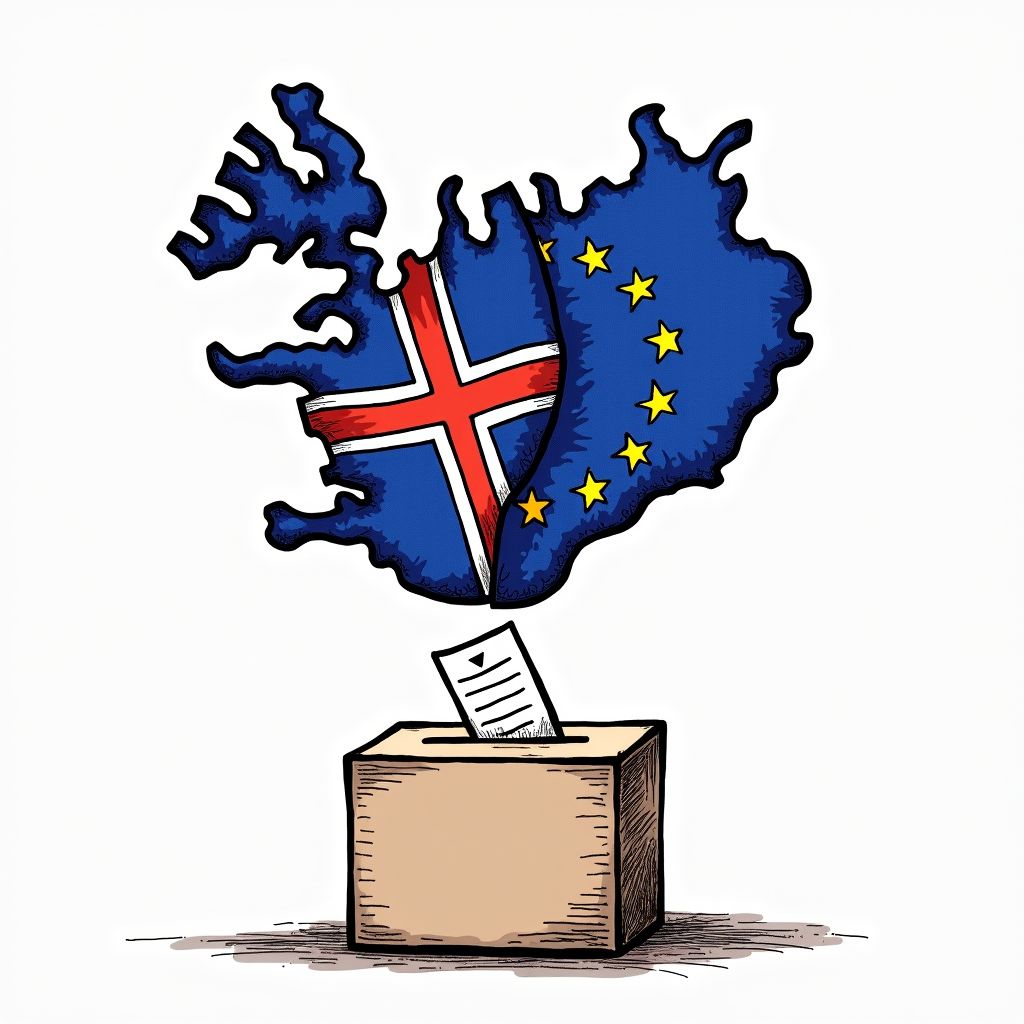
Citing geopolitical instability and US tariff threats, Iceland’s Prime Minister announced a referendum to restart EU accession talks will occur within months, revisiting a process suspended over a decade ago.
A Strategic Pivot in Warsaw
On Wednesday, February 25, 2026, Icelandic Prime Minister Kristrún Frostadóttir confirmed that the island nation will hold a referendum “in the coming months” to determine whether to restart accession negotiations with the European Union [1][2]. Speaking at a joint press conference in Warsaw alongside Polish Prime Minister Donald Tusk, Frostadóttir signaled a decisive shift in Reykjavik’s foreign policy, aiming to open an opportunity for greater integration within Europe [2]. This announcement revisits a political chapter that was abruptly closed in 2013, when Iceland suspended its previous membership bid after four years of negotiations [2][7]. While the precise date remains undecided, reports suggest the vote could take place as early as August 2026 [3][4][7].
Geopolitical Catalysts and Economic Pressures
The decision to expedite the referendum stems from a rapidly changing global landscape characterized by heightened geopolitical instability and economic coercion. The administration in Reykjavik has been compelled to act following repeated threats by U.S. President Donald Trump to annex Greenland, a move that places Iceland—situated strategically between North America and Europe—in a precarious position [2][3]. Furthermore, the imposition of U.S. tariffs on Icelandic goods has exacerbated economic uncertainty, prompting the government to reconsider the stability offered by the EU’s single market [4][6]. Domestic economic factors, specifically the rising cost of living, have also fueled renewed interest in the bloc [2]. Recent data indicates a cooling in the tourism sector, a critical pillar of the Icelandic economy, with turnover in characteristic tourism industries decreasing by nearly 7% [7].
The Mechanics of Re-engagement
Should the electorate vote in favor of resuming talks, the process could be swifter than typical accession timelines. Before the 2013 suspension, Iceland and the EU had already closed approximately one-third of the necessary negotiation chapters—specifically 11 out of 33 [3][4]. Consequently, some officials in Brussels estimate that the technical accession process could be completed within a single year [3][4]. The proposed referendum is structured as a mandate to negotiate; if a final accession treaty is reached, a second referendum would be required for the Icelandic public to approve entry into the union [3][4]. Prime Minister Frostadóttir emphasized that this initial vote is about “opening up the accession negotiations” rather than an immediate commitment to join [1][2].
Shifting Tides in the North Atlantic
Historically, fisheries management was the primary obstacle to Icelandic membership, but the post-Brexit landscape has altered this dynamic. With the United Kingdom no longer part of the EU’s Common Fisheries Policy, the complexities regarding fishing quotas in the North Atlantic may be easier to navigate [4]. Public sentiment appears to be tilting cautiously toward Brussels; opinion polls conducted in 2025 showed a plurality of voters favoring membership, with support at 45% compared to 35% opposition—a lead of 10 percentage points [1]. Polish Prime Minister Donald Tusk expressed strong support for Iceland’s potential candidacy, noting that the EU might need to demonstrate flexibility to accommodate the Nordic nation [1][2].