Mexico and China Strengthen Strategic Ties Amid Escalating External Pressures
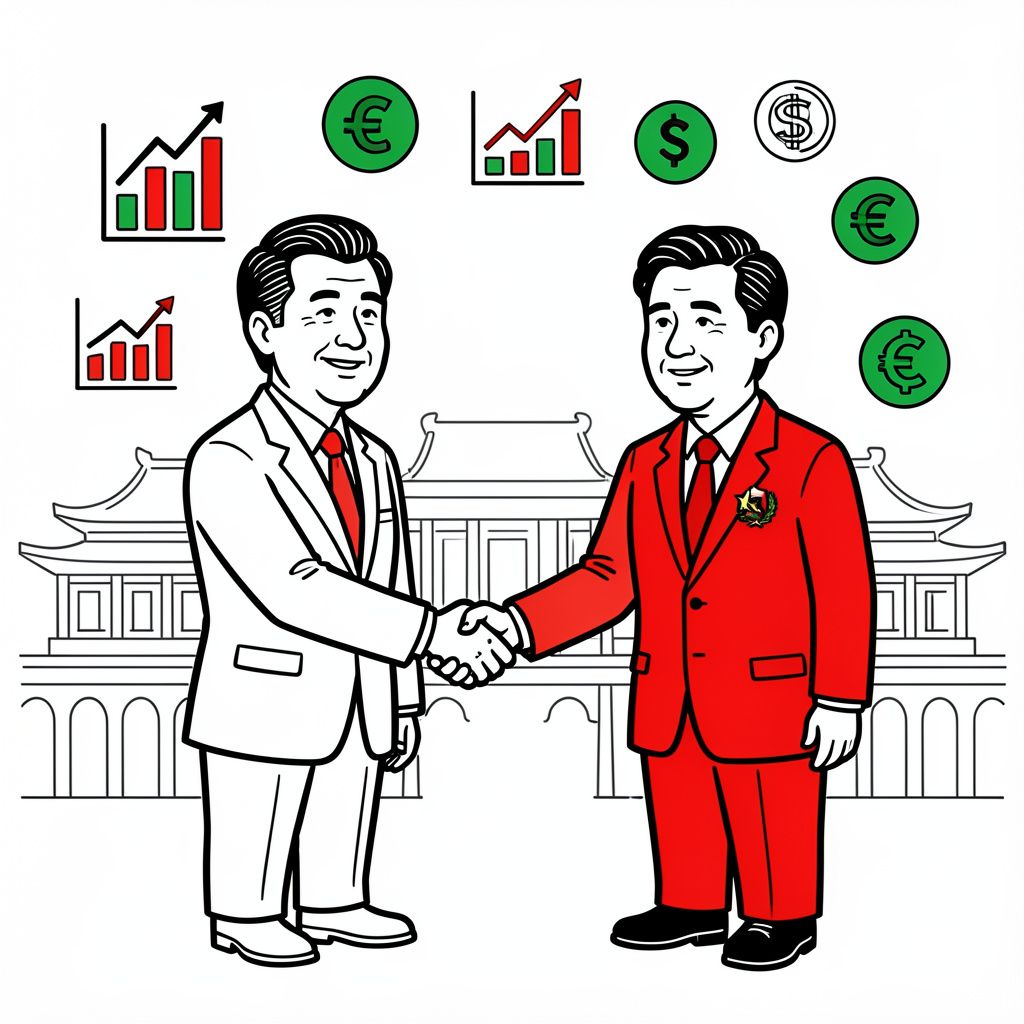
Beijing, Sunday, 13 September 2026.
Mexican and Chinese foreign ministers met in Beijing to deepen economic ties and safeguard sovereignty, defying growing trade and political pressure from the United States.
High-Level Diplomatic Engagement in Beijing
On September 7, 2026, Chinese Minister of Foreign Affairs Wang Yi held formal talks with Mexican Secretary of Foreign Affairs Roberto Velasco Álvarez in Beijing to discuss deepening bilateral cooperation [1][3]. The meeting focused on strengthening economic, trade, and diplomatic ties between the two nations, marking a significant moment in cross-Pacific relations [1]. During the visit, which took place from September 6 to September 7, 2026, both officials reaffirmed their commitment to mutual strategic interests amidst a shifting global landscape [3]. The discussions emphasized the importance of maintaining independent foreign policies不受 third-party influence, a sentiment explicitly voiced by Minister Wang Yi [1][2].
Geopolitical Context and External Pressures
This diplomatic engagement occurs as Mexico faces increasing pressure from the United States administration to reduce economic ties with China, particularly regarding trade protocols [2]. President Claudia Sheinbaum’s government has navigated complex demands, including the introduction of tariffs on imports from China earlier in the year to placate US concerns [2]. Despite these pressures, the September 7 meeting underscores the enduring importance of the China-Mexico bilateral relationship for both economies [2]. Minister Wang Yi stated that the China-Mexico relationship does not target any third party nor should it be subject to influence from any third party, highlighting a stance of strategic autonomy [1].
Strategic Sovereignty and Non-Interference
A core component of the talks involved reaffirming adherence to the one-China principle and United Nations General Assembly Resolution 2758 [1][3]. Minister Wang Yi expressed China’s support for Mexico in maintaining its independence and autonomy, safeguarding its sovereignty and security, and opposing external interference [3]. This position was reciprocated by Secretary Velasco Álvarez, who confirmed Mexico’s firm adherence to the one-China principle [1]. The dialogue reflected a broader alignment on international governance and Global South solidarity, positioning both nations against external political interference [3].
Leadership Responses to International Rhetoric
Tensions regarding sovereignty were highlighted recently when Mexican President Claudia Sheinbaum held a press conference at the National Palace on September 10, 2026, rejecting US political interference [3]. President Sheinbaum declared that Mexico is nobody’s piñata and must be respected, noting that Mexico does not interfere in US elections and they should not use Mexico in theirs [3][4]. This statement followed social media posts by Donald Trump on September 8, 2026, depicting an expanded United States encompassing Mexico, alongside claims by US Secretary of State Marco Rubio regarding drug trafficking control [3]. Secretary Velasco Álvarez conveyed greetings from President Sheinbaum during the Beijing talks, reinforcing the commitment to implement consensus reached by the heads of state [1].
Economic Frameworks and APEC Preparations
Looking toward future economic cooperation, China outlined the theme for the 2026 APEC China Year as Building an Asia-Pacific Community to Prosper Together [1]. Mexico expressed support for China holding the Asia-Pacific Economic Cooperation (APEC) Economic Leaders’ Meeting, which is scheduled for November 2026 in Shenzhen, China [3][5]. Secretary Velasco Álvarez stated Mexico’s willingness to strengthen coordination and cooperation with China to jointly safeguard the international multilateral system [3]. The talks aimed to activate the Free Trade Area of the Asia-Pacific (FTAAP) process, signaling long-term economic integration goals [1].
Future Outlook on Bilateral Cooperation
The strategic partnership aims to achieve new outcomes in Mexico-China cooperation through strengthened high-level exchanges and advanced bilateral mechanisms [1]. Both nations seek to expand practical cooperation while navigating the complexities of North American supply chains and nearshoring dynamics [2]. As the APEC Economic Leaders’ Meeting approaches in November 2026, the alignment between Beijing and Mexico City suggests a coordinated approach to regional economic challenges [3]. The dialogue concluded with a mutual commitment to deepen practical cooperation without allowing external geopolitical pressures to dictate bilateral terms [1][3].