US Seeks New Arms Agreement After Alleging Secret Chinese Nuclear Test
Washington, Saturday, 7 February 2026.
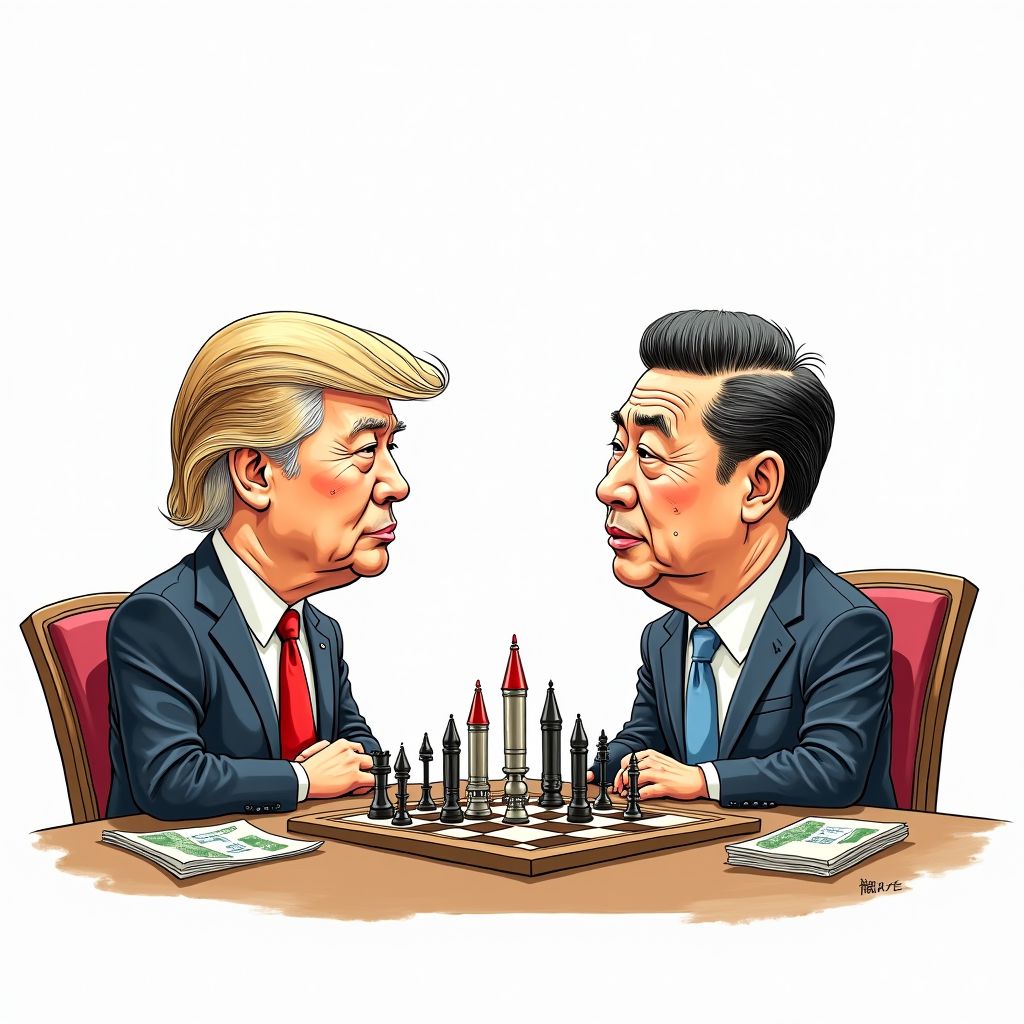
With the New START treaty expired, Washington alleges Beijing conducted a secret 2020 nuclear test, prompting an urgent push for a modernized trilateral agreement to prevent an unchecked arms race.
A Seismic Shift in Global Deterrence
The global security architecture underwent a fundamental restructuring this week, marking the end of the post-Cold War arms control consensus. On Friday, February 6, 2026, the United States formally accused China of conducting a secret nuclear test in 2020, a revelation that coincides with the expiration of the New START treaty just two days prior on February 4 [1][2]. With the bilateral pact between Washington and Moscow now dissolved—leaving the world’s two largest nuclear arsenals unconstrained for the first time since 1972—the Trump administration is pivoting toward a modernized trilateral framework that demands the inclusion of Beijing [1][5]. This move signals a significant departure from historical norms, treating China not as a secondary player, but as a central figure in the calculus of global nuclear stability.
The Allegation: A Breach of Trust?
The catalyst for this diplomatic offensive is a specific accusation regarding events in Xinjiang. Thomas DiNanno, the U.S. Under Secretary of State for Arms Control and International Security, revealed that the U.S. government possesses information indicating China conducted a “yield-producing” nuclear test on June 22, 2020 [1][2]. Speaking at a disarmament conference in Geneva, DiNanno alleged that the People’s Liberation Army (PLA) utilized “decoupling” techniques to obfuscate the explosive energy of the test, effectively hiding it from standard detection methods [3][4]. According to U.S. officials, these actions included preparing for tests with designated yields in the hundreds of tons, a direct violation of the testing moratoriums that major powers have ostensibly observed for decades [1][3].
Strategic Imbalance and Future Arsenals
Washington’s insistence on a new, broader treaty is driven by hard data concerning Beijing’s rapid military expansion. While China currently maintains an estimated 600 warheads, compared to the roughly 4,000 held by Russia and the United States respectively, the trajectory of its buildup is steep [5]. U.S. assessments project that China’s stockpile will swell to 1,000 warheads by 2030 [3][5]. This represents a projected increase of 66.667% in Beijing’s arsenal over the next four years. Administration officials argue that the bilateral limits of the New START treaty—which capped U.S. and Russian deployments at 1,550 strategic warheads—are obsolete in a world where a third power is expanding its capabilities without transparency or constraint [1][5].
Verification Disputes and Global Fallout
The accusation has met immediate resistance from both Beijing and international monitoring bodies. Shen Jian, China’s ambassador on disarmament, dismissed the U.S. claims as “false narratives” intended to “smear” China’s defense capabilities, asserting that the U.S. itself is the “culprit for the aggravation of the arms race” [2][4]. More critically, the Comprehensive Nuclear-Test-Ban Treaty Organization (CTBTO) has cast scientific doubt on the American allegations. Robert Floyd, the organization’s executive secretary, stated on Friday that their international monitoring system “did not detect any event consistent with the characteristics of a nuclear weapon test explosion” on the alleged date in June 2020 [2][4]. Despite this, the U.S. is signaling a readiness to escalate; President Trump ordered the military to resume nuclear weapons testing in October 2025, and officials have confirmed plans to restart testing to match covert detonations by adversaries [2][6].
Navigating a Post-Treaty World
As the dust settles on the expiration of New START, the path forward remains fraught with uncertainty. While Kremlin spokesperson Dmitry Peskov noted that negotiators in Abu Dhabi recently discussed the need for continued dialogue, he emphasized that any extension would need to be formal, dismissing the possibility of an informal arrangement [1]. With Russia having ceased implementation of the treaty in 2023 and withdrawing ratification of the Comprehensive Nuclear Test Ban Treaty (CTBT), the mechanisms for transparency are rapidly eroding [1][2]. Security analysts warn that without a replacement treaty, the risk of miscalculation rises significantly, leaving the global defense industry and financial markets to price in the volatility of a renewed, three-way arms race [5].