US and Israel Kill Iranian Supreme Leader, Sparking Global Oil Supply Fears
Washington, Saturday, 28 February 2026.
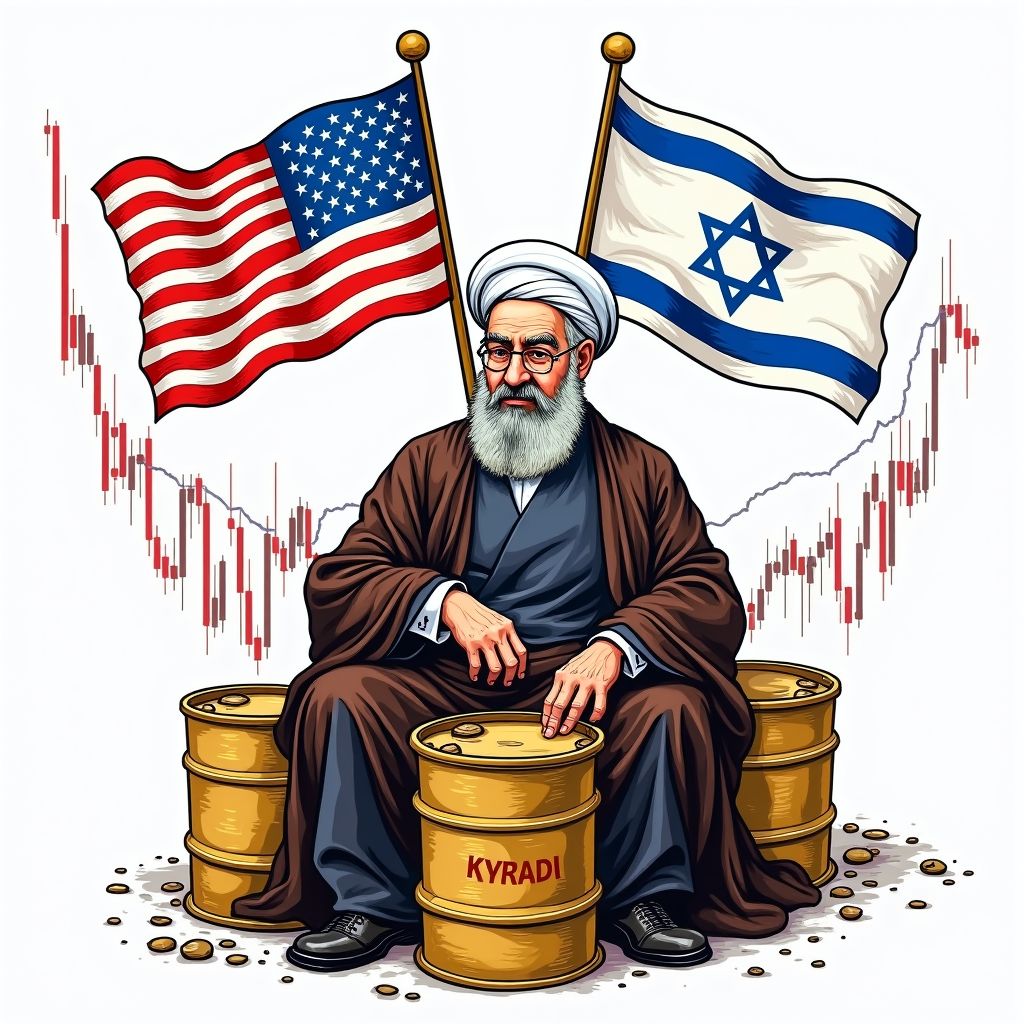
On February 28, 2026, joint US-Israeli strikes killed Supreme Leader Ayatollah Ali Khamenei. Markets brace for extreme volatility and surging oil prices as the Strait of Hormuz faces potential closure.
Escalation to Decapitation Strike
In a seismic escalation of Middle Eastern hostilities, the United States and Israel have confirmed the death of Iranian Supreme Leader Ayatollah Ali Khamenei during a massive joint military operation conducted on Saturday, February 28, 2026 [8]. This development marks a dramatic shift from the initial retaliatory exchanges reported earlier today, where Iran targeted U.S. personnel across five Gulf nations. For a detailed account of the initial missile barrages and the triggering “Operation Epic Fury,” readers can refer to our previous coverage: “<a href="https://wsnext.com/42eb266-Middle-East-conflict-Energy-security/\">Iran Targets U.S. Bases Across Five Gulf Nations in Retaliation for Joint Military Operation.” The conflict has now moved beyond tactical exchanges to a strategy of regime decapitation; alongside Khamenei, the strikes claimed the lives of key figures including Ali Shamkhani, Mohammad Pakpour, and Aziz Nasirzadeh [8]. President Trump, characterizing the late Supreme Leader as “one of the most evil people in History,” has authorized continued heavy bombing “throughout the week,” signaling that this campaign will likely be measured in days rather than hours [8].
Oil Markets Brace for a “War Premium”
Global energy markets, currently closed for the weekend, are pricing in extreme volatility ahead of the reopening on Monday, March 2, 2026 [1][4]. Before the confirmation of Khamenei’s death, crude futures had already begun to price in conflict risk on Friday, February 27. Brent crude settled at $72.48 per barrel, an increase of 2.445 percent, while U.S. West Texas Intermediate (WTI) rose to $67.02, up 2.776 percent [5]. However, analysts now predict a much more violent reaction. Alicia García-Herrero, chief economist for Asia-Pacific at Natixis, forecasts that oil prices could jump between 5% and 10% immediately upon opening [1]. Other industry experts project a specific monetary surge, estimating crude futures will rise by $5 to $7 per barrel when trading resumes at 18:00 ET on Sunday [5].
Historical Precedents and Economic Fallout
The prospect of forced regime change in a major oil-producing nation carries severe historical economic implications. According to analysis by J.P. Morgan Global Research, there have been eight notable instances of regime change in oil-producing nations since 1979 [6]. Natasha Kaneva, head of Global Commodities Strategy at J.P. Morgan, notes that such events typically lead to a substantial spike in oil prices, averaging a 76% increase from onset to peak [6]. While the market has recently absorbed geopolitical shocks—such as the capture of Venezuelan President Nicolás Maduro in January 2026—analysts view the Iranian situation as carrying significantly larger ramifications [1]. Unlike Venezuela, where production had dwindled to 800,000 barrels per day, Iran remains a top-ten global producer, outputting over 3 million barrels per day as of January 2026 [1][5].
The Strait of Hormuz: A Global Choke Point
The primary catalyst for market anxiety is the status of the Strait of Hormuz, a critical maritime corridor through which approximately 20 million barrels of crude oil—roughly 20% of global liquid oil consumption—transited daily in 2024 and 2025 [3][5]. With Iran launching missiles at U.S. bases in neighboring Qatar, Kuwait, the UAE, and Bahrain, the risk to commercial traffic has reached critical levels [5]. Reports indicate that some tankers have already begun diverting from the Strait, and insurers may soon balk at underwriting traffic in the region entirely [5]. Bob McNally, president of Rapidan Energy, warns that a prolonged closure would trigger “the mother of all bidding wars” as Asian importers scramble to hoard supplies, calling a prolonged blockage a “guaranteed global recession” [5]. While the U.S. Strategic Petroleum Reserve holds roughly 415 million barrels, experts caution that a full-scale crisis in Hormuz could outstrip the capacity of strategic stocks to offset the shortfall [5].
Flight to Safety
Beyond energy, the broader financial landscape is expected to undergo a rapid “risk-off” shift. Kenneth Goh, director of private wealth management at UOB Kay Hian, anticipates an immediate flight to safe-haven assets, predicting a strengthening of the U.S. dollar and the Japanese yen, alongside a rush into gold [1]. Conversely, global equities are projected to face significant headwinds, with forecasts suggesting a drop of 1% to 2% or more at the Monday open [1]. This turbulence comes at a fragile moment for the tech sector, where the S&P 500 and Nasdaq recently experienced their largest monthly drops in a year due to anxieties over AI valuations [2]. As the bombing campaign continues, markets will be closely monitoring the duration of the conflict; a short operation may limit the economic damage, but a prolonged “regime change endeavor” lasting three to five weeks could cause markets to react “rather badly” [1].
Sources
- www.cnbc.com
- www.reddit.com
- www.euronews.com
- oilprice.com
- www.cnbc.com
- www.jpmorgan.com
- www.npr.org
- www.politico.com