Why American Investors Are Funding Infrastructure along NATO's Eastern Border
Bucharest, Monday, 5 October 2026.
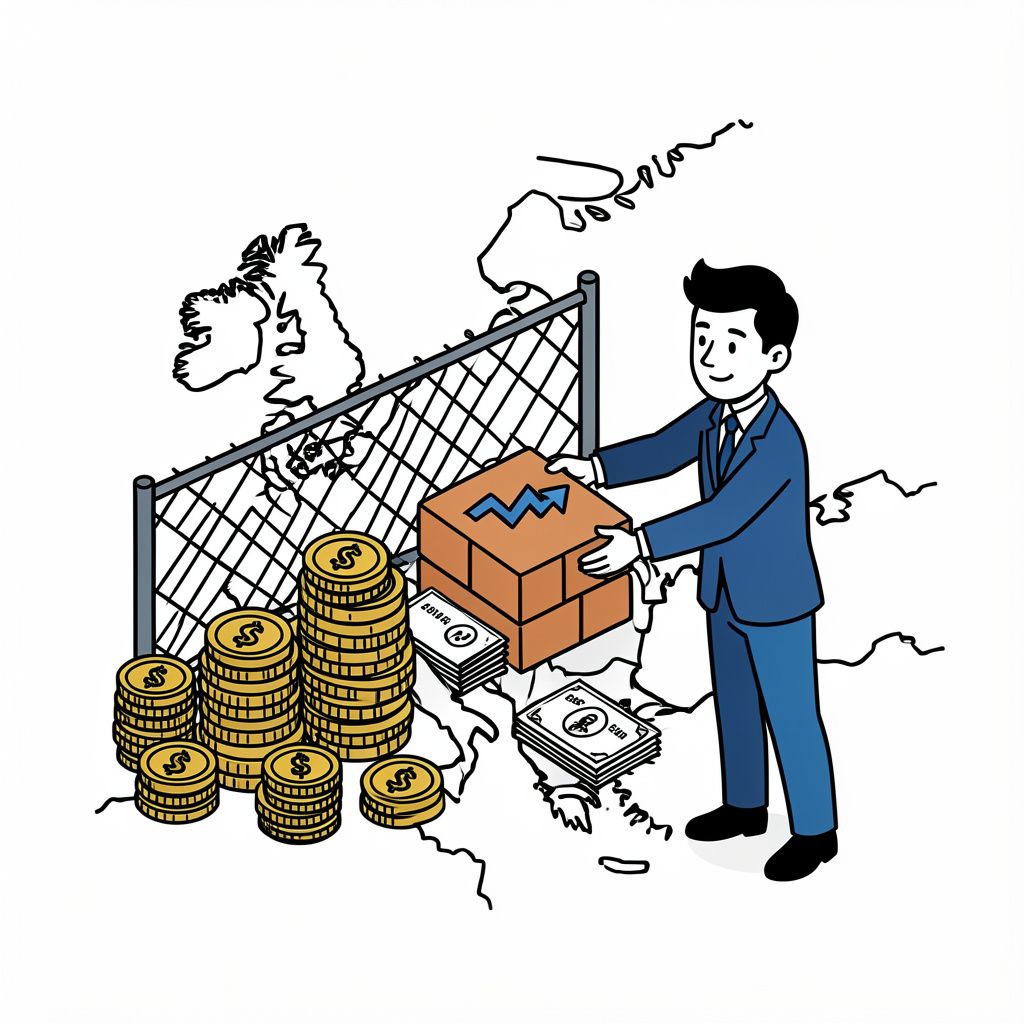
American institutional investors are channeling capital into Eastern European defense infrastructure, treating local construction capacity as a crucial security defense measure rather than a mere economic asset.
Strategic Capital Deployment on the Eastern Flank
On October 4, 2026, a pivotal roundtable titled “Anchoring the Eastern Flank: Critical Infrastructure and Transatlantic Capital in Central and Eastern Europe” convened in New York to address urgent infrastructure needs [1]. Hosted by Concelex and Atlantic Council Romania, the event highlighted a shift where U.S. institutional investors are targeting critical dual-use and defense-related infrastructure along NATO’s eastern border [1]. Romanian infrastructure firm Concelex introduced a specialized sovereign infrastructure initiative aimed at integrating local construction capacity with Western capital partners [1]. This move underscores a broader trend of private capital augmenting allied government expenditures to build resilient supply chains and energy security across the region [1]. High-level attendees included Romanian President Nicușor Dan, Finance Minister Alexandru Nazare, and Presidential Advisors Marius Lazurca and Radu Burnete [1]. The presence of Romania’s Ambassador to the U.S., Andrei Muraru, further signaled the diplomatic weight assigned to these economic security measures [1].
Infrastructure as a Security Capability
Radu Pițurlea, CEO of Concelex and member of Atlantic Council’s Board of Directors, emphasized that recovery depends on equipment and crews already present in the territory during a crisis [1]. He noted that a state may hold every repair capability and still remain exposed if that knowledge sits under another jurisdiction [1]. This perspective frames the infrastructure industry as a security capability rather than just an economic one [1]. Concelex proposed a “Strategic Infrastructure Index for NATO’s Eastern Flank” to catalog asset construction, restoration, response speed, and jurisdictional control [1]. Additionally, the firm submitted formal proposals to integrate delivery capacity into qualification criteria for strategic projects [1]. Frederick Kempe, President and CEO of Atlantic Council, stated that infrastructure, energy, and communications can no longer be planned country by country [1]. He argued that these sectors must be prioritized and integrated across borders due to their impact on energy prices and supply chains [1].
Corporate Capacity and Upcoming Forums
With over 30 years of experience, Concelex reported 2025 revenues of RON 1.4 billion and employs more than 1,300 people [1]. The company currently manages approximately 100 active construction sites in Romania, demonstrating significant local capacity [1]. U.S. investors identified NATO’s Eastern Flank as a major investment opportunity for the decade, contingent on clear risk allocation [1]. Looking ahead, Concelex and the Atlantic Council plan to further develop project proposals and continue discussions at a future event in Bucharest [1]. Concurrently, the broader business community is gathering for the Forbes Romania Business Bridges 2026 event from October 6-8, 2026, at Forbes on Fifth in New York [3]. This sequence of events illustrates the intensified focus on capital markets and real estate developments linking Romanian and American economic interests [2][4].