Record Butter Consumption and Dairy Growth Signal Major Shift in U.S. Dietary Trends
Washington, Wednesday, 17 December 2025.
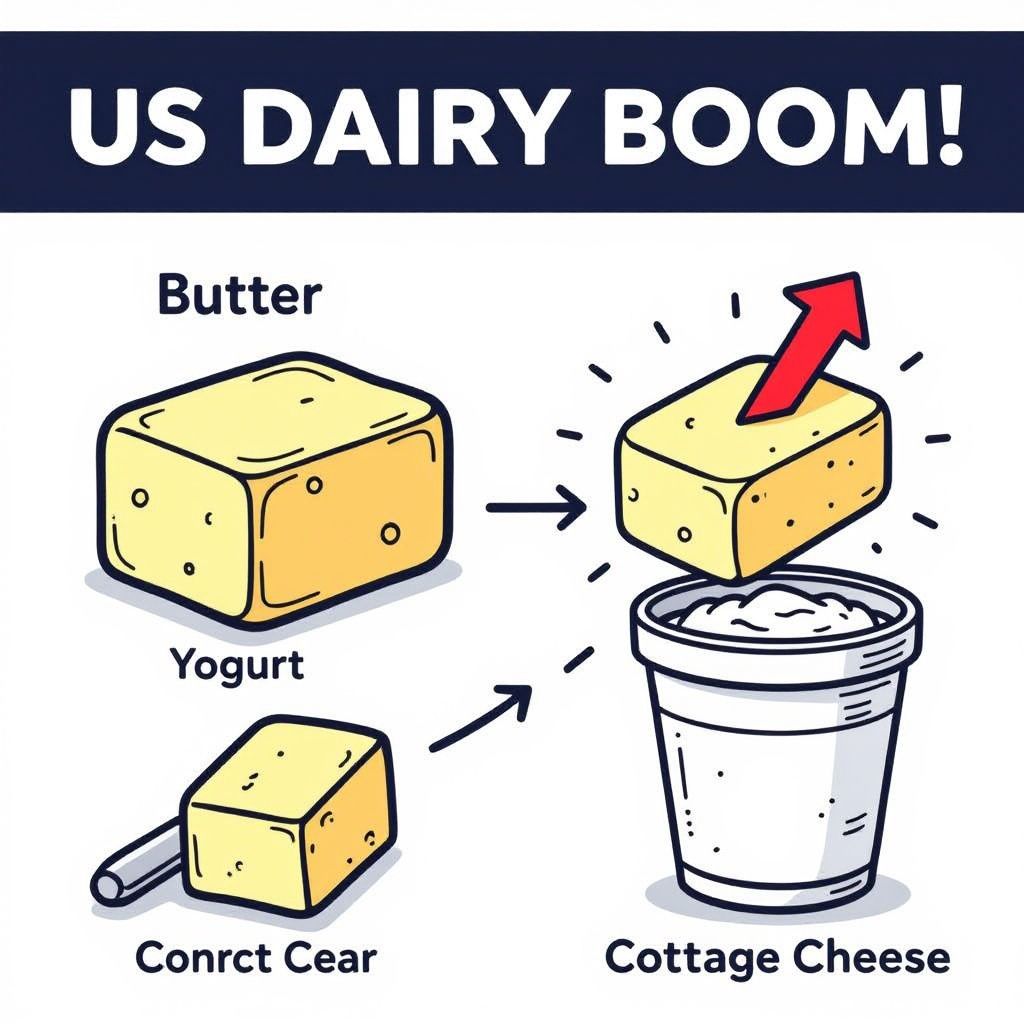
Data released on December 16, 2025, reveals a historic shift in U.S. consumer behavior, with per-capita butter consumption reaching a record 3.08 kg in 2024. This surge in demand for traditional fats accompanies significant growth in yogurt and cottage cheese, validating an $11 billion industry investment in expanded manufacturing capacity. These figures signal a stabilizing market for producers and offer critical insights for investors, as Americans decisively pivot back toward wholesome, full-fat dairy products over alternatives.
A Return to Traditional Fats
The resurgence of traditional dairy fats is quantified by the 2024 data, showing total per-capita dairy consumption in the U.S. reaching 295.3 kg [1]. While fluid milk consumption saw a modest decline to 57.6 kg per person, it now represents approximately 19.506 percent of the total dairy volume consumed, highlighting the drastic pivot toward value-added products [1]. Yogurt consumption, for instance, climbed to 6.58 kg, marking a 6% increase from the previous year, while cottage cheese consumption hit 1.08 kg, its highest level since 2009 [1]. Even regular ice cream saw growth, reaching 5.44 kg per person, reinforcing the trend that American households are prioritizing flavor and complete nutrition over low-fat alternatives [1].
Infrastructure Investment Meets Consumer Demand
To meet this evolving palate, dairy processors have committed over $11 billion to new and expanded manufacturing capacity across 19 states [1]. This capital injection supports over 50 manufacturing projects, including new plants and logistics capacity, intended to bolster a sector that already generates $779 billion in overall economic impact and supports more than 3 million jobs [1]. Michael Dykes, D.V.M., CEO of the International Dairy Foods Association, attributes this sustained demand to the trifecta of flavor, affordability, and nutrition, suggesting that the industry’s significant capital expenditure is a calculated response to a long-term shift in dietary preferences rather than a temporary fluctuation [1].
Biological Headwinds in the Heartland
However, this market optimism faces immediate biological headwinds. On December 14, 2025, the USDA confirmed the first case of highly pathogenic avian influenza (HPAI) in a Wisconsin dairy herd, specifically in Dodge County [2][3]. This detection brings the total number of affected states to 18 since the outbreak began in March 2024 [2][4]. The virus was identified as the H5 clade 2.3.4.4b strain through PCR and ELISA assays conducted as part of the routine National Milk Testing Strategy [4]. While the affected farm has been quarantined and symptomatic cattle separated, the presence of the virus in a major dairy-producing state like Wisconsin introduces a layer of operational risk to the supply chain [3][4].
Safety Protocols and Market Context
Despite the alarming nature of the pathogen, regulatory bodies maintain that the consumer supply remains secure. The FDA has confirmed that standard pasteurization effectively inactivates the virus, and milk from symptomatic animals is diverted from the commercial supply chain or destroyed [2][4]. In the broader financial markets, the livestock sector is seeing technical corrections; as of December 15, 2025, cattle futures were reported as “overbought” following a period of higher weekly closes [5]. While the demand for dairy products is at historic levels, these market fluctuations and biological constraints suggest that producers must navigate a complex environment of robust consumer interest tempered by significant production risks.