Supreme Court Evaluates Police Access to Mass Cellphone Location Data Today
Washington, D.C., Monday, 27 April 2026.
Today, the Supreme Court reviews if police can seize mass cellphone data tracking users within three meters, a ruling that will redefine digital privacy and corporate compliance nationwide.
The Catalyst for the Constitutional Challenge
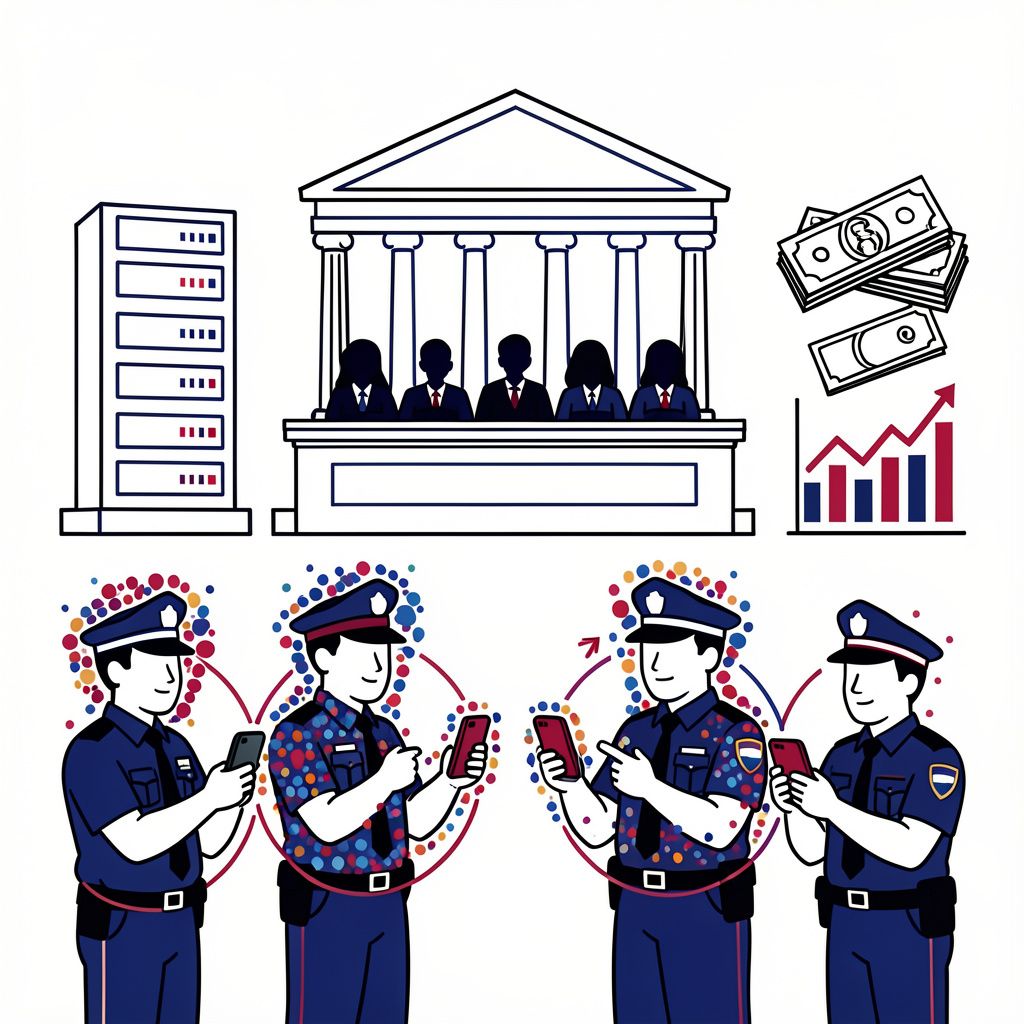
On April 27, 2026, the United States Supreme Court is hearing oral arguments in Chatrie v. United States, a landmark case closing out the court’s 2025 October term [3][4][5][6]. The dispute originates from a 2019 robbery at Call Federal Credit Union in Midlothian, Virginia, where a perpetrator demanded “at least 100k” and ultimately stole $195,000 from the vault [1][2]. To identify the suspect, law enforcement utilized a geofence warrant, compelling Google to parse location data for all mobile devices within a 300-meter radius of the bank during a 60-minute window encompassing the time before and after the crime [1][2].
Debating the Fourth Amendment in the Digital Age
The core political and legal debate centers on whether the Fourth Amendment’s protection against unreasonable searches and seizures applies to the mass collection of third-party digital location data [2][4]. Chatrie’s defense attorney, Adam Unikowsky, argues that while the technology is novel, the constitutional issue mirrors the Founding Fathers’ revulsion toward general warrants that allowed the government to search broadly and develop suspicions later [2]. The defense relies heavily on the 2018 Supreme Court precedent Carpenter v. U.S., which established that law enforcement generally requires probable cause and a warrant to access historical cellphone tower data [1][2].
Broad Implications for Corporate Data and Privacy
The technological capabilities under review are unprecedented in their precision, with the location data in Chatrie’s case capable of pinpointing a device within 3 meters every two minutes [2]. This level of granularity has transformed how major tech corporations manage consumer data and respond to law enforcement requests [GPT]. William McGeveran, dean of the University of Minnesota Law School, notes that the implications of this case extend far beyond Google, applying to “any of the digital technology that is tracking your location, which is a lot of things” [2].
Sources
- www.nytimes.com
- www.cnn.com
- www.law360.com
- news.bloomberglaw.com
- www.theepochtimes.com
- www.facebook.com