Amazon's Zoox Wins Approval for Paid Driverless Rides in Las Vegas
Las Vegas, Thursday, 6 August 2026.
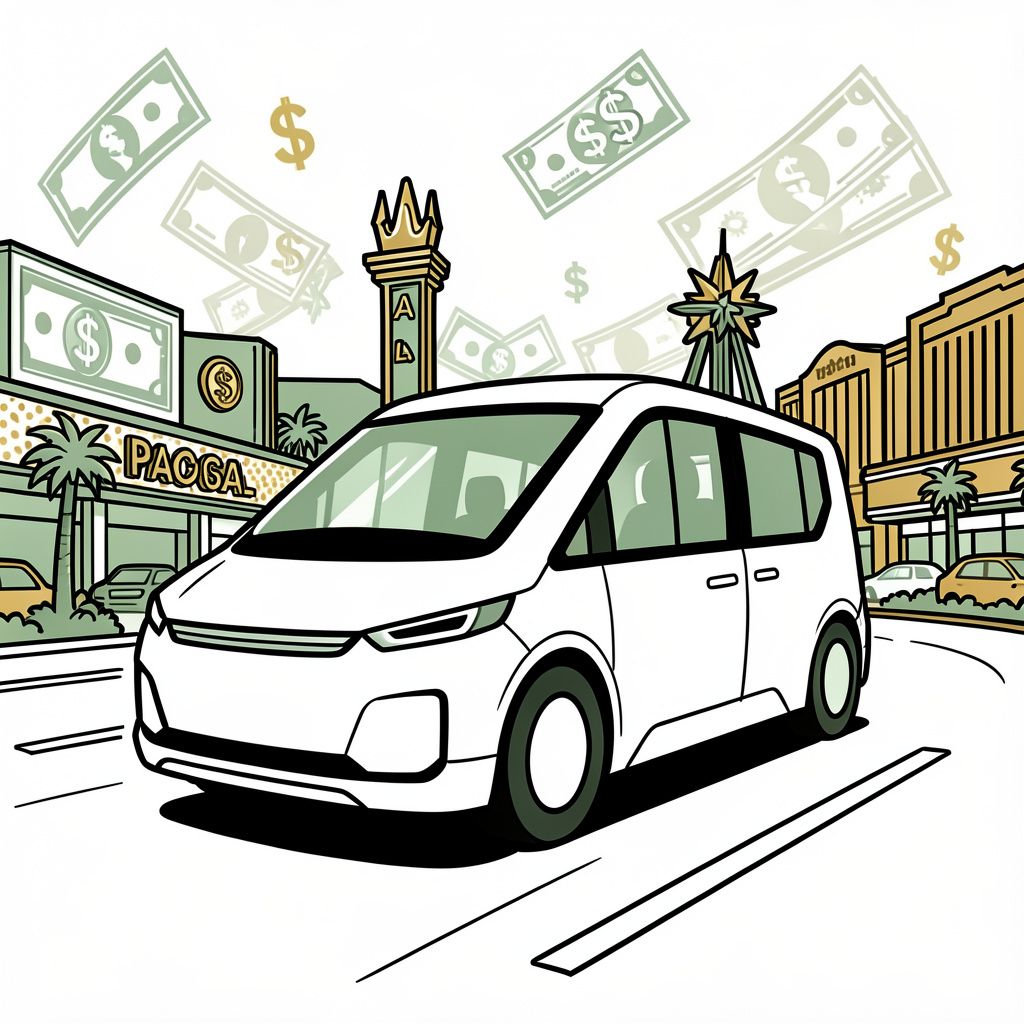
Amazon’s Zoox will launch its first paid driverless robotaxi service in Las Vegas on August 10, 2026, marking a pivotal transition to commercial operations for its custom steering-wheel-free vehicles.
Commercial Launch Overview
Amazon’s Zoox will launch its first paid driverless robotaxi service in Las Vegas on August 10, 2026, marking a pivotal transition to commercial operations for its custom steering-wheel-free vehicles [1][2]. This milestone represents a significant step in Amazon’s (NASDAQ: AMZN) strategy to commercialize fully driverless vehicle technology, positioning the company to compete directly with Alphabet’s Waymo in the autonomous transport market [1][4]. The service begins operations four days from today, transitioning from a free public trial phase that commenced in 2025 [2][3].
Regulatory Approval and Exemptions
Federal regulators granted Zoox a temporary exemption from human control requirements in July 2026, enabling the company to charge fares for the first time [2][3]. The National Highway Traffic Safety Administration (NHTSA) approved the fully autonomous Zoox robotaxis on August 6, 2026, to charge for rides in Las Vegas and San Francisco, pending state and local authorization [1]. This regulatory green light follows a period where Zoox provided free rides in these cities since 2025, allowing the company to gather operational data before commercialization [1][2].
Regulatory Landscape and Safety Concerns
Despite the approval, safety advocacy groups have raised concerns regarding the operational plan for driverless vehicles on public roads [1]. The Advocates for Highway and Auto Safety group criticized the lack of detailed safety evidence, with general counsel Peter Kurdock noting there was no data behind the promises [1][4]. NHTSA Administrator Jonathan Morrison emphasized the agency’s role as a cop on the beat to ensure safety standards are met as technology evolves beyond 1970s-era standards [1].
Vehicle Specifications and Design
Zoox operates custom vehicles lacking traditional steering wheels or brakes, featuring a four-passenger carriage-style design with bidirectional wheels [2][3]. These toaster-shaped vehicles are designed without standard controls, a feature that has drawn both interest and scrutiny from regulators and safety organizations [1][3]. The company intends to produce up to 10,000 robotaxis annually at a plant near Silicon Valley, though currently permitted to deploy a maximum of 2,500 steering-wheel-free vehicles over the next two years to prove safety [1].
Market Position and Competition
Waymo, owned by Alphabet, currently leads the industry, operating in multiple cities while competitors like Tesla and Amazon-owned Zoox work to expand their presence [1]. Since launching free public service less than a year prior to August 2026, Zoox vehicles have traveled over 4.8 million kilometers and transported nearly 1 million riders across Las Vegas, San Francisco, Austin, and Miami [4]. In comparison, Waymo has driven over 354 million kilometers and currently logs approximately 500,000 trips per week across 11 cities [4].
Operational Scale Comparison
The disparity in operational distance highlights the scale difference between the market leader and the new commercial entrant. Zoox’s total distance traveled represents a fraction of Waymo’s accumulated mileage, calculated as 1.356 percent of Waymo’s total distance [4]. This metric underscores the challenge Zoox faces in scaling its operations to match the incumbent’s data积累 and market penetration levels [4].
Pricing and Business Strategy
Zoox intends to price rides competitively with comfort level ride-hailing tiers, using a structure based on base price, distance, time, and potential destination fees [2][3]. Pricing for Las Vegas rides will be calculated based on distance and time fixed before booking, and may include destination fees for areas like the airport, the Sphere, or T-Mobile Arena [3]. CEO Aicha Evans noted that paid operations bring a new level of customer expectation compared to free trials [2].
Vertical Integration Approach
Unlike competitors such as Waymo and Uber that rely on partners for fleet manufacturing and operations, Zoox manages the entire vertical stack, including vehicle design, manufacturing, and depot operations [4]. Zoox co-founder and CTO Jesse Levinson stated that because they are vertically integrated, they can do things that other companies cannot [4]. Amazon acquired the self-driving startup Zoox for $1.2 billion and aims to scale the technology with significant investment [1][4].
Future Outlook
To expand paid operations beyond Las Vegas, Zoox requires additional state and local regulatory approvals [2]. The company aims to continue scaling operations, though specific base fare figures remain undisclosed as they finalize market entry strategies [2][3]. This launch marks the official commercial operations launch for Zoox, transitioning from a research and free trial entity to a paid service provider [3][4].