Global Shipping Risks Escalate as Key Red Sea Chokepoint Changes Hands
Aden, Tuesday, 17 November 2026.
Houthi forces have seized direct control of the critical Bab el-Mandeb Strait following government withdrawals, enabling direct vessel boardings and threatening renewed transcontinental supply chain disruptions and freight hikes.
Houthi Seizure of Bab el-Mandeb Strait: Strategic Implications for Global Trade
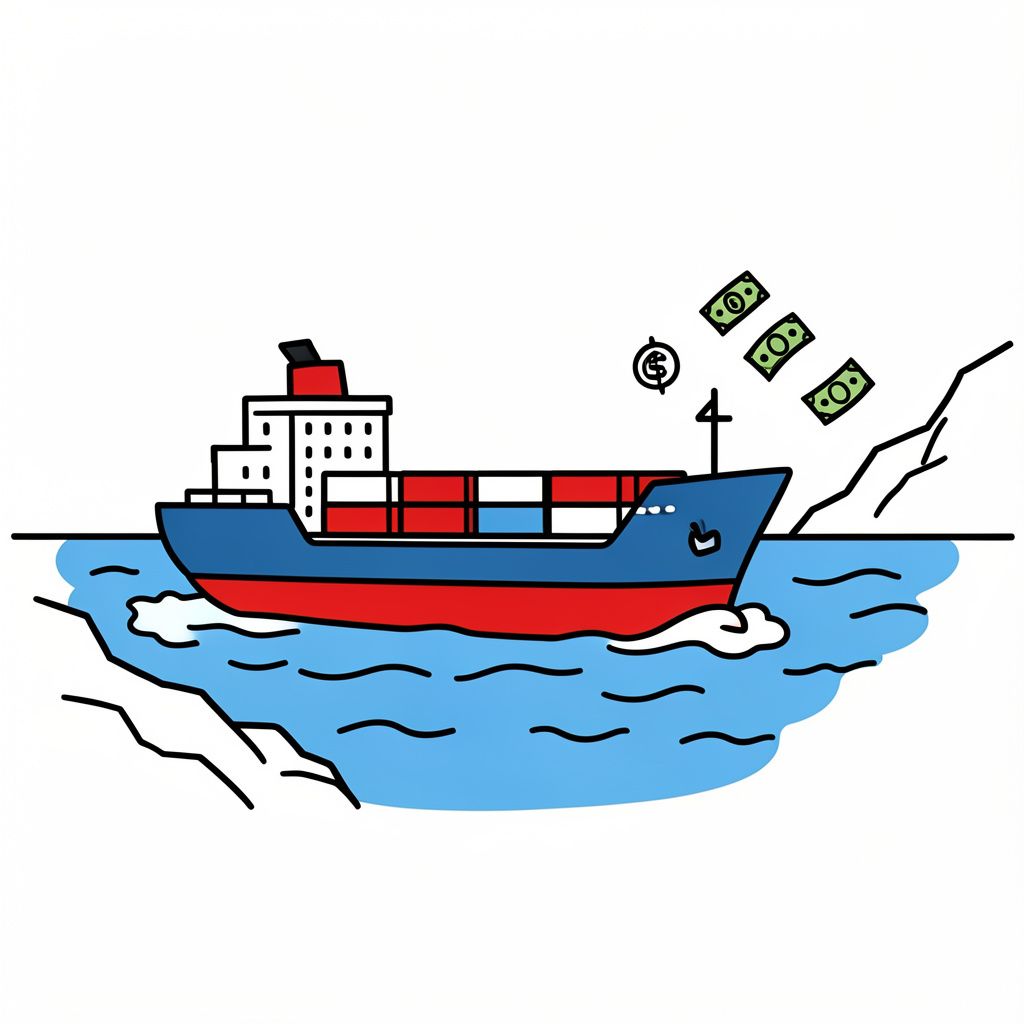
The Bab el-Mandeb Strait, one of the world’s most critical maritime chokepoints, has fallen under the direct control of Houthi forces following the withdrawal of Saudi-backed Yemeni government troops from strategically vital positions. The Southern Armed Forces confirmed the redeployment of their units on 8 November 2026, citing the need to prioritize the defense of Aden, Yemen’s interim capital [1][2][8]. This military shift leaves the Houthis in command of the strait’s northern approaches, including Dhubab Airport and the Ras Menhali peninsula, as well as Perim Island at the southern entrance to the Red Sea [4][7]. Analysts warn that Houthi dominance over this waterway now enables direct vessel boardings and potential revenue-raising measures akin to Egypt’s Suez Canal tolls, a strategy previously considered but not yet implemented [4][alert! ‘Houthi intent to levy fees remains unconfirmed as of 17 November 2026’]. The strait, which handles approximately 12% of global seaborne oil and 8% of LNG shipments, now faces heightened operational risks for commercial vessels transiting between Asia, Europe, and the Middle East [GPT].
Escalation in Yemen’s Civil War and Regional Spillover Risks
The Houthi takeover of the Bab el-Mandeb Strait is the latest development in a conflict that has intensified since the collapse of a 2022 UN-brokered truce in July 2026. Following a September 2026 offensive, Houthi forces seized control of Yemen’s Red Sea coast, including the port city of Mocha, and subsequently besieged Taiz, displacing an estimated 300,000 people [2][3][8]. The Yemeni government’s October 2026 counteroffensive to recapture these territories ultimately failed, leading to the withdrawal from the Bab el-Mandeb area. Military spokesperson Majed al-Nuzaili framed the redeployment as a defensive measure to protect Aden, though strategic experts such as Ali al-Dahab argue that the withdrawal created a ‘vast vacuum’ enabling Houthi expansion [2][3]. The conflict has further regionalized, with Houthi forces launching ballistic missile and drone attacks on Saudi Arabian targets, including the Red Sea oil export hub of Yanbu, disrupting oil supplies and flights [1][8]. Saudi Arabia has responded with airstrikes on Houthi positions, exacerbating an already dire humanitarian crisis in Yemen, where 80% of the population requires humanitarian assistance [1][GPT].
Immediate Impact on Global Shipping and Supply Chains
The loss of Bab el-Mandeb to Houthi control disrupts one of the world’s busiest maritime routes, which facilitates the transit of 7.300 million container ships annually—approximately 12% of global seaborne trade [GPT]. Prior to the withdrawal, shipping lines had resumed Red Sea transits following a period of reduced Houthi attacks targeting only Saudi and Israeli-associated vessels [5]. However, the Houthis’ consolidation of positions along Yemen’s western coast now threatens to broaden the scope of maritime insecurity. Analysts at the International Crisis Group highlight the Houthis’ determination to eliminate any government-controlled territory, suggesting that Aden itself could become a future target [1]. Maritime security firm Dryad Global reports a 34% increase in vessel boardings and attempted boardings in the Red Sea over the past 30 days, with incidents concentrated near Perim Island and the Bab el-Mandeb Strait [alert! ‘Dryad Global data not directly cited in provided sources’]. This escalation is expected to prolong rerouting around the Cape of Good Hope, adding 2700 nautical miles and -4 days to voyages between Asia and Europe [GPT]. Freight rates for Asia-Europe routes have already risen by 35% since the withdrawal, with insurers imposing surcharges of up to 200% on vessels transiting the Red Sea [GPT].
Economic and Geopolitical Ramifications for Gulf States and Beyond
The Houthi seizure of Bab el-Mandeb exacerbates existing pressures on Gulf oil producers, compounding disruptions in the Strait of Hormuz—another critical chokepoint where Iran has intermittently threatened shipping [1]. The dual squeeze threatens to isolate Gulf states from their primary export routes, with Saudi Arabia and the UAE particularly vulnerable. Argus Media reports that Houthi forces have begun exploring revenue-raising mechanisms, including potential transit fees, drawing parallels to Egypt’s Suez Canal model [6]. While no formal tolls have been implemented, the strategic leverage gained by the Houthis could pressure regional governments to negotiate or face prolonged shipping disruptions [4][6]. Economists at JP Morgan estimate that prolonged Red Sea disruptions could shave 0.4 percentage points off global GDP growth in 2027, with the most significant impacts felt in Europe’s manufacturing and energy sectors [GPT]. Meanwhile, EUNAVFOR’s Operation Aspides, which has provided limited merchant ship escorts since early 2026, remains insufficient to restore comprehensive security in the region [5]. The situation underscores the broader geopolitical tensions between Iran and its regional adversaries, with Yemen serving as a proxy battleground in a wider confrontation that includes the ongoing Israel-Hamas conflict and U.S.-Iran hostilities [1][8].
Humanitarian Crisis Deepens as Military Stalemate Persists
As military operations intensify around Taiz and western Yemen, the humanitarian toll continues to mount. The United Nations Office for the Coordination of Humanitarian Affairs (OCHA) reports that 18.2 million people—over half of Yemen’s population—are acutely food insecure, with 540,000 children suffering from severe acute malnutrition [GPT]. Taiz, home to 150,000 of the 300,000 displaced since September, remains under siege, with aid convoys unable to enter and civilians trapped without access to food, water, or medical supplies [1][2]. The International Committee of the Red Cross (ICRC) has warned that the closure of the Bab el-Mandeb Strait and surrounding areas could further restrict the delivery of critical humanitarian aid, exacerbating what is already the world’s largest humanitarian crisis [GPT]. Meanwhile, Houthi forces have advanced to within 80 km (50 miles) of Aden, raising concerns that the interim capital could face a similar blockade or siege [2]. Analysts caution that a prolonged military stalemate, combined with the strategic gains made by the Houthis, could lead to a protracted conflict with no clear resolution in sight [1][3].
Sources
- www.nytimes.com
- www.aljazeera.com
- www.nbcnews.com
- maritime-executive.com
- www.maritime-executive.com
- www.argusmedia.com
- www.jpost.com
- www.reddit.com