Danish Intelligence Warns of Rising Risk of Russian Attacks on NATO Infrastructure
Copenhagen, Saturday, 26 September 2026.
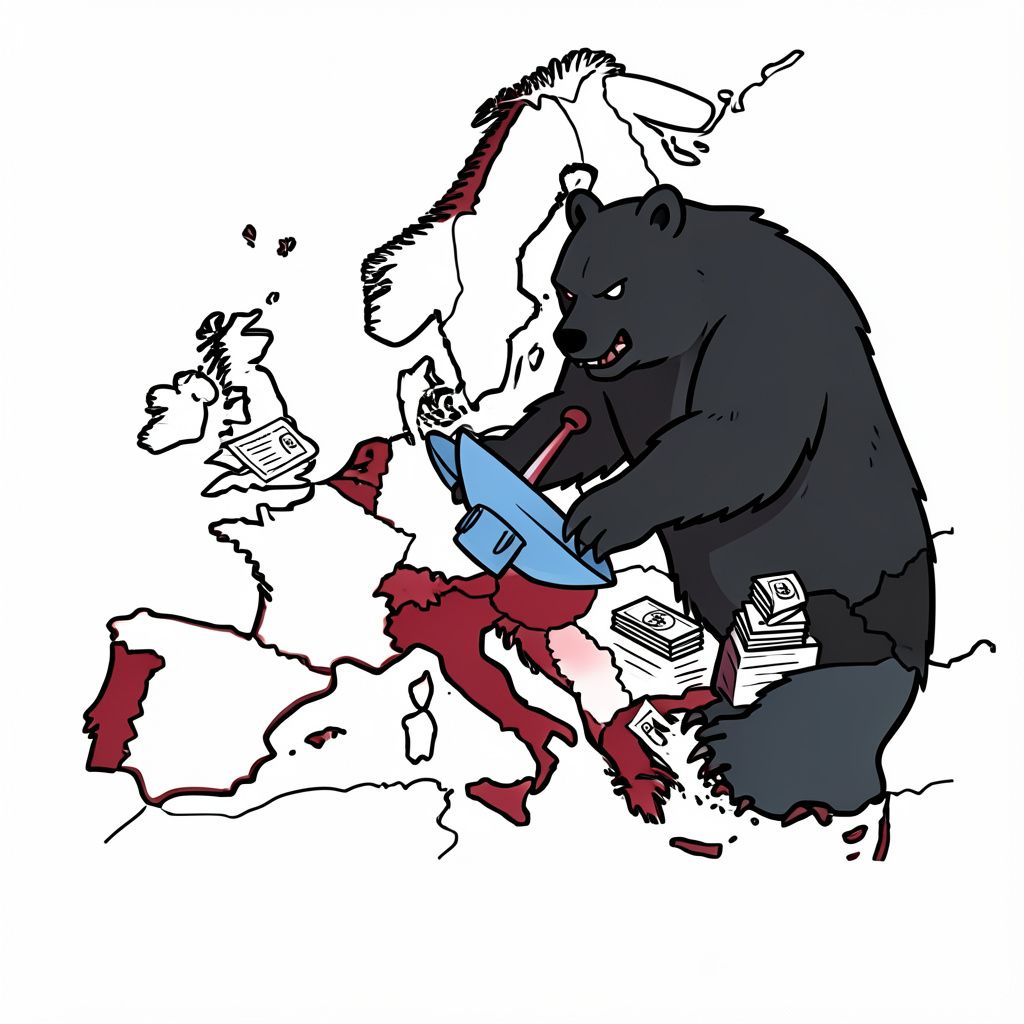
Danish intelligence warns Russia may launch limited military strikes on NATO members within months to disrupt Ukraine support, following a confirmed sabotage attack on Polish satellite infrastructure.
Danish Intelligence Warns of Rising Risk of Russian Attacks on NATO Infrastructure
Danish intelligence warns Russia may launch limited military strikes on NATO members within months to disrupt Ukraine support, following a confirmed sabotage attack on Polish satellite infrastructure [1][2]. On 24 September 2026, the Danish Defence Intelligence Service (DDIS) released an assessment identifying a low but growing risk of Russian military strikes or troop deployments into NATO territory in the coming months [1][3]. The assessment highlights that while a full-scale invasion is not currently indicated, localized attacks aimed at infrastructure critical to supporting Ukraine remain a distinct possibility [2][3]. This warning aligns with a broader pattern of escalating geopolitical risk across Northern and Eastern Europe, posing significant disruptions to transatlantic trade routes and defense supply chains [1][4].
Recent Incidents Signal Shift in Tactics
The intelligence warning follows specific incidents that security officials classify as acts of sabotage intended to disrupt military and civilian services [2][4]. On 23 September 2026, the Polish government confirmed that a fire at a Starlink ground station in Wola Krobowska was an act of sabotage designed to disrupt internet services utilized by the Ukrainian military [2][4]. Polish Deputy Prime Minister Krzysztof Gawkowski stated that many signs suggest this aligns with Russia’s new doctrine of attack, emphasizing the element of hybrid warfare [2][4]. Additionally, on 14 September 2026, a Russian frigate fired flares at a Danish military helicopter in international waters off Gedser, marking a serious escalation in the Baltic Sea region [3][4].
Hybrid Warfare Escalation
The DDIS report indicates that Russia is actively shifting its hybrid warfare strategy from creating fear to directly obstructing military aid by targeting defense companies and railway transport networks [3][4]. German authorities previously confirmed that a foiled drone attack on Leipzig/Halle Airport was planned by Russia over several months, illustrating an intensification of sabotage and destructive cyber attacks across Europe [2][3]. Danish intelligence projects that Moscow will intensify these hybrid attacks against European nations in the coming months, specifically citing risks of destructive cyber-attacks that could cripple societal functions [2][4]. The stated purpose of these actions is to redirect European resources away from supporting Ukraine and to sow division within NATO should the alliance fail to agree on a collective response [1][3].
Strategic Timelines and Capabilities
Regarding military readiness, the DDIS maintains previous timelines established in earlier assessments, projecting specific windows for potential conflict escalation [3]. The assessment outlines a capability for local war within approximately 6 months, regional war within 2 years, and large-scale war within 5 years from the baseline of previous evaluations [3]. While the 6-month window for local war from a February 2025 assessment has passed, the current evaluation confirms that Russia’s ability to escalate against the West remains independent of the status of the war in Ukraine [3][5]. Danish intelligence notes that even if Russia decides to invade a NATO country, it would likely take at least six months to prepare and build up the necessary forces, making such a move difficult to conceal [3][5].
NATO Response and Market Implications
In response to the heightened threat matrix, NATO is increasing intelligence-sharing protocols following the series of concerning incidents attributed to Russia [4][5]. US Air Force General Alexus Grynkewich, Supreme Allied Commander Europe, confirmed these measures while describing the alliance’s posture as calm and confident despite the risks [4][5]. For global business leaders and policymakers, the heightened risk matrix demands immediate contingency planning regarding European market exposure and critical infrastructure resilience [1][2]. The Russian embassy in Denmark officially rejected the assessment on 24 September 2026, labeling the claims as unsupported by credible evidence, yet security services maintain the threat level regarding potential cyberattacks remains elevated [4][5].