Surging Energy Costs Halt Residential World Cruise and Strand Residents
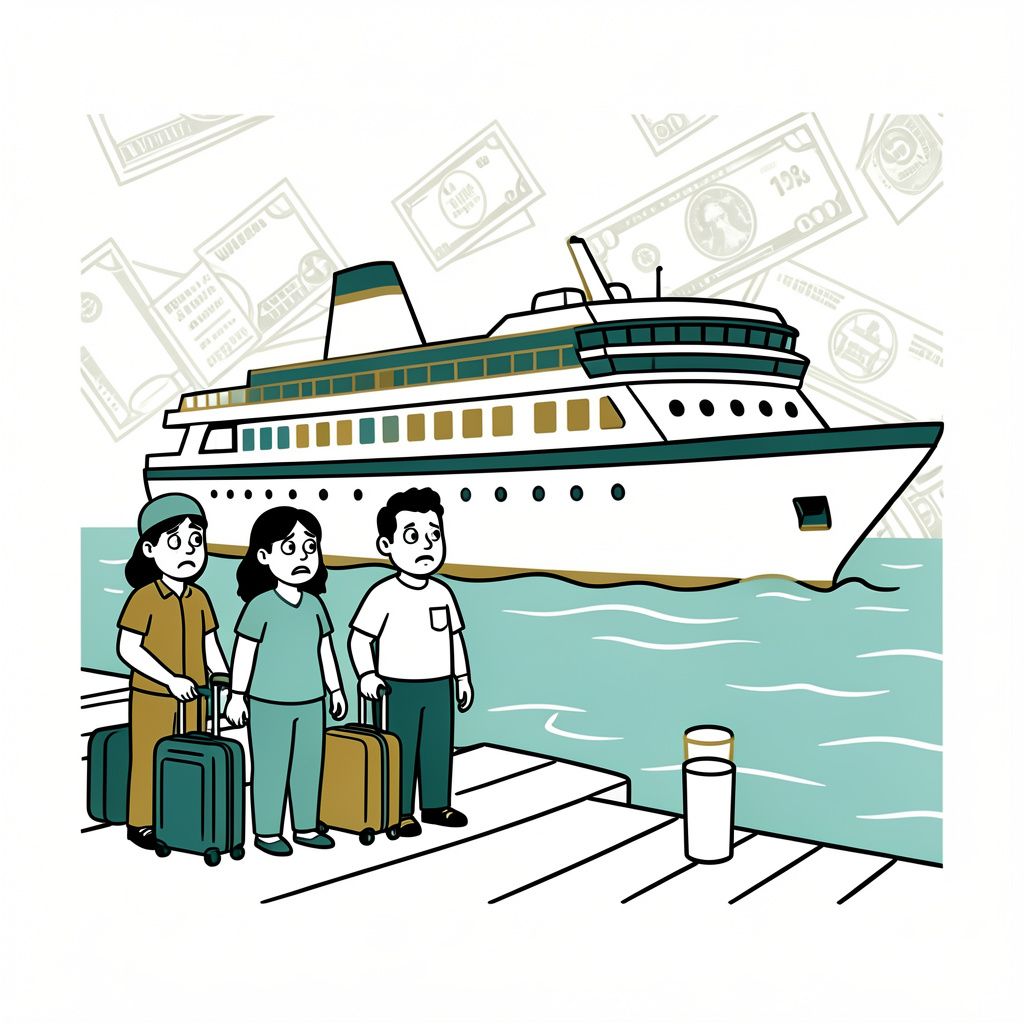
Sihanoukville, Thursday, 29 October 2026.
Crushed by Asian fuel costs surging to $8,000 per cabin following Middle Eastern conflict, operator Villa Vie Residences abruptly halted operations, stranding over 200 global residents in Cambodia.
The Collapse of a Floating Retirement Dream
On Tuesday, 28 October 2026, Villa Vie Residences—Florida-based operator of the MV Odyssey residential cruise ship—announced an abrupt suspension of its three-and-a-half-year global voyage, stranding 203 passengers and 156 crew members in Sihanoukville, Cambodia [1][2][3][4][5]. The decision followed an unsustainable spike in bunker fuel costs, which had escalated from an average of $1,800 per cabin per month to an estimated $6,000 to $8,000 in parts of Asia due to geopolitical disruptions in the Strait of Hormuz [1][2][3][5]. The MV Odyssey, a 200-meter Bahamas-flagged vessel built in 1993 and purchased by Villa Vie in 2023, had departed Belfast in October 2024 with a planned itinerary covering nearly 150 countries [1][2][3][5].
Seven Hours to Disembark: A Sudden Unraveling
Passengers were given just seven hours’ notice to disembark on Monday, 27 October 2026, during a scheduled stop in Sihanoukville. Long Dimanche, deputy governor of Preah Sihanouk Province, confirmed that 203 guests and 156 crew arrived aboard the ship from Thailand on 23 October 2026 and were due to proceed to Vietnam before the abrupt change [1][2][4]. Randy Cassingham, a resident and cruise blogger, described the disembarkation order as the culmination of a ‘cascade of problems,’ including delayed launch, undercapacity (peaking at 350 of a possible 650 residents), and chronic mismanagement [2][4]. Some passengers reported receiving no support and having to arrange their own flights or temporary lodging, while others remained in Sihanoukville awaiting clarity on the ship’s future [2][4][5].
Financial Strain and Failed Mitigation Strategies
Villa Vie Residences attributed the suspension to ‘extraordinary’ fuel cost increases following the US-Israel war on Iran, which curtailed traffic through the Strait of Hormuz and pushed oil prices above $117 per barrel [2][3][5]. The company stated that passing these costs to residents was not feasible, as monthly fuel expenses per cabin had ballooned from $1,800 to $6,000–$8,000 [1][2][3][5]. Efforts to mitigate the crisis—such as slowing itineraries and extending port time—proved insufficient, leaving Villa Vie unable to cover operating losses [3][5]. CEO Mikael Petterson had previously asserted that residential cruising was sustainable, but the venture’s financial model collapsed under the weight of fuel volatility and operational missteps [5][alert! ‘Petterson’s sustainability claim predates the 2026 crisis, and no post-2026 financial projections are available’].
Human Impact: Sold Homes, Shattered Dreams
Among the stranded passengers was Carol Larson of Minnesota, who purchased her cabin for $120,000 in installments plus monthly maintenance fees, intended for up to 15 years of life at sea. She expressed no regrets, calling the experience a ‘blessing’ despite the abrupt end [2][3][4]. Others, like Pamela Reckamp, warned that without additional funding, the ship would run out of fuel within four days, leaving essential systems like lighting and air conditioning inoperable [2][3][4]. Lynn Montoya, a retired Wyoming resident, criticized persistent requests for additional payments and alleged unpaid crew wages, describing a pattern of mismanagement that eroded trust [3][5].
Uncertain Future: Restructuring or Abandonment?
Villa Vie Residences has entered a 60-day restructuring and recapitalization phase, aiming to coordinate disembarkation and temporary living arrangements for affected residents and crew [1][2][3][4]. As of 29 October 2026, the Odyssey remains in Sihanoukville, with an expected refueling and departure date of 31 October 2026, though no formal confirmation has been issued [1][2][4][5]. Meanwhile, passengers like Holly Hennessey and Lanette Canen remain in Cambodia, torn between hope for a rescue and acceptance of the venture’s failure [4][5]. The incident underscores the fragility of fixed-cost subscription models in volatile energy markets and raises questions about the long-term viability of residential cruise enterprises [GPT].
Sources
- www.abc.net.au
- www.theguardian.com
- apnews.com
- www.bbc.com
- www.nbcnews.com
- www.aljazeera.com
- www.facebook.com
- www.facebook.com