Global Billionaire Wealth Hits Record High Driven by Tech Investments
New York, Friday, 4 September 2026.
Global billionaire wealth surged to $15.1 trillion as tech and AI investments fueled significant gains, while just 29 superbillionaires now control over a quarter of that total wealth.
Record Wealth Accumulation in 2025
Global billionaire wealth expanded to a record $15.1 trillion last year as the worldwide count of billionaires reached 3,795 individuals, according to a report published by wealth intelligence firm Altrata in September 2026 [1]. The findings highlight an accelerating concentration of capital among the world’s richest individuals, driven by strong asset yields and market gains [1]. For business leaders and policymakers, this milestone underlines shifting global wealth dynamics, with major implications for luxury market expansion, philanthropic capital allocation, and growing fiscal regulatory scrutiny worldwide [1]. The global billionaire population rose by 8.2% in 2025, marking the strongest annual expansion in five years [5].
The AI Investment Catalyst
A significant driver of this growth was the artificial intelligence boom, with public companies investing at least $30 million in AI over the past five years outperforming non-AI peers by 23% in market capitalization growth from 2024 through 2025 [1]. Altrata’s “Billionaire Census 2026” report indicates that among 150 listed companies contributing most to billionaire wealth, those making meaningful investments in artificial intelligence recorded significantly higher growth than companies that did not [3]. This trend suggests that technology-focused fortunes are increasingly volatile but potent, responding sharply to the AI narrative [1].
Concentration of Capital
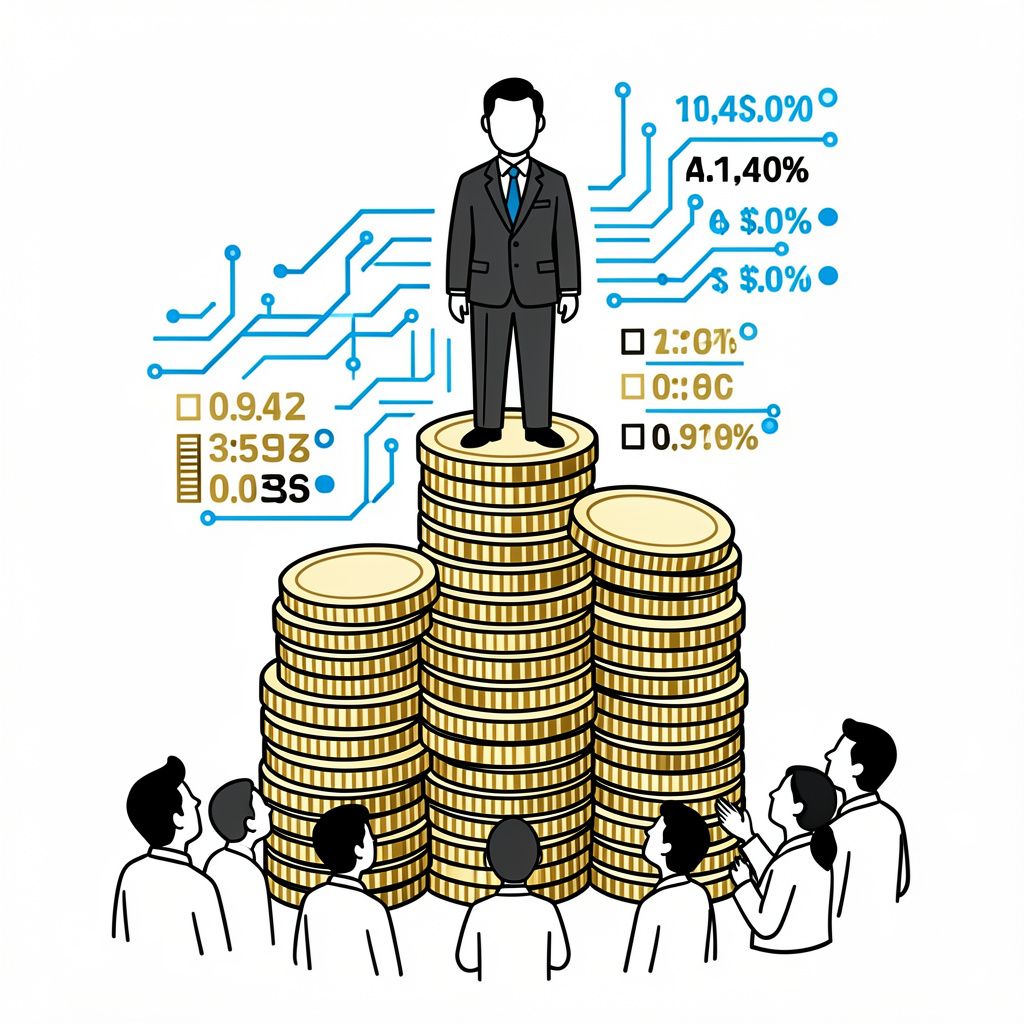
Wealth concentration is intensifying at every level, with the number of “superbillionaires” (individuals worth >$50 billion) rising to 29 in 2025 [1]. These 29 individuals control $4.1 trillion, representing 27% of all billionaire wealth, a stark increase from 10 individuals controlling 7.2% of wealth in 2017 [1]. The mathematical proportion of wealth held by this group can be expressed as 27.152, illustrating the density of assets at the very top of the pyramid [1]. This level of concentration indicates that market exposure is heavily weighted within one main sector, specifically tech and AI, creating potential systemic risks [1].
Regional Disparities and Shifts
North America hosts the largest billionaire population with 1,337 individuals, growing by 11.6% in 2025, followed by Europe with 1,081 and Asia with 881 [1]. The United States remains the largest billionaire market with 1,265 individuals, followed by China with 363 and Germany with 221 [3]. In the Middle East, the billionaire population increased by 5% to 254, although combined wealth fell by 4% to $700 billion amid weaker energy prices and underperforming regional equity markets [3]. The UAE was home to 59 billionaires with a combined wealth of $201 billion in 2025, placing it 14th globally by billionaire population [3].
City Rankings and Global Hubs
New York remained the world’s largest billionaire city with 164 individuals, an increase of 12 from the previous year [4]. Hong Kong retained its position as the world’s second-largest billionaire centre in 2025 with 106 billionaires, though property-sector weakness weighed on the city’s population [4]. Dubai ranked joint eighth among global cities by billionaire population, tying with Shenzhen, counting 43 billionaires in 2025 [3]. These city-level metrics reflect the broader trend of capital clustering in established financial hubs despite regional economic variances [3][4].
Future Outlook and Wealth Transfer
Looking ahead, the global stock of investable assets is projected to increase by 45% from 2025 levels, reaching $97.5 trillion by 2030 [2]. Altrata expects $6.6 trillion to transfer to billionaires’ spouses and children over the next decade, creating significant succession and governance requirements for family offices [4]. This generational transfer is set to reshape the client landscape, as a new generation of heirs with different spending habits and philanthropic priorities prepares to inherit vast sums [5]. Understanding this population has never been more complex or commercially critical for wealth managers [5].