Key Red Sea Trade Route Secured as Yemeni Forces Push Back Rebels
Dhubab, Monday, 5 October 2026.
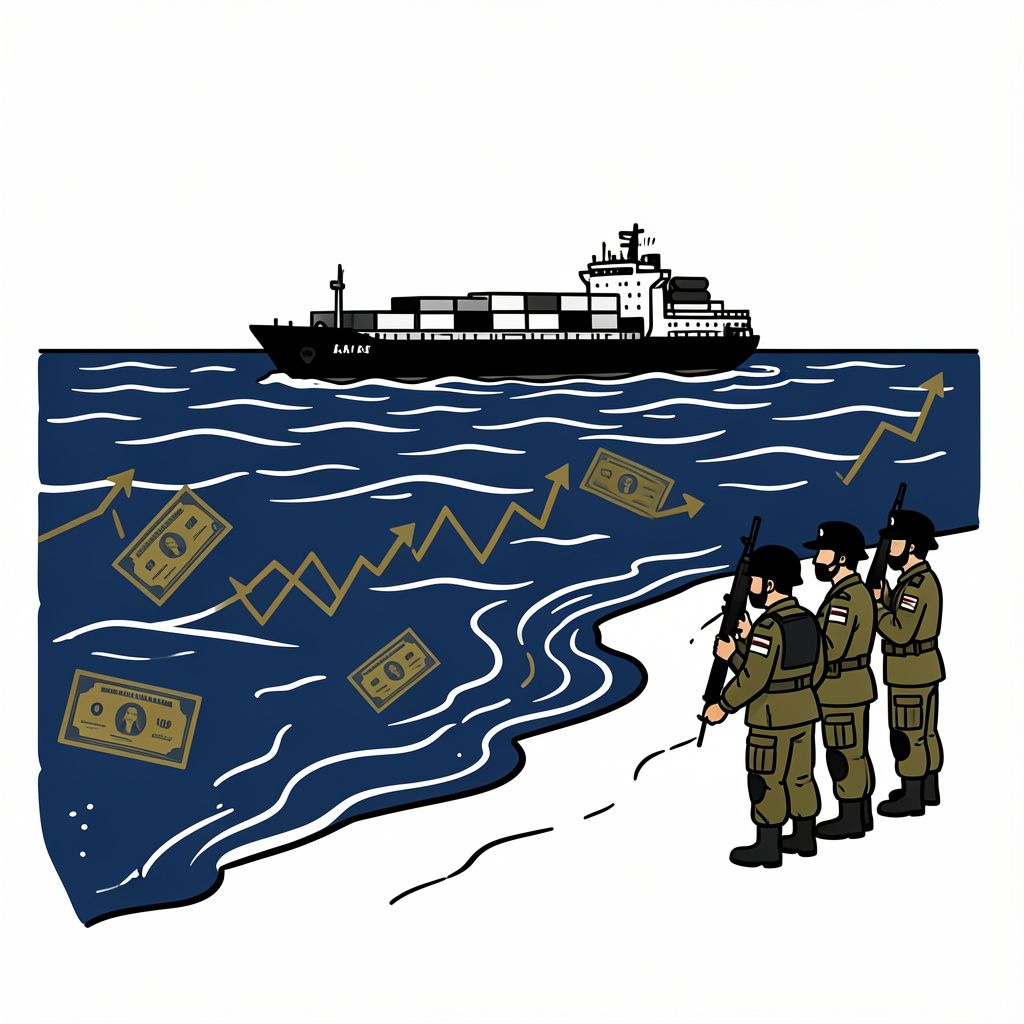
Yemeni government troops secured critical positions near the Bab al-Mandeb Strait, delivering a strategic boost to a vital shipping lane that handles twelve percent of global trade.
Operational Breakthrough and Military Coordination
On October 4, 2026, Yemeni government forces successfully reclaimed the Dhubab district, a critical area located near the Bab al-Mandeb Strait [1]. This military advancement follows a strategic offensive announced on October 3, 2026, by Rashad al-Alimi, Chairman of Yemen’s Presidential Leadership Council [1]. The operation, supported by air power from the Saudi-led coalition, targeted Houthi positions across several areas to secure the tactical high ground [6]. According to coalition spokesman Major General Turki al-Maliki, approximately 100 fighter jets provided air protection during the operation, resulting in the destruction of hundreds of Houthi targets [1].
Verification of the ground gains has been supported by multiple independent reports. Footage circulated on social media platforms confirms that government forces have cut off supply lines and roads leading to the Bab al-Mandeb Strait [5]. Additionally, pro-government forces including the Southern Giants Brigades and Nation’s Shield forces were identified as key components in seizing these strategic sites [6]. While the Houthi-controlled Saba news agency denied the advance, calling reports baseless, the consistency of claims from the internationally recognized government and coalition partners suggests a significant shift in control [6].
Regional Diplomacy and Strategic Alliances
Coinciding with the military offensive, high-level diplomatic engagements are underway in Riyadh. On Monday, October 5, 2026, officials from Pakistan, including Deputy Prime Minister Ishaq Dar and Defence Minister Khawaja Asif, arrived in Saudi Arabia for talks with Turkish and Saudi counterparts [1]. These discussions operate under the framework of the Mecca Joint Defence Agreement, signed on August 7, 2026, aiming to stabilize regional security architectures [1]. The timing of the meeting, occurring simultaneously with the Dhubab offensive, indicates a coordinated effort to address both immediate tactical gains and long-term political solutions.
Prior to this deployment, Pakistani officials had explored political engagement with the Houthis as an alternative to military action, following an approach by Tehran in late September 2026 [1]. However, the current trajectory favors a reinforced military posture to secure critical maritime chokepoints. The status of the ongoing meeting in Riyadh remains unconfirmed at the time of writing, but the presence of top-tier military and political leadership underscores the priority assigned to resolving the Yemeni conflict’s impact on Red Sea security [1][alert! ‘Meeting outcome not yet reported in sources’].
Economic Implications and Humanitarian Context
The security of the Bab al-Mandeb Strait is paramount for global commerce, as the waterway facilitates approximately 12% of global trade and critical oil shipments between the Red Sea and the Indian Ocean [1]. Securing this route from insurgent control is expected to reduce volatility in global maritime supply chains, which have faced heightened risks since the collapse of the 2022 truce in July 2026 [1]. The strategic value of the Dhubab district lies in its ability to control access to these shipping lanes, making its recapture a significant economic victory for the government forces [3].
Despite the strategic gains, the human cost of the escalation remains severe. Analysts note that civilians remain caught in the fragmented front lines, with tens of thousands facing continued displacement and hunger [1]. The conflict, which began in 2014 when Houthis seized Sanaa, has led to a protracted humanitarian crisis that continues to deepen with each cycle of violence [6]. As government forces launch a strategic offensive toward the capital, the international community watches closely for both security outcomes and adherence to humanitarian protections.