Federal Reserve Governor Cook Evaluates AI's Economic Disruption and Persistent Inflation Risks
Stanford, Wednesday, 27 May 2026.
Fed Governor Lisa Cook warns that AI could trigger unprecedented workforce reorganization and near-term job losses, noting she remains prepared to raise interest rates if current inflation persists.
The Inflationary Pressures of the AI Boom
Speaking at Stanford University’s Institute for Economic Policy Research on May 27, 2026, Federal Reserve Governor Lisa Cook addressed the intersection of artificial intelligence and the central bank’s dual mandate of maximum employment and price stability [1][3]. Her remarks arrive at a critical juncture for the U.S. economy, which has endured five consecutive years of inflation running above the Federal Reserve’s 2 percent target [3][4]. This prolonged inflationary environment has resulted in cumulative price increases approaching 25 percent [4]. Recent data underscores the challenge: the personal consumption expenditures (PCE) price index rose by 3.8 percent over the 12 months ending in April 2026, with core PCE hitting 3.3 percent—its highest level since 2023 [1]. Cook noted that inflation is currently moving in the wrong direction, exceeding the central bank’s target by 1.8 percentage points [1][2][3].
Monetary Policy in a Fractured Institutional Landscape
In response to these sticky price pressures, Cook emphasized a risk-management approach to monetary policy [3]. While she currently favors holding the benchmark interest rate steady in the 3.50 percent to 3.75 percent range—a position she supported with the majority of the Fed last month—she explicitly stated her readiness to raise borrowing costs if expected disinflation fails to materialize [2][3]. Cook warned that allowing inflation to remain elevated risks embedding it permanently into corporate price-setting and consumer wage expectations [3]. However, she remains optimistic that the systematic integration of AI will eventually boost labor productivity and support robust GDP growth in the near to medium term, which could help cool price growth in the coming months [1][2].
Labor Market Reorganization and Systemic Vulnerabilities
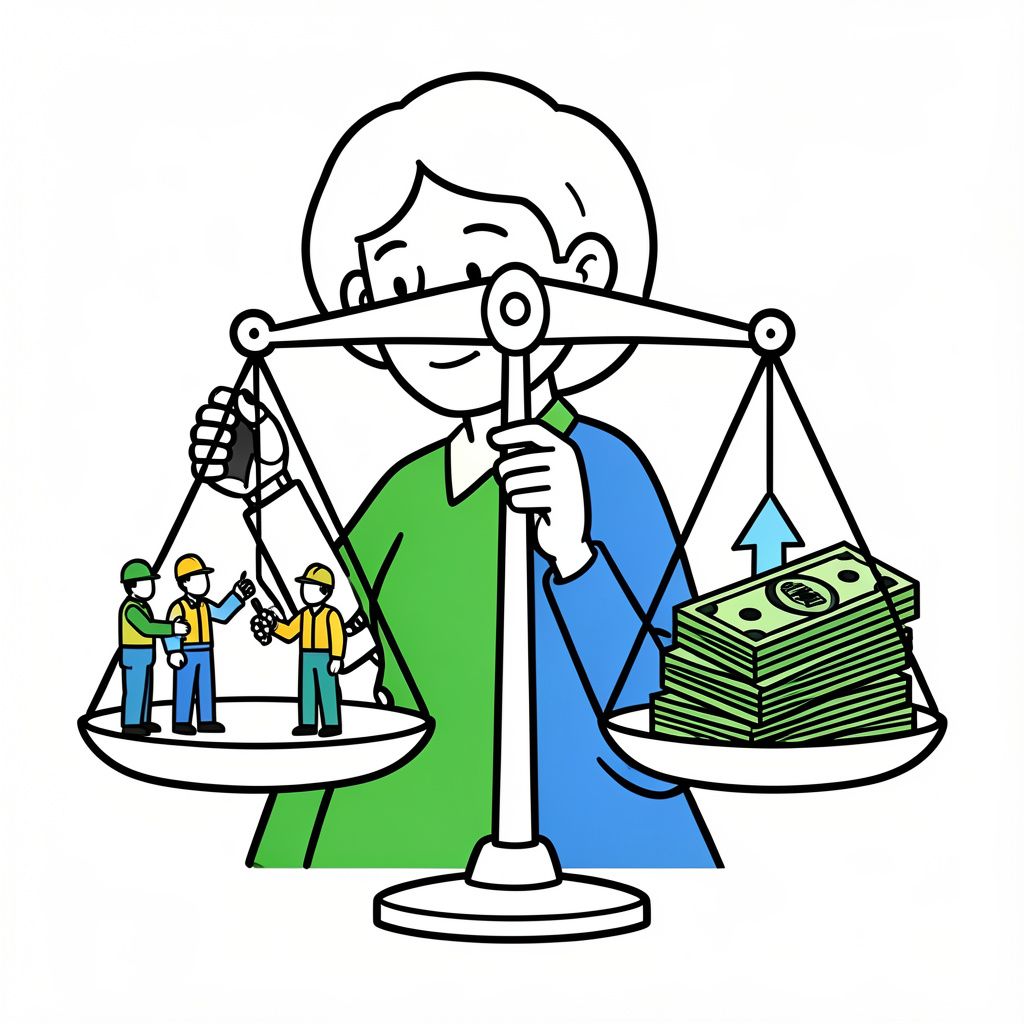
Beyond inflation, Cook dedicated significant attention to AI’s impending disruption of the labor market, describing the technology as “like none other I have seen in my lifetime” [1]. She cautioned that the economy could be approaching “the most significant reorganization of work in generations” [1]. While the national unemployment rate stood at a relatively stable 4.3 percent in April 2026, Cook warned that the adoption of AI could precipitate near-term job losses before the economy creates new, tech-centric positions [1][3]. Notably, findings from the 2025 Small Business Credit Survey indicated that most small businesses had not yet experienced labor cost changes due to AI, suggesting that the most severe workforce disruptions are still on the horizon [1].
Internal Innovation and Regulatory Foresight
To effectively regulate and mitigate these emerging threats, the Federal Reserve is actively building its own internal artificial intelligence capabilities [1]. Cook, who utilized machine learning during her tenure as director of the AEA Summer Program in 2018 and urged the Fed to adopt AI upon joining the Board in 2022, argued that policymakers must gain hands-on experience with these systems [1]. The central bank has already made significant strides, developing an “active knowledge distillation” AI model that reduces computation costs by up to 80 percent, and applying natural language processing to decades of Beige Book data to forecast economic recessions [1].