Local Museums and Zoos Step Up as Federal Science Grants Plunge
Washington, Saturday, 29 August 2026.
As federal scientific funding sharply declines in 2026, local museums and zoos are using private donations and community science to preserve vital environmental research across the nation.
Bridge Institutions Fill the Funding Void
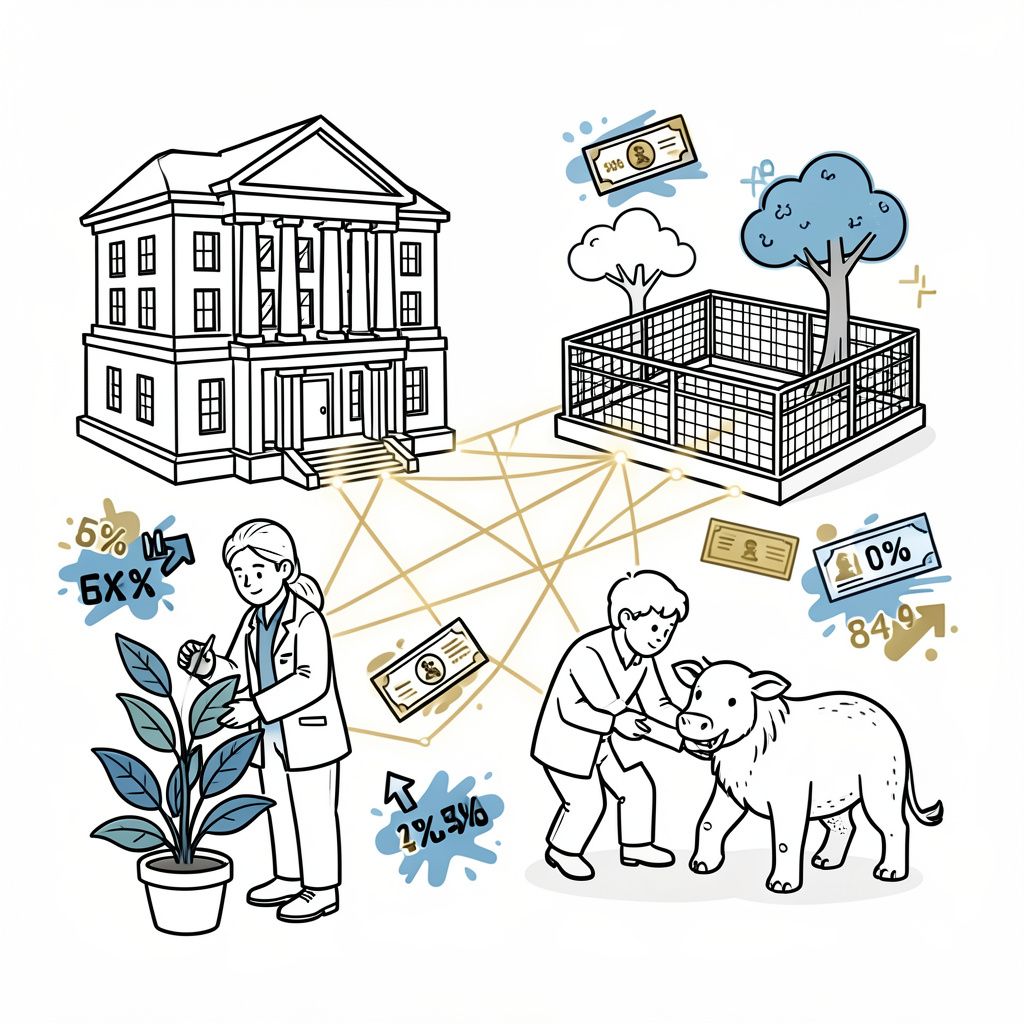
As federal scientific funding sharply declines in 2026, regional non-profit institutions, including local museums and zoos, are increasingly stepping in to fund and execute critical environmental research [1]. On August 28, 2026, the Prairie Fire initiative published an investigation highlighting how these “bridge institutions” are leveraging public visitor engagement and private donations to mitigate nationwide gaps in research funding [1]. Dr. Phillip Levin’s national-level assessment of the state of nature, halted by a Trump administration official in January 2025, is now being completed independently by the nonprofit “Nature Record,” which toured these institutions in Spring 2026 [1]. Institutions like the California Academy of Sciences and the San Diego Natural History Museum are utilizing community scientists to generate large-scale datasets, effectively treating participants as genuine partners to expand research capacity [1]. This shift suggests a durable support model for post-government research initiatives, combating anti-intellectualism by creating space for the public within science [1].
Sharp Decline in Federal Grant Issuance
The contraction in federal support is evidenced by significant drops in grant issuance across major agencies. During the 2025-26 academic year, federal research funding at UNC-Chapel Hill declined by 2.5%, a fluctuation within the historical average variance of 4% [2]. However, the volume of new grants has dropped precipitously; new grants fell from 746 in 2024 to 582 in 2026, representing a decrease of 21.984 percent [2]. Nationally, the National Institutes of Health awarded 25% fewer new grants in 2025 compared to 2024, while the National Science Foundation reduced new grant output by 46% from the Biden administration average [2]. The Agency for Healthcare Research and Quality awarded only 37 grants by mid-August 2026, down from 974 at the same point in 2024, a reduction of 96.201 percent [2]. These reductions have led to canceled research jobs, smaller graduate cohorts, and potential restructuring of faculty funding [2].
University Research and Medical Impacts
Major research universities are feeling the economic strain of these federal cuts. The University of Washington received approximately $1.4 billion in federal support in 2025, accounting for roughly 80% of the institution’s total research funding [3]. Between July 2025 and June 2026, UW Medicine experienced a nearly 20% reduction in federal funding, impacting its ability to attract and retain top graduate students [3]. Specific projects, such as a $2.5 million grant for addiction treatment in rural communities held by Dr. Sebastian Tong, were terminated in July 2026 [3]. Additionally, the Agency for Healthcare Research and Quality terminated at least 117 grants in the latest funding cycle, totaling over $264 million in losses across 63 research projects [3]. These cuts have forced the termination of projects partnering with clinics in Montana, Idaho, and Wyoming that served remote populations [3].
Civic Engagement and Advocacy Responses
In response to funding uncertainty, civic engagement around federal science has surged. Since 2021, the Partnership for Public Service has tracked public perception, finding that 61% of Americans now believe civil servants “are committed to helping people like me,” an 11-point increase since 2021 [4]. Advocacy groups like Stand Up for Science are mobilizing, having organized over 50,000 people across 170+ global events on March 7, 2026 [6]. On September 1, 2026, the organization plans to host an “empty chair” town hall in Columbus, Ohio, to address concerns with Congressional representatives [6]. Meanwhile, the NSF is preparing to implement the President’s agenda for FY 2027, beginning October 1, 2026, though the Directorate for Social, Behavioral and Economic Sciences faces potential elimination [5]. This period presents a generational opportunity to build lasting civic understanding of the work government does and why it matters [4].
Sources
- www.einpresswire.com
- www.theassemblync.com
- www.opb.org
- ourpublicservice.org
- www.thetransmitter.org
- www.einpresswire.com