Soaring Gas Prices Push American Household Confidence to Historic Lows
Washington, Friday, 23 October 2026.
With gas prices up 40% year-over-year, American consumer sentiment plunged near historic lows in October, as 85% of households now warn inflation is severely damaging their finances.
Consumer Sentiment Plummets as Inflationary Pressures Deepen
Consumer confidence in the United States has fallen to its lowest level in five months, with the University of Michigan’s Surveys of Consumers index dropping to 48.0 in late October 2026—a reading that, while revised upward from an initial 46.3, remains deeply depressed by historical standards [1][5]. The decline reflects a broad-based deterioration in household sentiment that cuts across political affiliations, with Republicans, Democrats, and independents all reporting worsening financial outlooks [1][5]. This erosion in confidence comes amid persistent inflation that has exceeded the Federal Reserve’s 2% target for more than five consecutive years, with the consumer price index (CPI) rising from 3.4% in August 2026 to 3.7% in September [5].
Gas Prices Surge, Fueling Broader Economic Anxiety
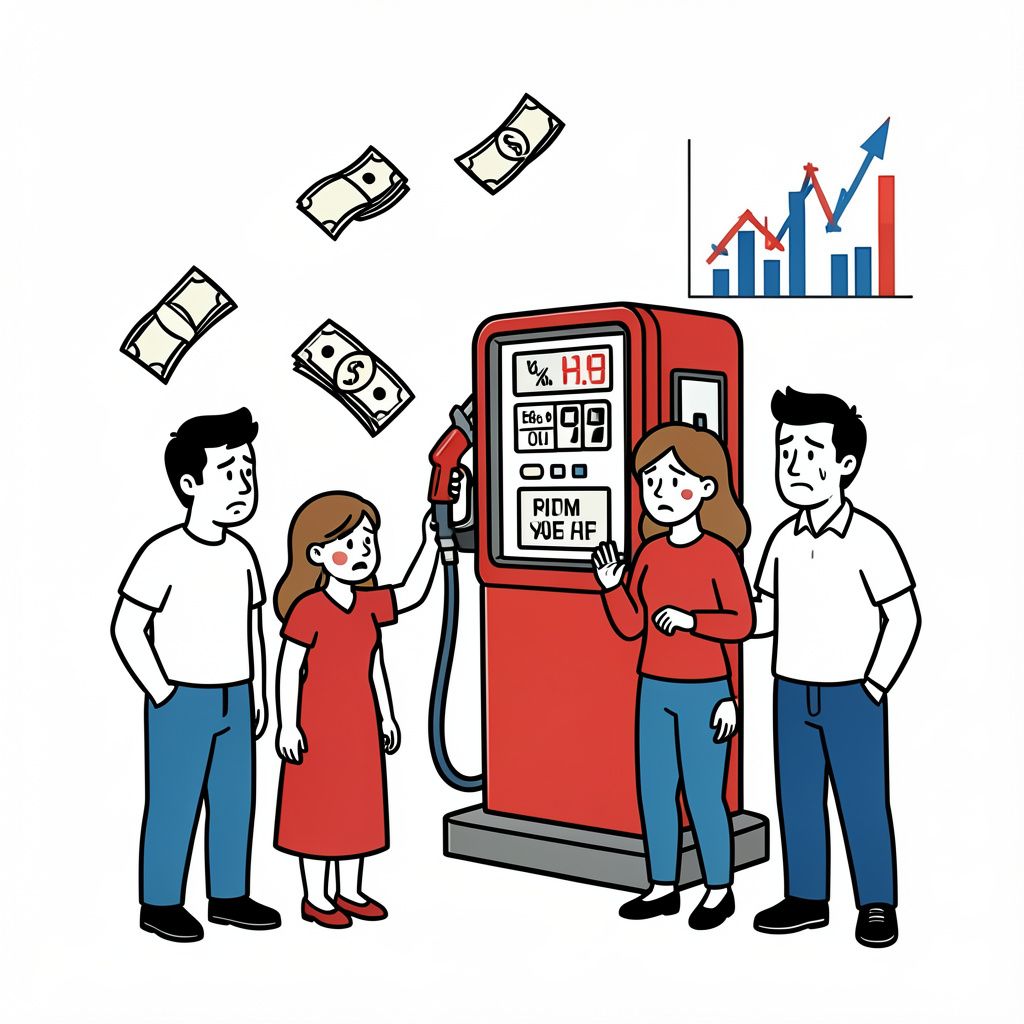
The primary catalyst for the latest downturn in consumer sentiment is the dramatic escalation in energy costs. Regular unleaded gasoline prices have surged by 39.739 40% year-over-year, reaching an average of $4.29 per gallon nationally in October 2026, according to data aggregated by CNN Business [1]. Regional disparities are stark, with prices spiking to $4.77 per gallon in Michigan—a 33-cent increase in just two days—and $4.37 in Ohio, where costs rose 39 cents over the same period [1]. Diesel prices have followed a similar trajectory, climbing to $6.32 per gallon, while Brent crude oil has breached $116 per barrel as of October 23, 2026 [1]. These increases are not merely incremental; they represent a structural shift in energy affordability that is reshaping household budgets and consumption patterns [1].
Households Report Severe Financial Strain Amid Persistent Inflation
The cumulative impact of years of elevated inflation and recent energy price shocks has left 56% of consumers reporting that higher prices are negatively affecting their personal finances—a figure that has risen for four consecutive months [1]. This widespread financial strain is reflected in broader economic indicators: year-ahead inflation expectations have climbed to 4.7%, up from 3.4% in February 2026 following geopolitical tensions in the Middle East [1][5]. Long-run inflation expectations have also inched higher, reaching 3.5% from 3.4% in prior months [1][5]. The erosion of purchasing power is particularly acute in the housing market, where 85% of consumers now view it as a bad time to buy a home due to higher interest rates—a sentiment that has intensified concerns about affordability [1][5].
Macroeconomic Implications: Retail Spending and Monetary Policy in Focus
The decline in consumer sentiment carries significant implications for the broader economy, particularly as the critical holiday shopping season approaches. The University of Michigan’s Current Conditions subindex, which tracks consumers’ assessments of their personal financial situations and the broader economy, has fallen sharply, driven by an 18% plunge in buying conditions for durable goods [5]. This decline is directly linked to higher interest rates, which have increased the cost of borrowing for major purchases such as automobiles and appliances [5]. With sentiment now 10% below its year-ago level and 15% below February 2026 levels—just prior to escalations in the Iran conflict—analysts warn that depressed consumer confidence could translate into weaker retail spending in the fourth quarter [1][5].
Federal Reserve Poised for Policy Decision Amid Economic Uncertainty
Against this backdrop, the Federal Reserve’s rate-setting committee is scheduled to convene on Wednesday, October 28, 2026, for its final borrowing cost decision before the midterm elections [1][5]. The timing of this meeting adds a layer of political sensitivity to the economic outlook, as policymakers grapple with the dual challenges of controlling inflation and supporting economic growth. Market expectations, as reflected in the CME FedWatch tool, suggest that the federal funds rate will remain within a range of 3.75% to 4.00%, following a quarter-point increase in September 2026 [5]. Analysts at Eurasia Group have noted that the current geopolitical environment—characterized by heightened tensions in the Middle East—could further disrupt oil supply chains, exacerbating price pressures and complicating the Fed’s policy calculus [1].
Outlook: A Cautious Consumer Base and the Path Forward
Looking ahead, the trajectory of consumer sentiment will depend heavily on developments in energy markets and the Federal Reserve’s policy response. While the University of Michigan’s index showed a modest upward revision in late October 2026, the underlying trend remains weak, with sentiment still 16% below levels recorded in October 2025 [1][5]. The divergence between improved year-ahead business conditions expectations—up approximately 14% from earlier readings—and the broader decline in consumer confidence underscores the fragility of the current economic environment [5]. As households navigate higher borrowing costs and elevated prices, the risk of a feedback loop between weak sentiment, reduced spending, and slower economic growth looms large. For now, the data suggests that American consumers are battening down the hatches, preparing for a holiday season marked by caution rather than celebration.