Iraqi Militia Releases Kidnapped American Journalist Amid Regional Tensions
Baghdad, Tuesday, 7 April 2026.
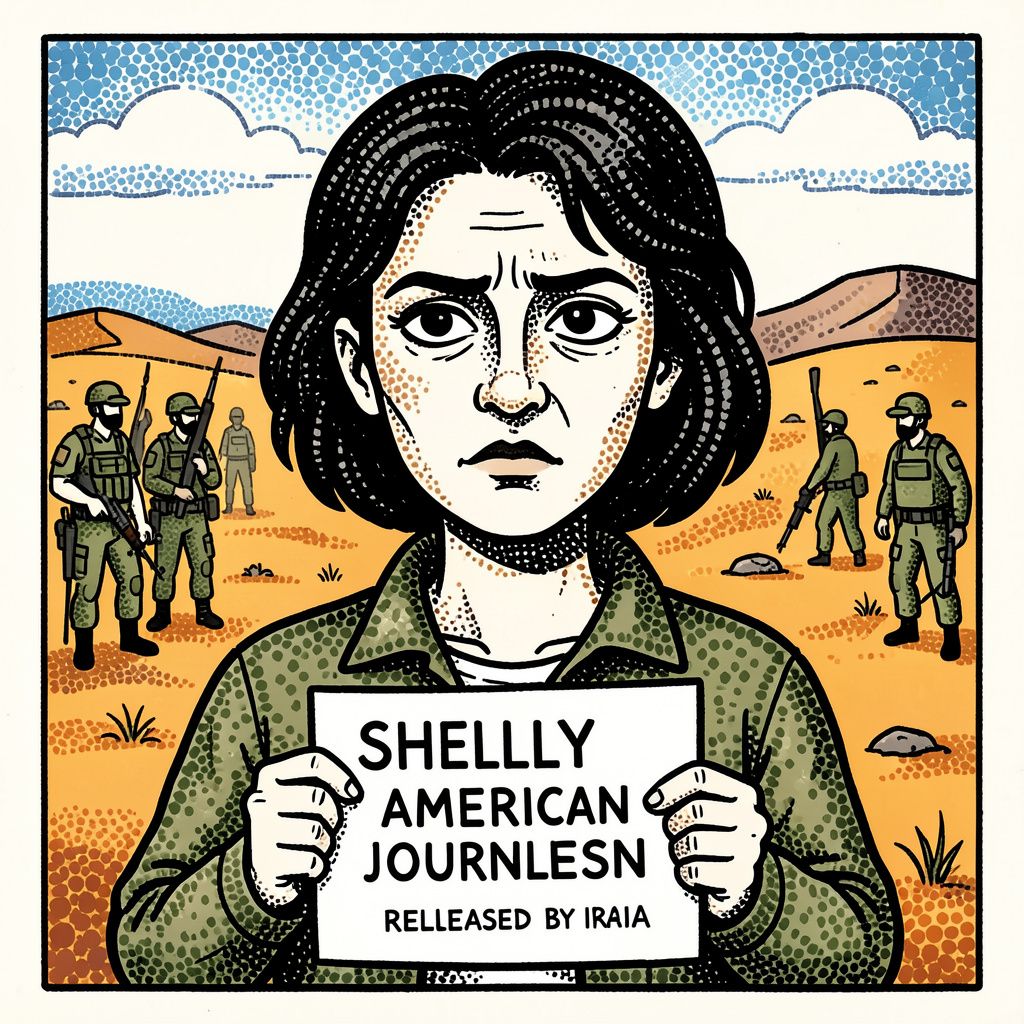
An Iran-backed Iraqi militia is releasing kidnapped American journalist Shelly Kittleson, demanding her immediate departure from the country, highlighting the region’s intense geopolitical risks.
The Abduction and the Warnings
On the afternoon of March 31, 2026, 49-year-old freelance journalist Shelly Kittleson was abducted on Saadoun Street in Baghdad [2][3]. Armed men forced the Wisconsin native into a silver vehicle, part of a two-car convoy that subsequently drove southwest of the city [2][3]. During the escape, one of the vehicles crashed near al-Haswa in Babil province [6]. Intelligence indicated that Kittleson was likely being held in Jurf al-Sakhar, a militia stronghold located approximately 64 kilometers south of the Iraqi capital [5].
The Negotiations and Prisoner Swap
The path to Kittleson’s release was fraught with logistical and political hurdles. Iraqi security forces engaged in a high-speed pursuit shortly after the abduction, managing to intercept one vehicle and apprehend a suspect [5]. However, broader negotiations faced severe obstacles because Kataib Hezbollah commanders had gone into hiding, making communication extremely complex [6]. An official from the Popular Mobilization Forces was tasked with mediating the crisis but struggled to establish direct contact with the militia’s leadership [6].
Diplomatic Pressure and Hostage Policies
Prior to the militia’s announcement, the kidnapping triggered an intense advocacy campaign in Washington. On April 3, 2026, three prominent press freedom organizations—the Committee to Protect Journalists, Reporters Without Borders, and the James W. Foley Legacy Foundation—sent an urgent letter to Secretary of State Marco Rubio [4]. They demanded that Kittleson be formally designated as a hostage under the Robert Levinson Hostage Recovery and Hostage-Taking Accountability Act [4]. Such a wrongful detention designation elevates a case to a top interagency priority, unlocking specialized resources from the Hostage Recovery Fusion Cell, which coordinates efforts between the FBI, the State Department, and the broader intelligence community [4].
Geopolitical Ramifications
Kittleson’s ordeal unfolds against a backdrop of severe regional instability. The security environment in Iraq has deteriorated sharply following United States and Israeli military strikes on Iran on February 28, 2026 [5]. In response to the escalating conflict, the U.S. State Department strongly advised all American citizens, including media personnel, to strictly adhere to travel advisories [5]. While the previous Iraqi administration had provided Kittleson with a degree of protection during her routine trips to cover the fight against the Islamic State, the current government rescinded those safeguards [3]. As Kittleson prepares to leave Iraq under the militia’s strict conditions, her case serves as a stark reminder of the fragile security apparatus in Baghdad and the persistent leverage held by Iran-aligned factions over both local governance and international diplomatic efforts [1][GPT].