Author Warns Recent Federal Workforce Cuts Cost Billions and Harm Efficiency
Washington, Sunday, 11 October 2026.
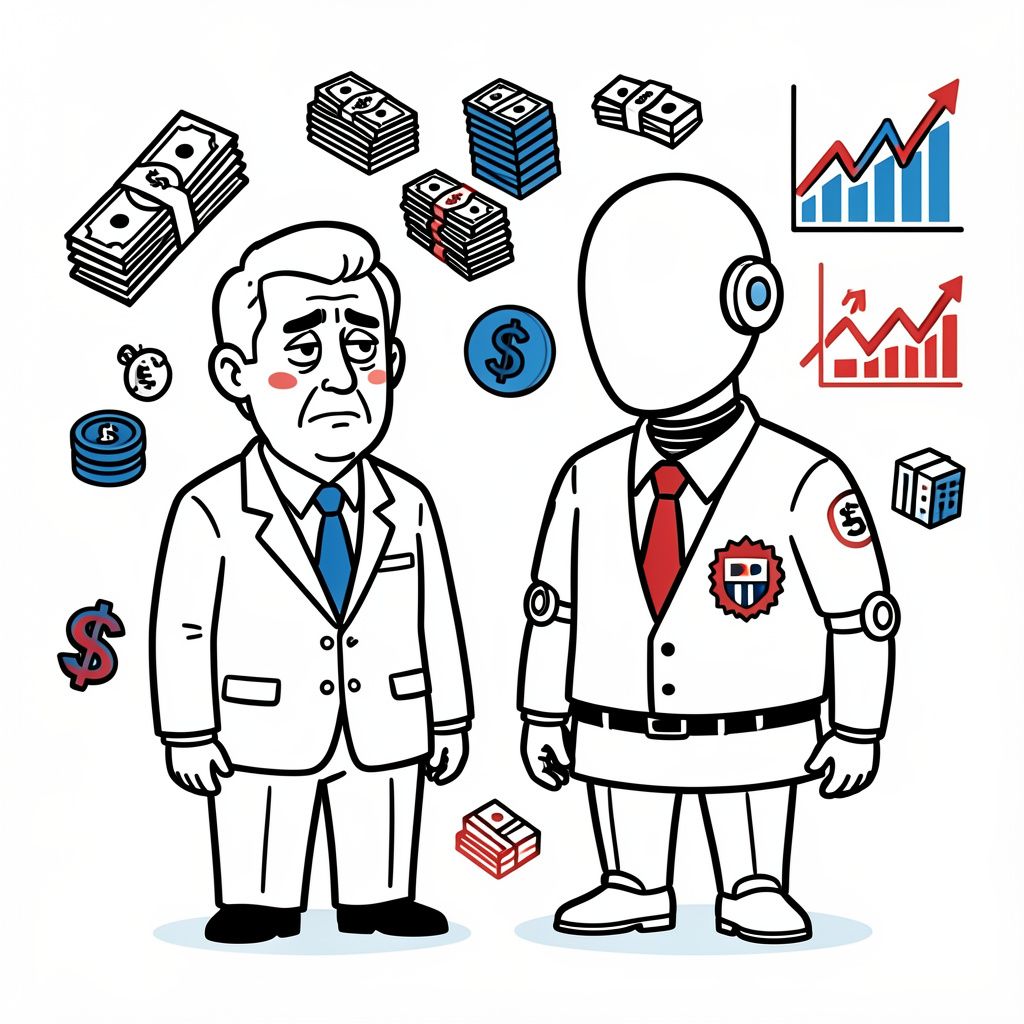
Author Michael Lewis warns that recent federal staffing cuts eliminated over 200,000 civil servants, ultimately costing taxpayers $6 billion while replacing institutional expertise with strict political loyalty.
Michael Lewis Warns of Institutional Shifts Following DOGE Initiatives
Acclaimed author Michael Lewis has issued a stark warning regarding the long-term impacts of the Department of Government Efficiency (DOGE) on the federal workforce. In an interview aired on 11 October 2026, Lewis highlighted how the initiative fundamentally altered career incentives and administrative dynamics within the government [1]. His new book, “Blockers: Rebels in the Deep State,” published on 6 October 2026, chronicles the experiences of civil servants who resisted these changes [2]. Lewis argues that the restructuring risks destabilizing essential regulatory oversight and eroding public institutional memory [1].
Workforce Reductions and Operational Costs
The Department of Government Efficiency, led by Elon Musk, launched in January 2025 with the objective of downsizing the federal workforce [2]. By February 2026, DOGE had reduced the federal workforce by 9%, resulting in the elimination of 209,775 positions [2]. The department officially ceased operations on 4 July 2026 [2]. However, a new report reveals that DOGE’s cuts cost the government more than $6 billion, countering narratives of fiscal efficiency [3]. Lewis notes that while Musk claimed an interest in cutting $2 trillion from a roughly $7 trillion deficit, the efforts focused on a narrow sliver of the budget rather than major cost drivers like Defense or entitlements [5].
Redefining Federal Incentives and Loyalty
Lewis asserts that the implementation of DOGE has fundamentally altered the structural incentives within the federal government apparatus [1]. He describes a shift where the oath to the Constitution is replaced by a loyalty pledge to the president [2]. This change transforms the nonpartisan civil service into a tool serving the narrow interests of the president rather than the American people [5]. Lewis characterizes this as a radical seizure of power that redefines the 2 million-person civil service [2]. He warns that populations with fewer direct connections to federal employees are more susceptible to political rhetoric characterizing the workforce as wasteful [2].
Case Studies in Civil Service Resistance
The book profiles specific federal employees labeled “blockers” by the administration, including Colin O’Brien of the U.S. Institute of Peace and Kathleen Walters of the Internal Revenue Service [2]. Francis Collins, former director of the National Human Genome Research Institute, was fired with 24 hours’ notice despite his scientific contributions [6]. Lewis reports that Collins still does not know who fired him, highlighting the opacity of the process [5]. These individuals struggled to protect their work as Musk slashed departments claiming he could cut $2 trillion of the almost $7 trillion dollars of federal spending [4]. Lewis emphasizes that these employees often forgo higher private-sector compensation to perform essential public services [2].
Future Implications and Congressional Outlook
Looking ahead, Lewis aims for his book to trigger congressional hearings focused on reforming government operations [2]. He is scheduled to appear in Portland on 29 October 2026 to discuss the book with editor David Shipley [2]. The discourse surrounding these events continues to shape political analysis, with commentators noting the shift from neglect to a malicious attack on the executive branch [5]. Lewis hopes to support federal employees rather than engage in partisan politics [2]. His analysis suggests that without reform, strategic uncertainties for private sector entities reliant on federal stability will persist [1].
Sources
- www.nbcnews.com
- www.oregonlive.com
- www.yahoo.com
- www.kqed.org
- andrewsullivan.substack.com
- www.economist.com