U.S. Strikes Iran’s Primary Oil Hub, Triggering Global Energy Market Shockwaves
Washington D.C., Saturday, 14 March 2026.
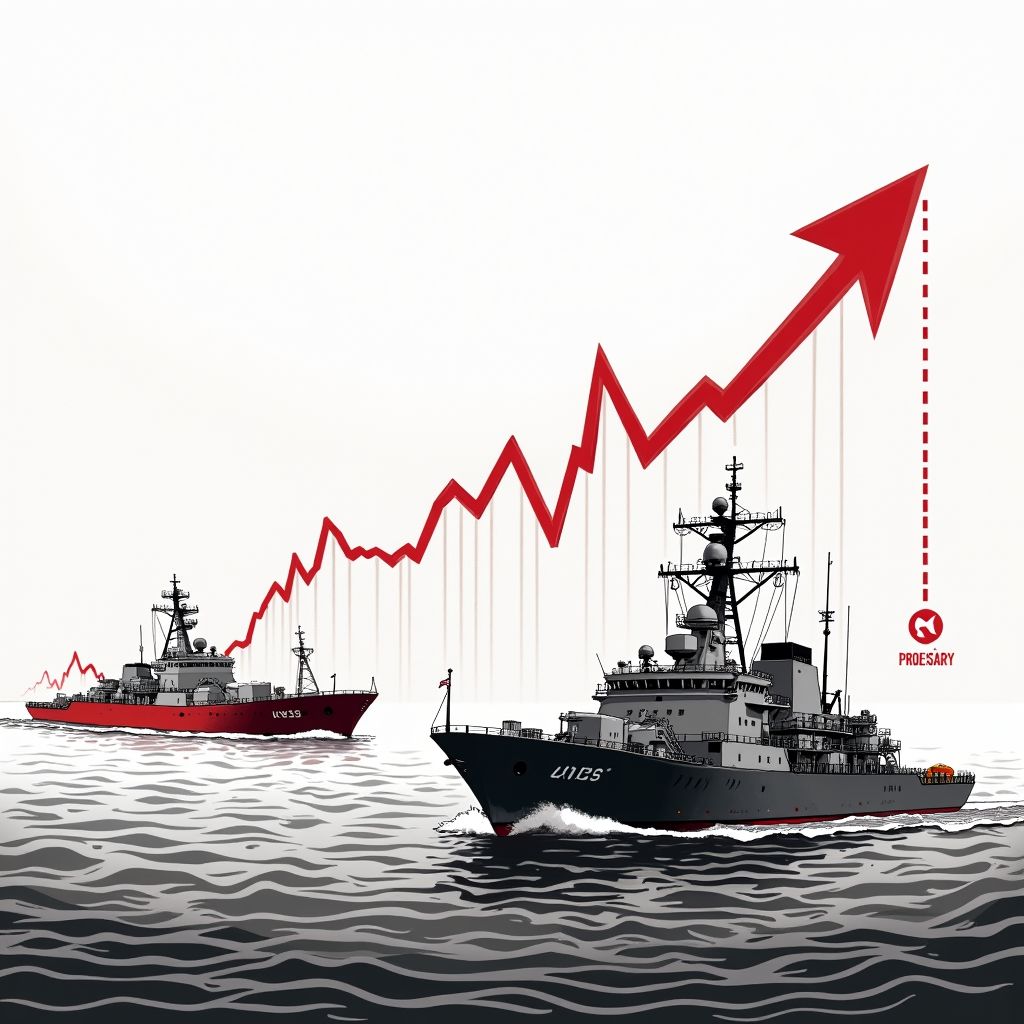
Following U.S. strikes on Kharg Island—which handles 90% of Iran’s crude exports—oil prices surged past $100 a barrel, prompting U.S. Navy escorts in the Strait of Hormuz.
From Naval Skirmishes to Operation Epic Fury
Following the recent escalation involving a U.S. naval strike on an Iranian vessel approaching the USS Abraham Lincoln, the conflict has entered a devastating new phase [GPT]. On March 12 and 13, 2026, the United States executed what President Donald Trump described as one of the most powerful bombing raids in Middle Eastern history, targeting Iran’s Kharg Island [2]. This aggressive military action falls under the umbrella of “Operation Epic Fury,” a campaign that began on February 28, 2026, and has already seen nearly 900 strikes [6][8]. The obliteration of these military sites marks a critical pivot in the war’s trajectory, shifting the focus directly onto the backbone of the Iranian economy.
Energy Markets React and Strategic Reserves Mobilize
The bombardment of Iran’s primary oil export terminal has sent immediate shockwaves through global energy markets, with Brent crude prices sustaining levels above $100 per barrel as of Friday [8]. In a concerted effort to stabilize these surging energy costs, the U.S. Energy Department announced a massive drawdown from the Strategic Petroleum Reserve [8]. The administration has invited bids for 86 million barrels of crude oil, which represents exactly half—or 50 percent—of a planned 172-million-barrel release [8]. These barrels will be issued as loans to oil companies, complete with a premium upon return, and the first shipments could reach the open market by the end of the upcoming week [8].
Retaliation Threats and Regional Spillover
Tehran’s response to the Kharg Island offensive has been swift and severe. Iran’s Khatam al-Anbiya Central Headquarters declared the U.S. attack a breached red line, warning that any strike on Iranian energy infrastructure will trigger immediate retaliation against energy facilities owned by multinational corporations cooperating with the United States in the region [5][8]. This threat of asymmetric regional warfare is already materializing. On March 14, the Islamic Revolutionary Guard Corps (IRGC) asserted it was their “legitimate right” to attack U.S. military facilities in the United Arab Emirates (UAE) [8]. Consequently, debris from an intercepted Iranian drone sparked a fire at an oil storage and export terminal in Fujairah, UAE, forcing the suspension of several oil loading operations [8].
Domestic Security and the Broader Conflict Toll
The psychological impact of the war is also reaching American shores, recalling the anxious domestic climate of the post-9/11 era [7]. Recently, an unverified FBI email sent to local California law enforcement sparked widely circulated news reports of a potential Iranian drone threat against the U.S. West Coast [7]. However, the White House has strongly pushed back against these claims. Press Secretary Karoline Leavitt demanded a retraction from ABC News for sensationalizing the uncorroborated intelligence, while national security experts proceed under the assumption that no credible threat exists against the homeland [7].
Sources
- www.ctvnews.ca
- www.rferl.org
- www.aljazeera.com
- www.foxnews.com
- timesofindia.indiatimes.com
- www.instagram.com
- www.instagram.com
- www.dw.com